


Kansenen Garden Kimono Wedding Photos in Tokyo | Photo Spots, Poses & Seasons

If you are dreaming of kimono wedding photos in Tokyo, a traditional Japanese garden is one of the most beautiful settings you can choose. Ponds, stone bridges, lanterns and old trees bring out the elegance of a white shiromuku or a colorful iro-uchikake in a way that no studio backdrop can.
In this guide, we introduce Kansenen Garden (Kansen-en Park) in Nishi-Waseda, Shinjuku. It is a strolling garden that dates back to the Edo period and has been selected as one of Japan’s 100 Historic Parks. A bamboo gate, a stone bridge, stepping stones, a wooden gazebo and a small waterfall are all gathered within one compact garden. Below, we walk you through each photo spot, pose ideas for each one, how the garden changes with the seasons, and what to know when planning your pre-wedding photoshoot in Japan with Wedding Avenue.
🌸 Contents
- What Is Kansenen Garden?
- Why Kansenen Garden Is Perfect for Kimono Photos
- The Bamboo Gate: Where Your Story Begins
- The Stone Bridge and Stepping Stones
- The Gazebo: A Quiet Moment Together
- The Mountain Path and Waterfall
- Kimono Gestures That Make Your Photos Shine
- Kansenen Garden Through the Seasons
- Shiromuku, Iro-uchikake and Montsuki
- Practical Information and Our Plans
What Is Kansenen Garden?
Kansenen Garden is a public park run by Shinjuku City, located in a quiet residential area of Nishi-Waseda. At its heart is a kaiyu-shiki teien, a strolling garden designed to be enjoyed as you walk along the paths around the pond. It is the only garden of this style in Shinjuku, and it has been cared for since the Edo period.
The name “Kansen-en” comes from the spring water that once flowed here. The water was said to be especially good for making tea, so the garden was named after this sweet spring. Today there are two ponds, an upper pond and a lower pond, surrounded by trees, stone lanterns and mossy rocks. Wherever you look, the scenery feels calm and unmistakably Japanese.

The garden is not huge, and that is part of its charm. The gate, the bridge, the stepping stones, the gazebo and the waterfall are all close to one another, so you can move between spots easily even in a heavy shiromuku or iro-uchikake. You spend more time taking photos and less time walking.
Step inside from the street and the atmosphere changes right away. You hear water and birds instead of traffic. This quiet setting helps many couples relax in front of the camera, which shows in the photos as soft, natural expressions.
Why Kansenen Garden Is Perfect for Kimono Photos
The biggest reason is variety. Within a single garden you can take photos at a bamboo gate, on a stone bridge over the pond, on stepping stones across the water, under the roof of a wooden gazebo, and on a green path leading to a waterfall. Each spot has a different mood, so your album will feel rich and varied even though you stayed in one place.
The garden’s long history also matters. Trees that have grown for many years and stones covered in moss give your photos depth and a sense of place. Against these muted greens and browns, the pure white of a shiromuku looks even more graceful, and the reds and golds of an iro-uchikake stand out beautifully.
✨ Highlights of Kansenen Garden
・A strolling garden from the Edo period, one of Japan’s 100 Historic Parks
・Bamboo gate, stone bridge, stepping stones, gazebo and waterfall in one garden
・Compact layout that is easy to explore in kimono
・Cherry blossoms, fresh green, autumn leaves and winter snow ropes (yukitsuri)
Finally, the garden changes completely with the seasons. Spring cherry blossoms, early summer greenery, autumn colors and the rope-supported pine trees of winter each create a different backdrop. Choosing the season you would like to see in your photos is one of the most enjoyable parts of planning your shoot.
The Bamboo Gate: Where Your Story Begins
The bamboo gate at the entrance of the Japanese garden is where most shoots begin. The simple bamboo fence and wooden roof are classic Japanese craftsmanship, and simply standing in front of it in kimono makes a photo feel like a scene from another era.

📷 Pose ideas at the bamboo gate
・Stand side by side and face the camera for a formal portrait
・Walk through the gate together and let the camera follow from behind
・The bride walks a little ahead, then turns back to smile
・The bride rests one hand on the gate and shows her profile
A formal portrait at the gate gives your album a dignified opening. The bride lightly folds her hands in front, the groom holds a folding fan, and both stand tall. It is a traditional pose, and the bamboo backdrop makes it look natural rather than stiff.
Photos from behind, walking through the gate, feel like the start of a new chapter together. The back of a shiromuku hood (wataboshi) or the pattern on the back of an iro-uchikake becomes the star of the shot. For a softer image, the bride can turn around as if someone just called her name. Your photographer will guide you through each moment, so there is no need to practice in advance.
The Stone Bridge and Stepping Stones
A stone bridge spans the upper pond, and between the two ponds you will find a line of stepping stones crossing the water. Together with the surrounding trees, this area captures everything people imagine when they think of a Japanese garden.

On the bridge, you might face each other and hold hands, or stand side by side and look out over the pond. From the edge of the pond, your photographer can capture the whole bridge with the two of you in the middle, framed by water and trees like a painting. On calm days, the scenery is mirrored on the surface of the pond, which adds a lovely sense of depth.
Changing where you look can change the whole feeling of a photo. Looking at each other feels romantic, looking at the camera feels bright and happy, and a gentle downward gaze feels graceful and modest. Trying a few directions at the same spot gives you more variety from a single location.
The stepping stones are a favorite place for Japanese umbrellas (wagasa). A red umbrella against the green garden and dark water is a simple combination, but it photographs beautifully, and the colors are often reflected in the pond below.
Kimono outdoor photoshoot plan in Tokyo
Our kimono location plan includes your kimono, hair and makeup, dressing, a professional photographer and retouched photo data. See what is included and how the day works.
The Gazebo: A Quiet Moment Together
Inside the garden stands a wooden gazebo (azumaya), a small open shelter with a roof. Its simple design blends into the garden, and it is one of the best places for calm, relaxed photos.

Sit side by side and look out at the garden, lean in to talk, or let the bride rest her head gently on the groom’s shoulder. Under the roof, the light becomes softer, so skin and fabric look smooth and gentle. The pillars and beams act like a natural frame and keep the two of you at the center of the picture.
Shots taken from outside the gazebo, through the pillars and branches, feel as if someone is quietly watching your private time together. The view of the two of you from behind, gazing at the garden, is another photo many couples love.
The gazebo is also a good place to take a short break. Kimono can feel a little unfamiliar at first, and sitting down to chat for a few minutes often helps couples relax. Your photographer will keep capturing those unplanned smiles too.
The Mountain Path and Waterfall
Three sides of the garden are surrounded by gentle slopes, which gives the paths the feel of a small mountain trail. At the end of one path is a small waterfall, falling between rocks and green moss.

Walking together along this tree-lined path is one of the easiest and most natural scenes to photograph. You are simply strolling and talking, and the camera follows. A glance back over the shoulder or a shared laugh along the way often becomes a favorite photo.
In front of the waterfall, a portrait of the bride alone works especially well. The white lines of falling water and the deep green of the rocks bring out the colors of the kimono. A shiromuku looks pure and serene here, while an iro-uchikake looks vivid and striking. You can also photograph the two of you from behind, watching the waterfall together, surrounded by the sound of the water.
Kimono Gestures That Make Your Photos Shine
You may be wondering how to pose in kimono, especially if it is your first time wearing one. The good news is that kimono photos rarely need big poses. Small, graceful movements are what make them beautiful, and in a Japanese garden, every one of those movements looks at home.
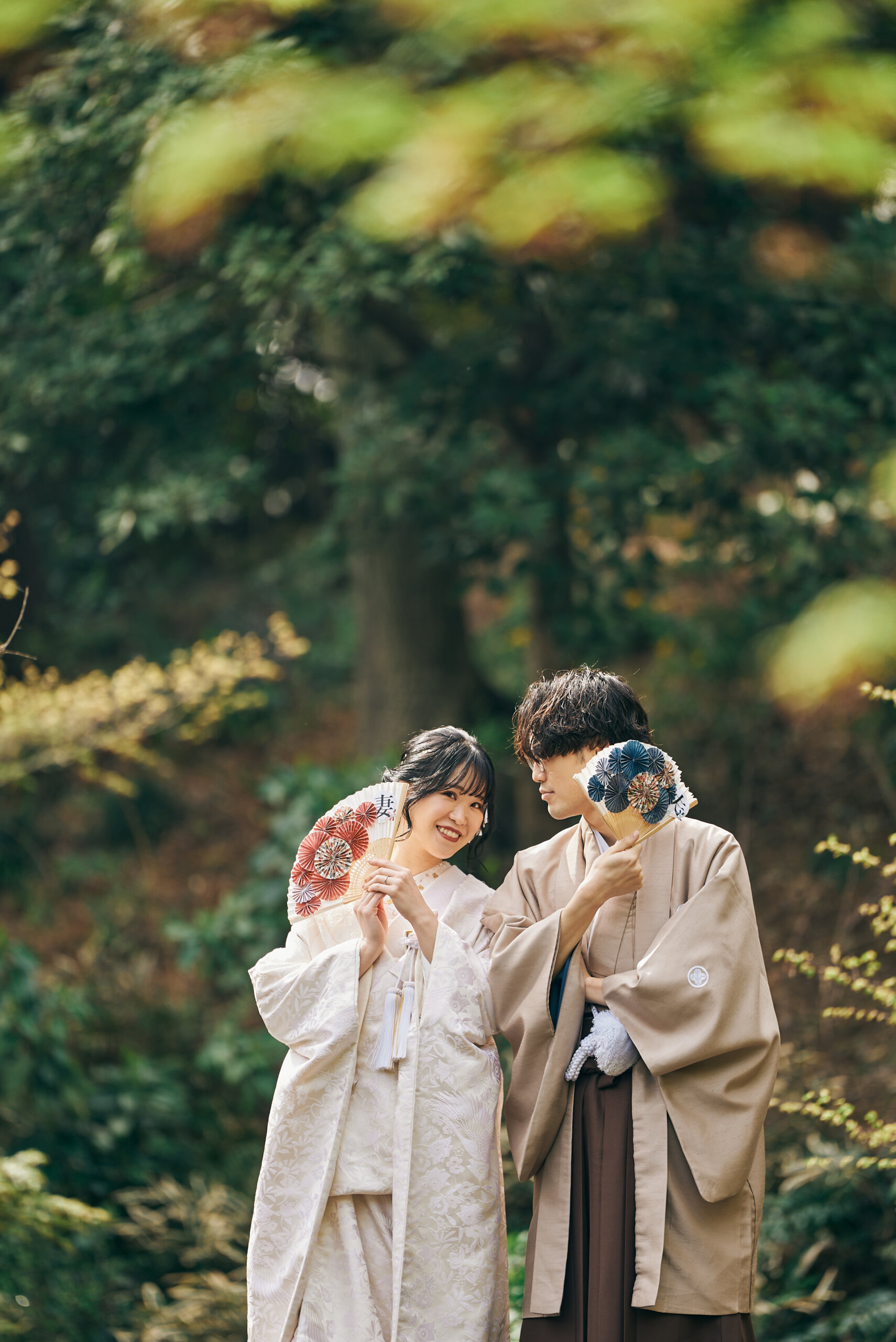
Sleeves. Lightly holding a long sleeve with one hand, bringing the edge of the sleeve close to your face as you smile, or opening the sleeve to show its pattern. Each sleeve gesture creates a different mood, from modest to bright and glamorous.
Hands and fans. The bride can hold a small ceremonial fan (suehiro) in both hands or bring it close to her chest. The groom looks especially dignified in montsuki hakama with a folding fan in his hand. Larger colorful fans are also fun for playful shots, like hiding your faces together and peeking out.
Face angle and gaze. A slightly lowered chin and eyes looking gently downward feel elegant and calm. Turning your face toward your partner with a smile feels warm and tender. The side profile of a bride in a white wataboshi hood is one of the most beautiful images in a Japanese garden.
Standing together. When you stand side by side, the bride standing slightly behind the groom, or turning her body a little toward him, creates a natural and balanced look. On the day, our photographer and staff will adjust your sleeves, hems and hand positions as you go, so you can simply enjoy the moment.
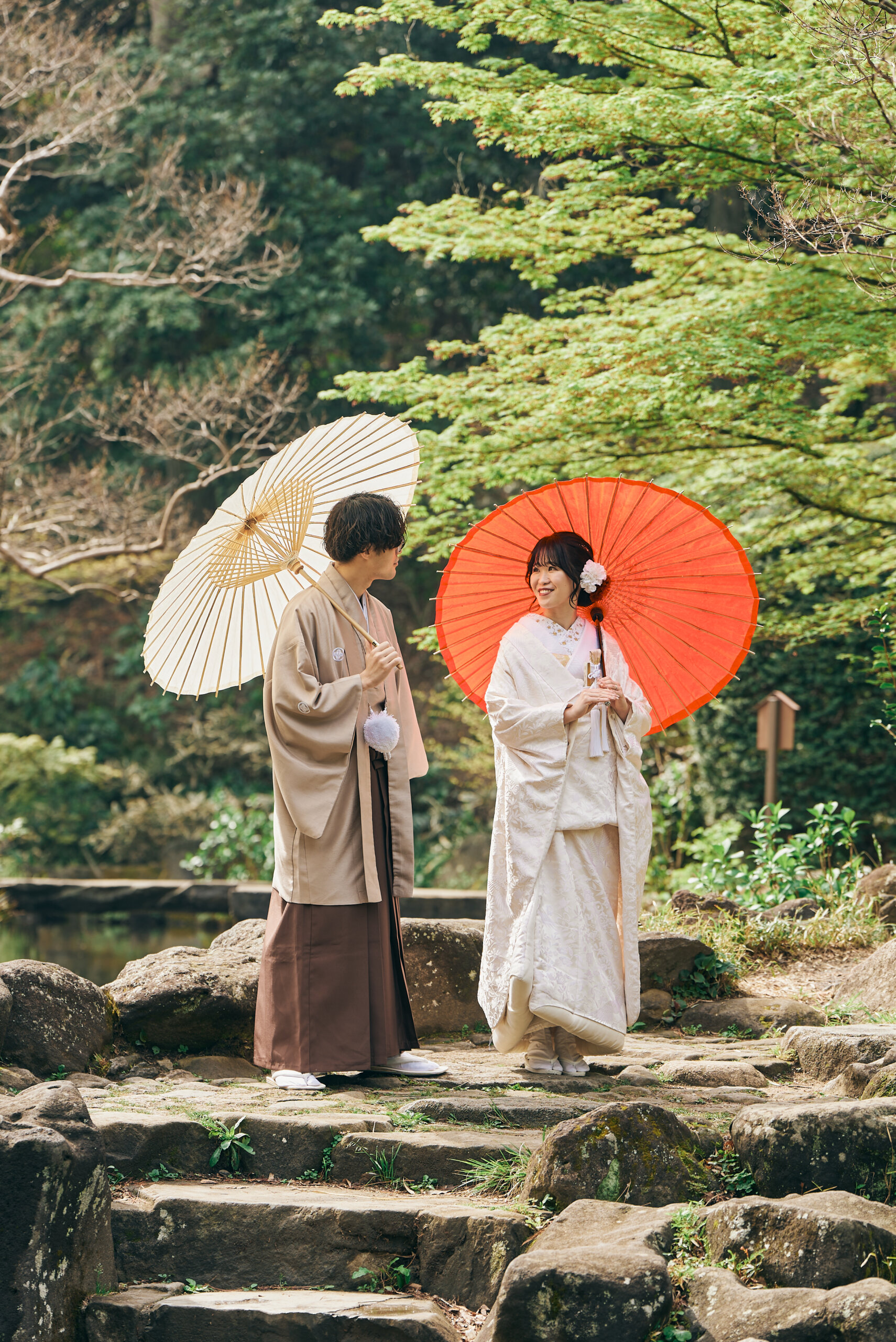
Props are another easy way to add variety. Japanese umbrellas, folding fans and small accessories change the feel of a photo without requiring any special posing skill. Tilting an umbrella so you can lean in close, or looking out over the pond from under one umbrella together, gives you a different image at the same spot.
Kansenen Garden Through the Seasons
Kansenen Garden looks very different depending on the time of year. The same bridge and pond can feel soft and pink, fresh and green, or warm and golden, so the season you choose shapes the whole feeling of your album.

Spring. Cherry blossoms frame the garden in pale pink. A shiromuku under the blossoms feels pure and gentle, and an iro-uchikake looks even brighter against the soft petals. Looking up at the branches together, or catching a falling petal in your palm, are lovely seasonal gestures.
Early summer. Fresh green leaves fill the garden and are reflected in the ponds. The photos feel clean and refreshing, and the deep greens make both white and colored kimono stand out.
Autumn. The trees turn red and yellow, and you can often see pampas grass swaying alongside the autumn leaves. Warm colors create calm, mature kimono portraits. Walking slowly under the colored trees or holding a fallen leaf together suits this season well.
Winter. Pine trees are protected with yukitsuri, rope supports that keep the branches from breaking under snow. This is a scene you will only find in Japanese gardens, and it gives your photos a quiet winter elegance.
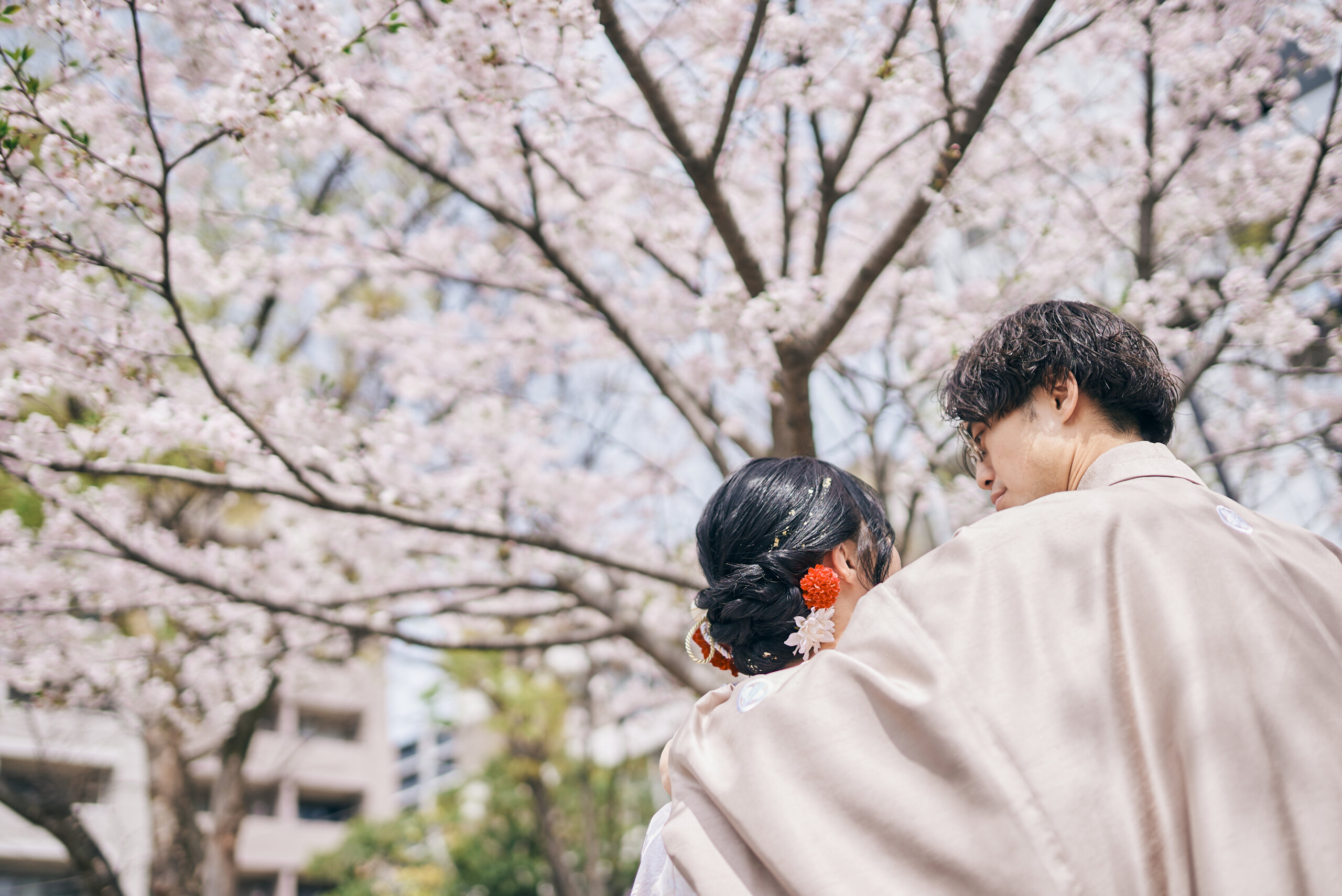
Cherry blossom timing changes slightly every year. One couple who photographed with us at Kansenen Garden wanted cherry blossoms in their photos, but the trees had not bloomed yet on their original date. They moved the shoot to a later day and were able to take their photos with the blossoms in full bloom. If the season matters to you, please talk to us about dates early.
🌸 Planning a spring or autumn shoot?
Cherry blossom and autumn leaf dates fill up quickly. See what each season looks like at our locations across Japan.
Shiromuku, Iro-uchikake and Montsuki
Photos at Kansenen Garden are taken in traditional Japanese wedding kimono. Brides choose between a shiromuku or an iro-uchikake, and grooms wear montsuki hakama.
A shiromuku is an all-white bridal kimono with delicate woven patterns. Against the greens of the garden and the dark water of the pond, its white looks especially clean and elegant. Pairing it with a white wataboshi hood or a tsunokakushi headpiece gives a very traditional look.
An iro-uchikake is a colorful bridal kimono, often in red, vermilion, gold or green, with rich patterns. In a calm garden setting, its colors bring the whole photo to life.
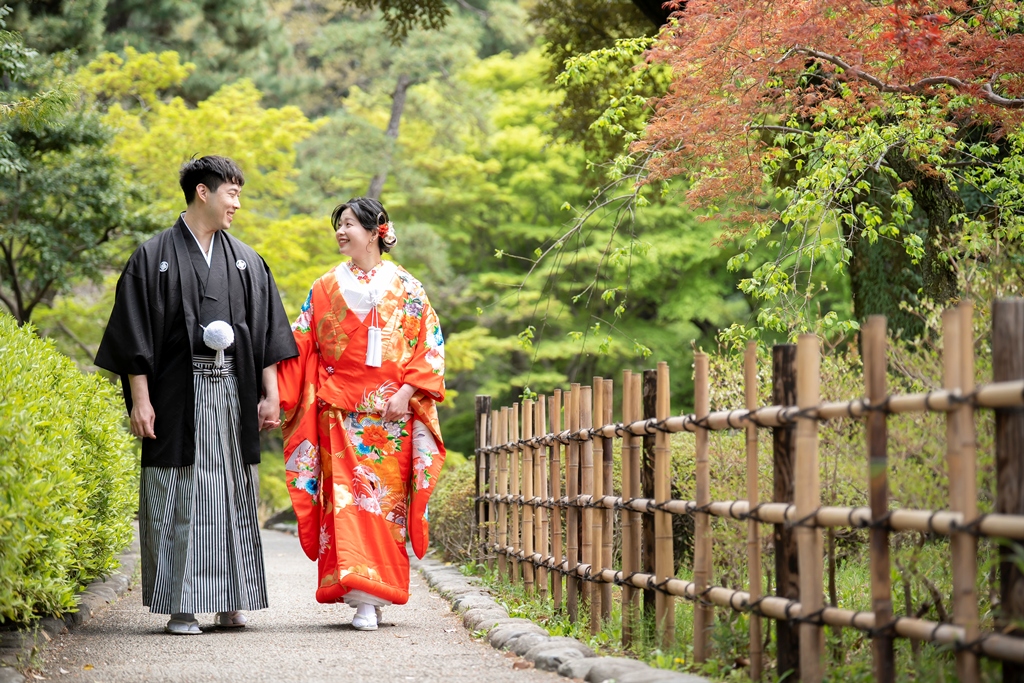
For the groom, black montsuki is the classic choice, while gray or beige montsuki gives a softer, more relaxed impression. Choosing colors that balance with the bride’s kimono helps the two of you look natural together.
Hairstyles change the feeling of your photos as well. A traditional style with a wataboshi or tsunokakushi suits the formal beauty of a shiromuku. A modern updo with fresh flowers or mizuhiki hair ornaments adds a contemporary touch.
Can’t choose between white and color?
With our Two Kimono Experience Plan, you can wear both a shiromuku and an iro-uchikake in one location shoot.
Practical Information and Our Plans
Here is a quick summary to help you plan your Kansenen Garden photoshoot.
If the weather is not cooperating on your shoot day, Wedding Avenue offers free rescheduling as many times as needed (please contact us by the day before). For couples traveling to Japan, we are happy to talk through flexible dates in advance.

At Wedding Avenue, we set our prices with one goal in mind: the right balance between quality and value. Not so cheap that the quality suffers, and not so expensive that it no longer feels worth it.
Our kimono outdoor photoshoot plan in Tokyo includes your shiromuku or iro-uchikake, the groom’s montsuki, hair and makeup, kimono dressing, accessories, an art bouquet, a professional photographer, a hair and makeup attendant, a kimono dresser and location arrangement. You receive 200 edited images (currently with a 100-shot bonus campaign) with no extra charge for data, and color retouching is included. Location permit fees and taxi fares between the studio and the location are not included in the plan price, and we will explain them before you book. Please see our plan page for the latest prices and campaigns. As you move from the gate to the bridge, the gazebo and the waterfall, there is plenty of room to keep every scene.
Albums start from 30,800 yen (tax included) in 10 styles, and the second album and beyond are 50% off. If you would like to choose a higher-grade kimono, we can show you options that fit your style and budget.
When you contact us, feel free to share photos you have saved on social media. Even a simple wish like “calm and elegant” or “lots of smiles” is enough to start. Consultations are free, both online and in person, and our team supports couples from overseas throughout planning and on the day.
WEDDING AVENUE TOKYO
Kimono wedding photos in a garden from the Edo period
Tell us the season and the look you have in mind,
and our planners will help you shape the day.