


Arisugawa Memorial Park Wedding Photos in Tokyo, Japan | Recommended Kimono Location
What Is Arisugawa Memorial Park?
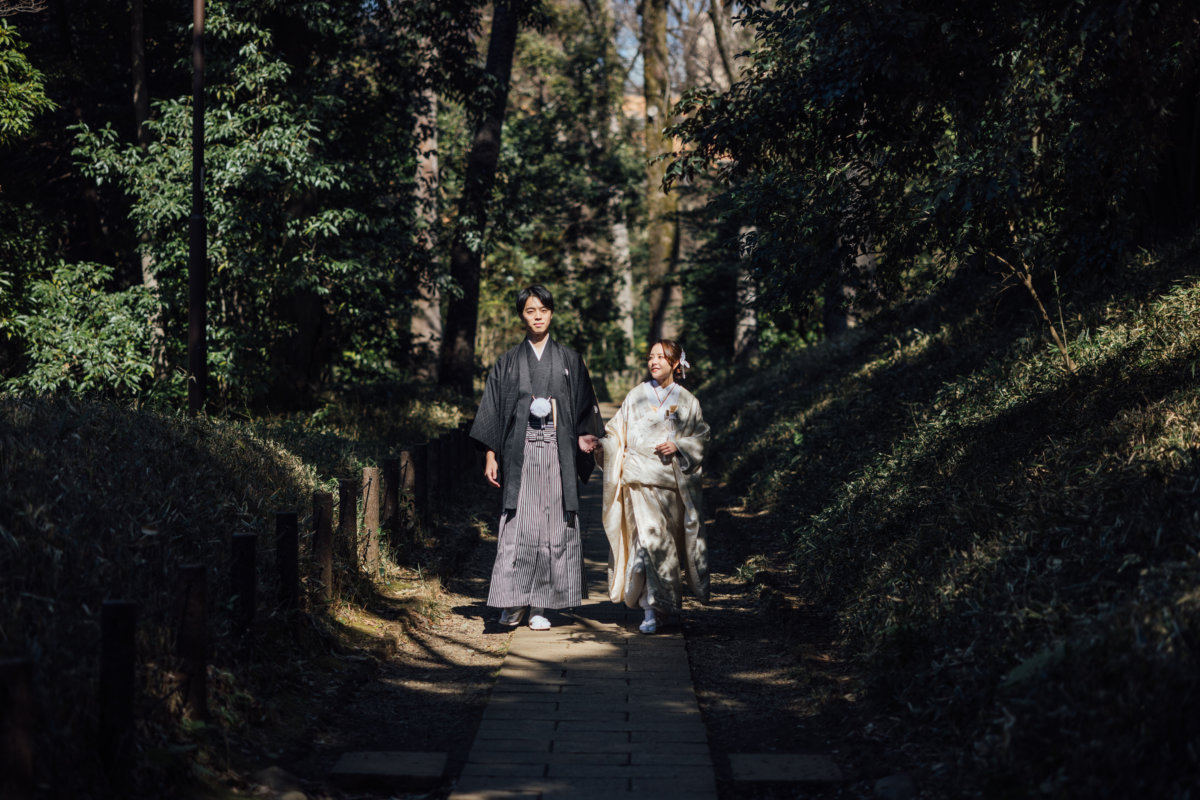
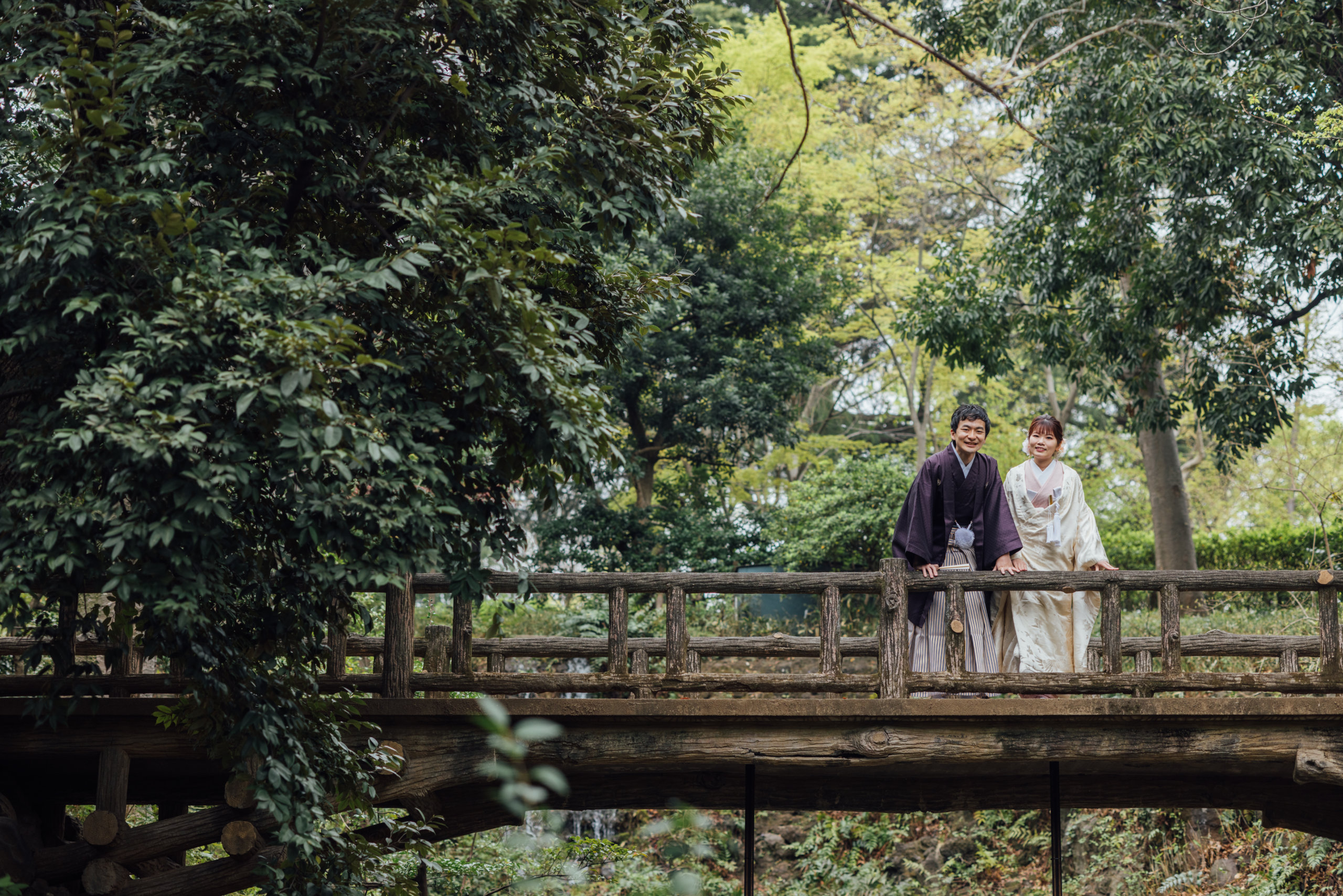
In the Hiroo neighborhood of Minato Ward — one of Tokyo’s most quietly affluent districts — a forested hillside garden sits almost invisibly behind a low gate. Arisugawa Memorial Park is not a manicured Japanese garden in the classical sense. It is something rarer in central Tokyo: a genuine woodland, with sloping terrain, large old trees, dappled light paths, a stone arch bridge, and a small wooden footbridge crossing a stream. It looks, and feels, less like a city park and more like the edge of a forest.
The park takes its name from the Arisugawa-no-miya imperial household, on whose former estate it was established. Today it is a public park — open to all, known to locals, and almost entirely unknown to tourists. For wedding photography, this relative obscurity is a significant advantage. Clean backgrounds. Unhurried space. The experience of moving through a beautiful natural environment without the feeling of being watched or crowded.
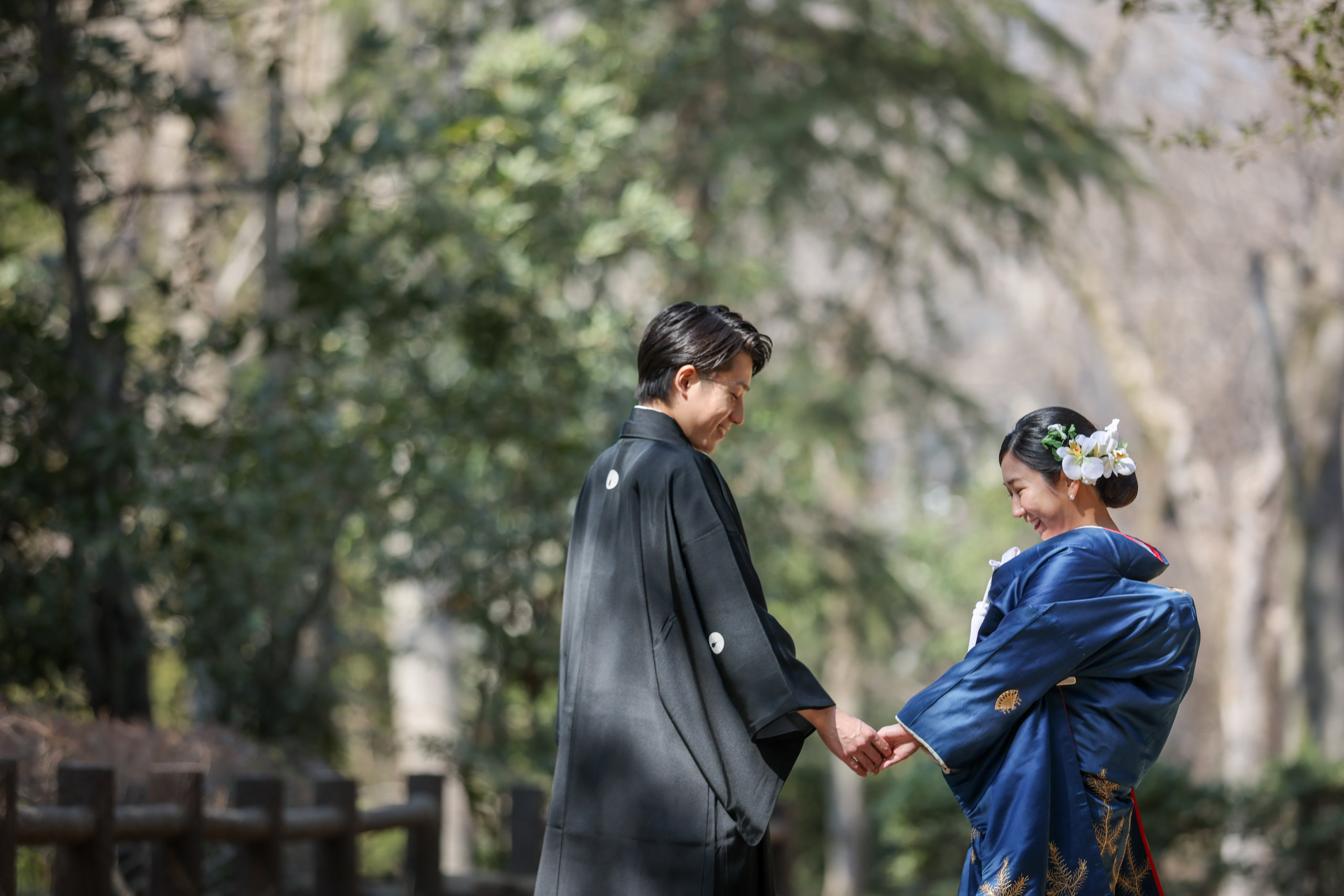
The park’s hilly terrain sets it apart from the flat, pond-centered gardens that characterize most traditional Japanese garden locations. Walking through Arisugawa means ascending and descending — which means the body moves naturally, and natural movement produces natural photographs. The sloping stone paths, the way the trees open and close around you as you walk, the sudden appearance of the stone bridge over a curve in the path — all of this creates a sense of discovery and progression that static garden settings cannot replicate.
Why This Park Creates Exceptional Wedding Photography
The qualities that make Arisugawa Memorial Park exceptional for kimono wedding photography are specific — and different from what makes the classical Japanese gardens exceptional.
🌿 Five Reasons This Park Produces Exceptional Photographs
① Dappled light — the most flattering natural light for kimono photography
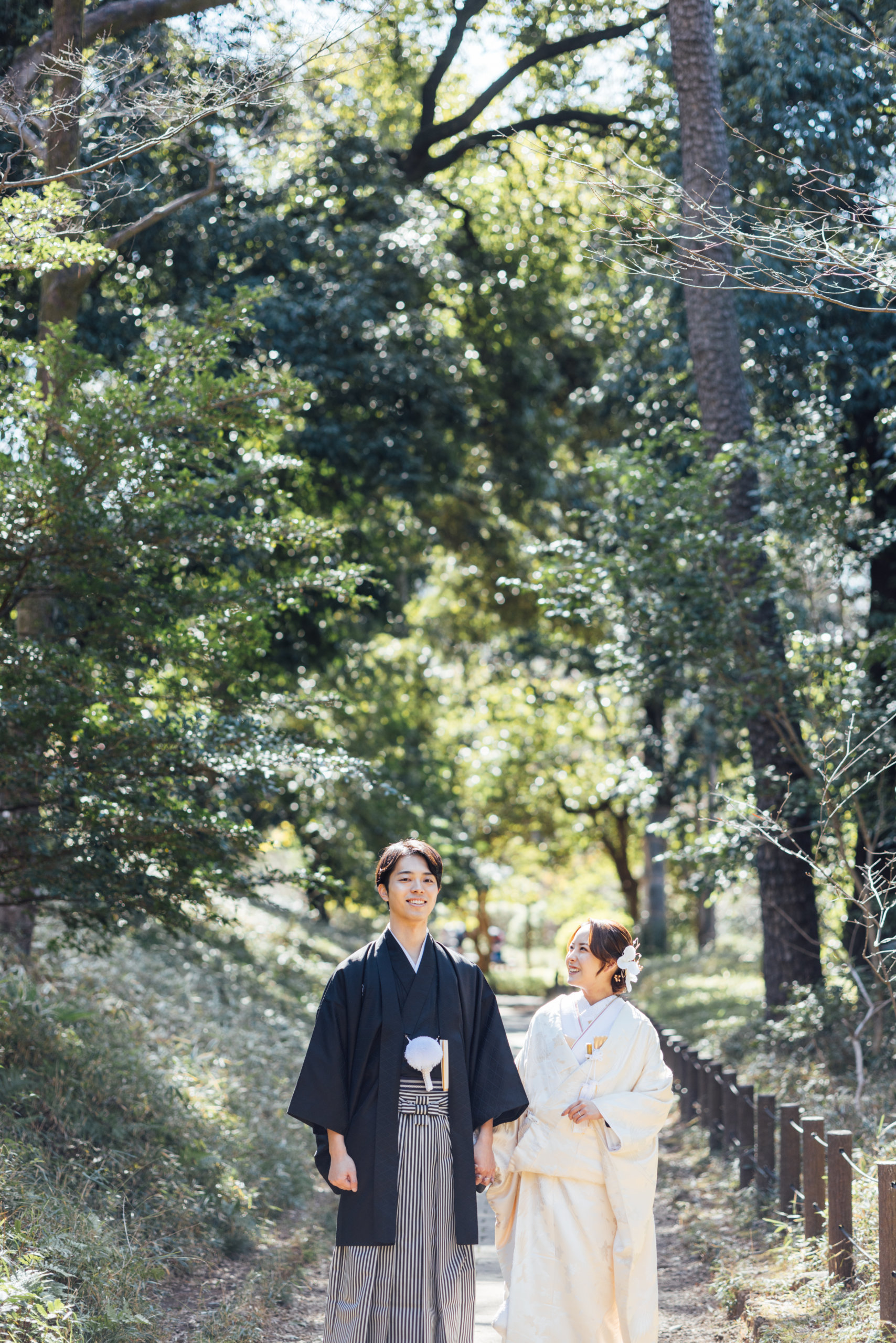
The old trees of Arisugawa filter direct sunlight into dappled patterns that shift constantly with wind and cloud. This quality of light — diffused, directional, constantly changing — is among the most flattering for both fabric and skin. It catches the sheen of silk without creating harsh shadows; it illuminates faces without flattening them. The park’s canopy provides this light condition across almost every shooting location within its boundaries.
② Hillside terrain that creates natural movement and depth
Flat gardens produce photographs with a certain static quality. Arisugawa’s slopes, stone steps, and varied elevation create natural reasons for the body to move — to ascend, to pause, to turn and look back. This movement is photographically valuable: it introduces direction, energy, and a sense of narrative into images that might otherwise feel posed. Walking up a stone path in a kimono, with the forest opening ahead, produces a completely different kind of image than standing still in a garden.
③ The stone arch bridge — a photogenic landmark unlike any other in the area
The park’s large stone arch bridge is an architectural element of real visual distinction. Its curved form, substantial scale, and placement within the wooded setting produce photographs that feel neither purely Japanese nor purely Western — which is, for a location in central Tokyo, entirely appropriate. The bridge provides something every photographer needs: a clear, compelling focal point with multiple angles and approaches that each produce different results.
④ Rich and diverse seasonal change
Cherry blossoms in spring. Fresh vivid green in early summer. Deep forest shade in midsummer. Autumn foliage from October through November. Each season transforms the park so completely that photographs taken in different seasons at the same locations look like they were taken in different places. The park is worth visiting in any season — and worth visiting more than once.
⑤ Genuine tranquility and clean backgrounds
Because Arisugawa is not a famous tourist destination, it sees relatively few visitors — particularly on weekday mornings, when the park can feel genuinely private. This matters for photography: clean backgrounds without strangers, the ability to take time at each spot without feeling rushed, and the psychological freedom of moving through a beautiful space without an audience.
Shooting Spot Guide
Here is a closer look at the key photography locations within the park, and what each one produces photographically.
🍀 ① Dappled Woodland Paths
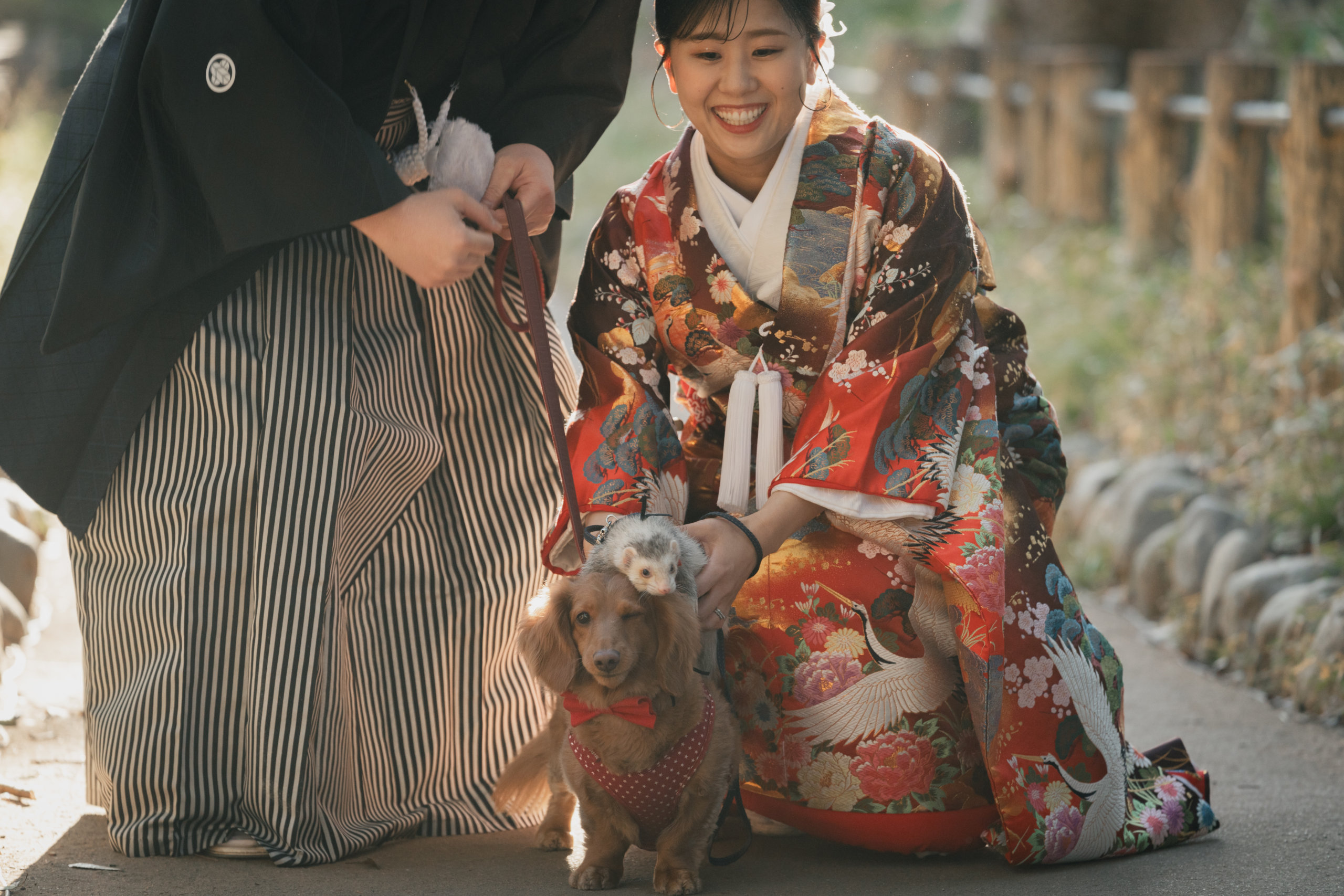
The park’s winding paths beneath the old-growth tree canopy are its most consistently photogenic feature. Walking slowly along these paths — hand in hand, occasionally pausing, occasionally turning to look at each other — produces photographs of a candid, natural warmth that directed poses cannot achieve. The dappled light shifts as the couple moves through it, creating frames that feel found rather than constructed. Our photographers consider these paths the heart of what makes this location special.
🍀 ② The Stone Arch Bridge
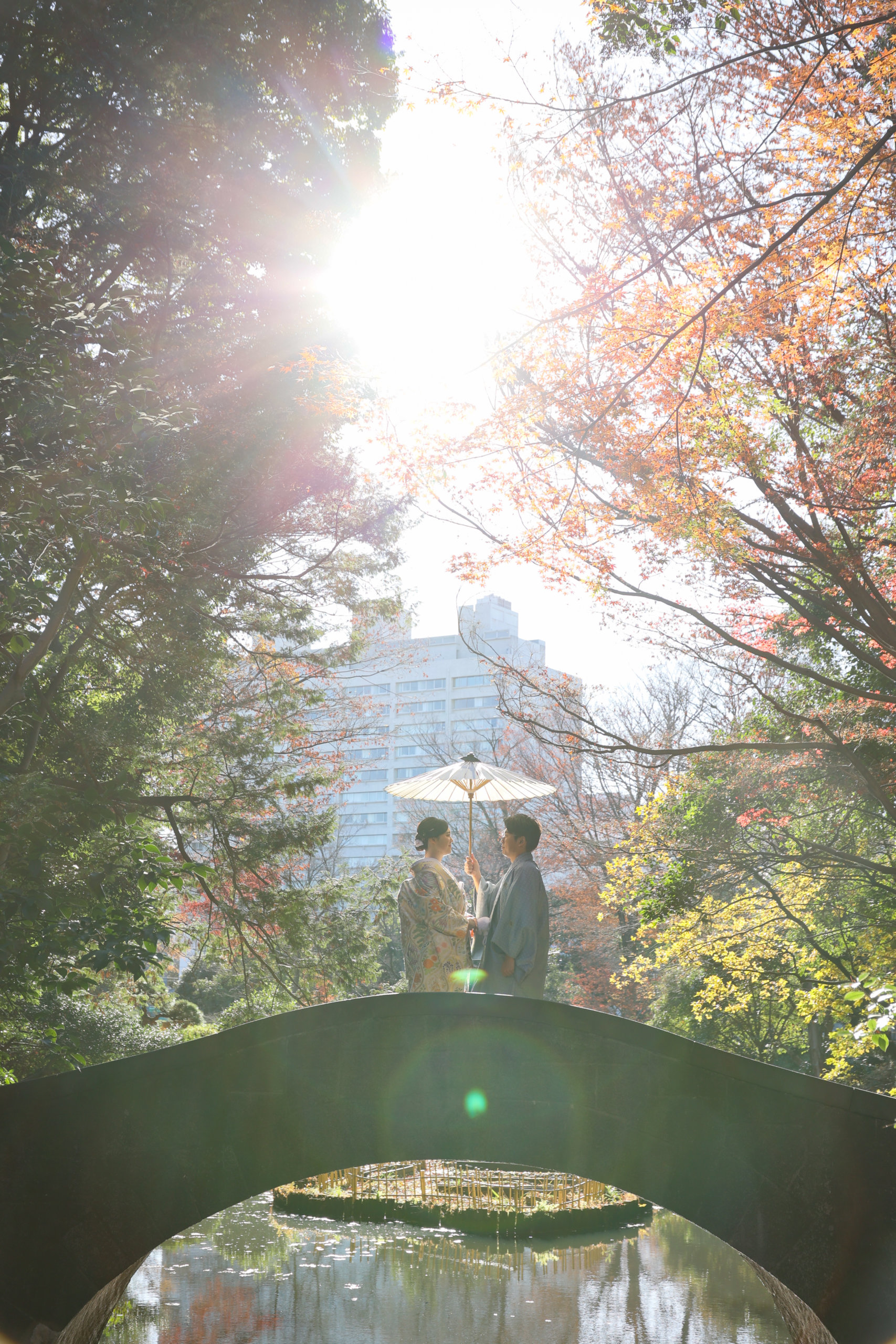
The large stone arch bridge is the park’s most architecturally distinctive element, and the most versatile shooting spot. Shot from the front, it frames the couple within its arch. Shot from the side, its curved form creates a strong compositional line leading through the image. Shot from below, the arch becomes a ceiling above the couple, with the forest visible through it. Each approach produces an entirely different photograph — and all three are worth attempting.
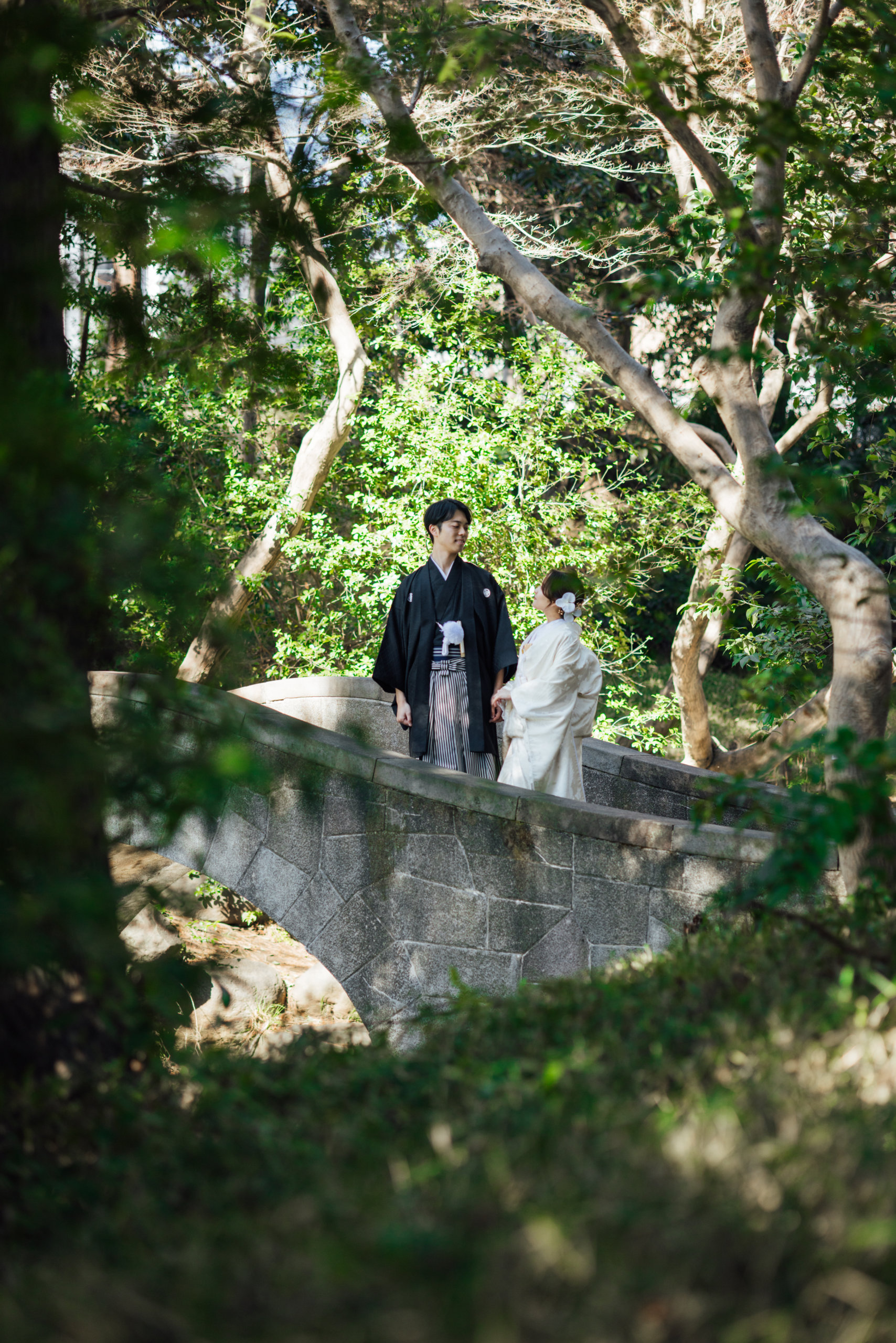
🍀 ③ The Small Wooden Footbridge
Where the stone arch bridge is grand and architectural, the small wooden footbridge over the stream is intimate and warm. The human scale of the structure brings couples naturally close together; the sound of the water below provides an ambient stillness that settles the body. Photographs from this spot tend toward quietness — two people close together in a small, sheltered space in a wood. A useful emotional counterpoint to the more monumental shots available elsewhere in the park.
🍀 ④ Seasonal Plantings & Garden Areas
Distributed throughout the park are areas where seasonal plantings concentrate: cherry trees near certain paths in spring, maples that turn brilliant red and orange in autumn, areas of particularly vivid green in early summer. These seasonal concentrations are worth planning around — they transform already-beautiful spots into something extraordinary for a few weeks each year.
🍀 View Our Kimono Location Photography Plan
Browse our outdoor kimono plan — including what’s included, pricing, and the stunning Tokyo locations available.
Cherry Blossom & Autumn Foliage Season
Two seasons at Arisugawa Memorial Park stand apart from the others — not because the park is less beautiful at other times, but because these seasons transform it into something that has to be seen to be believed.
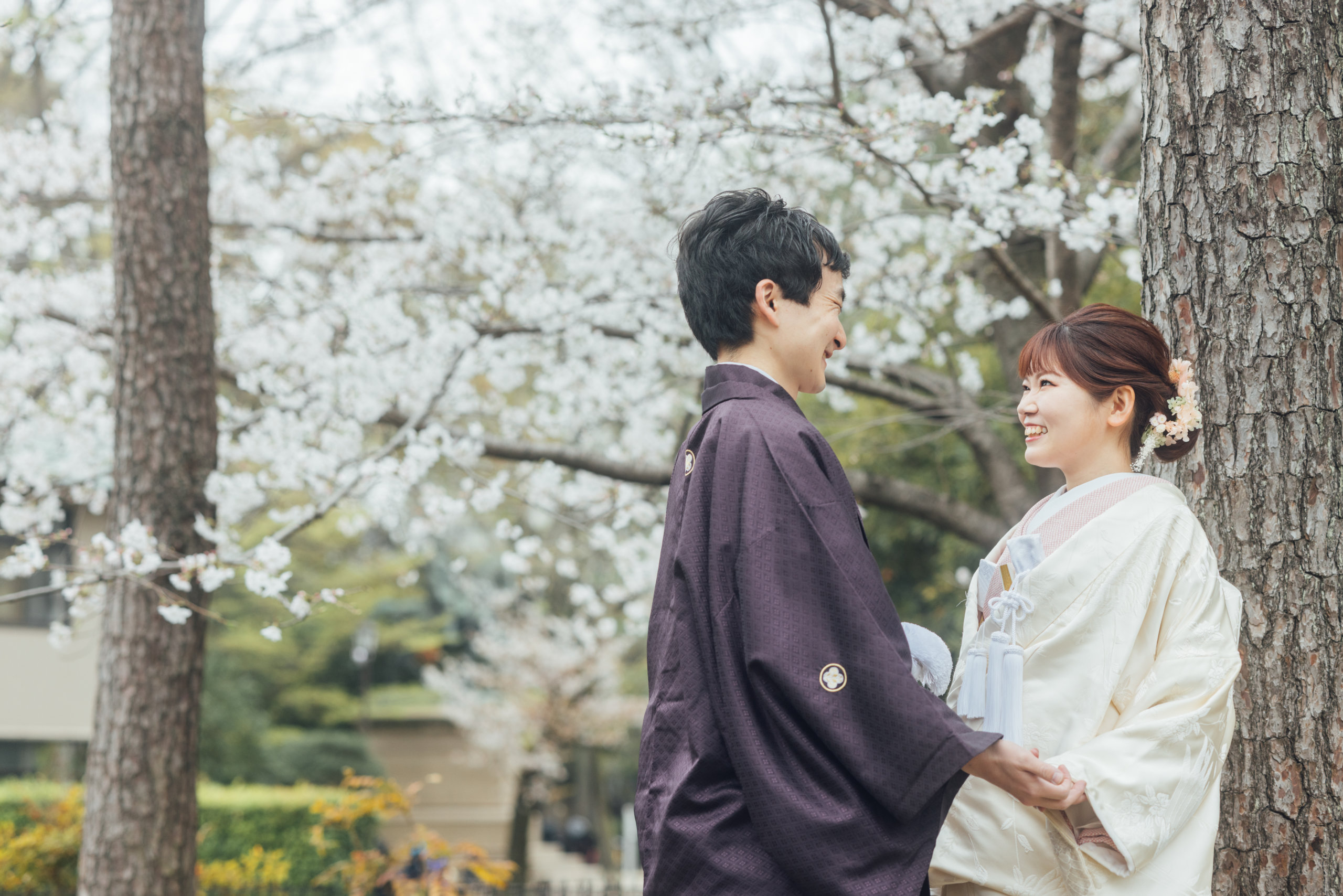
Cherry blossom season (typically late March to mid-April) brings a complete transformation to the woodland paths. The canopy that normally filters green light becomes a canopy of white and pale pink, with petals drifting across the paths and collecting in the hollows of the stone bridge. Walking in full kimono through a woodland path of falling cherry petals is an experience that exists only in Japan — and photographs of that experience carry a quality of fleeting beauty that no other seasonal backdrop can replicate.
The timing of cherry blossoms varies by one to two weeks between years depending on temperature. Our team monitors park conditions in the lead-up to each session and proactively suggests minor schedule adjustments where peak timing can be better aligned. For couples planning to visit Japan in spring and wanting cherry blossom photographs, we strongly recommend booking as early as possible to maximize scheduling flexibility.
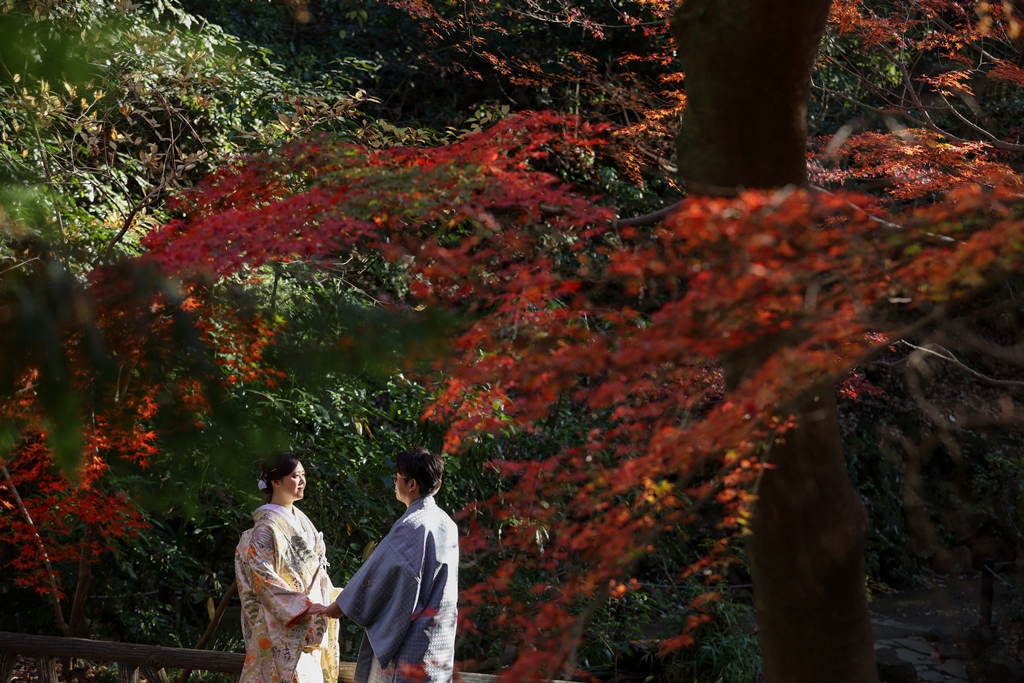
Autumn foliage season (October through November) brings the park’s deciduous trees to their most dramatic. The stone arch bridge surrounded by maples in red, gold, and orange is among the most visually compelling combinations available in Tokyo for kimono photography. The bridge’s grey stone against the warm-toned foliage creates a powerful color contrast, and a vermilion or gold iro-uchikake worn in front of it harmonizes with the autumn palette in a way that feels designed rather than accidental.
💡 From Our Photographers: Both cherry blossom and autumn foliage sessions at this park reward early morning scheduling. Visitor numbers are low, light is at its softest, and the seasonal displays — particularly the cherry blossom petals before they’ve been disturbed by foot traffic — are at their most pristine. If you’re visiting Japan during either of these seasons and want to shoot at Arisugawa, we recommend planning around an early morning start time.
Which Kimono Works Best Here?
Arisugawa Memorial Park’s natural environment — green canopy, grey stone, brown earth paths, seasonal color — creates clear guidance for kimono selection.
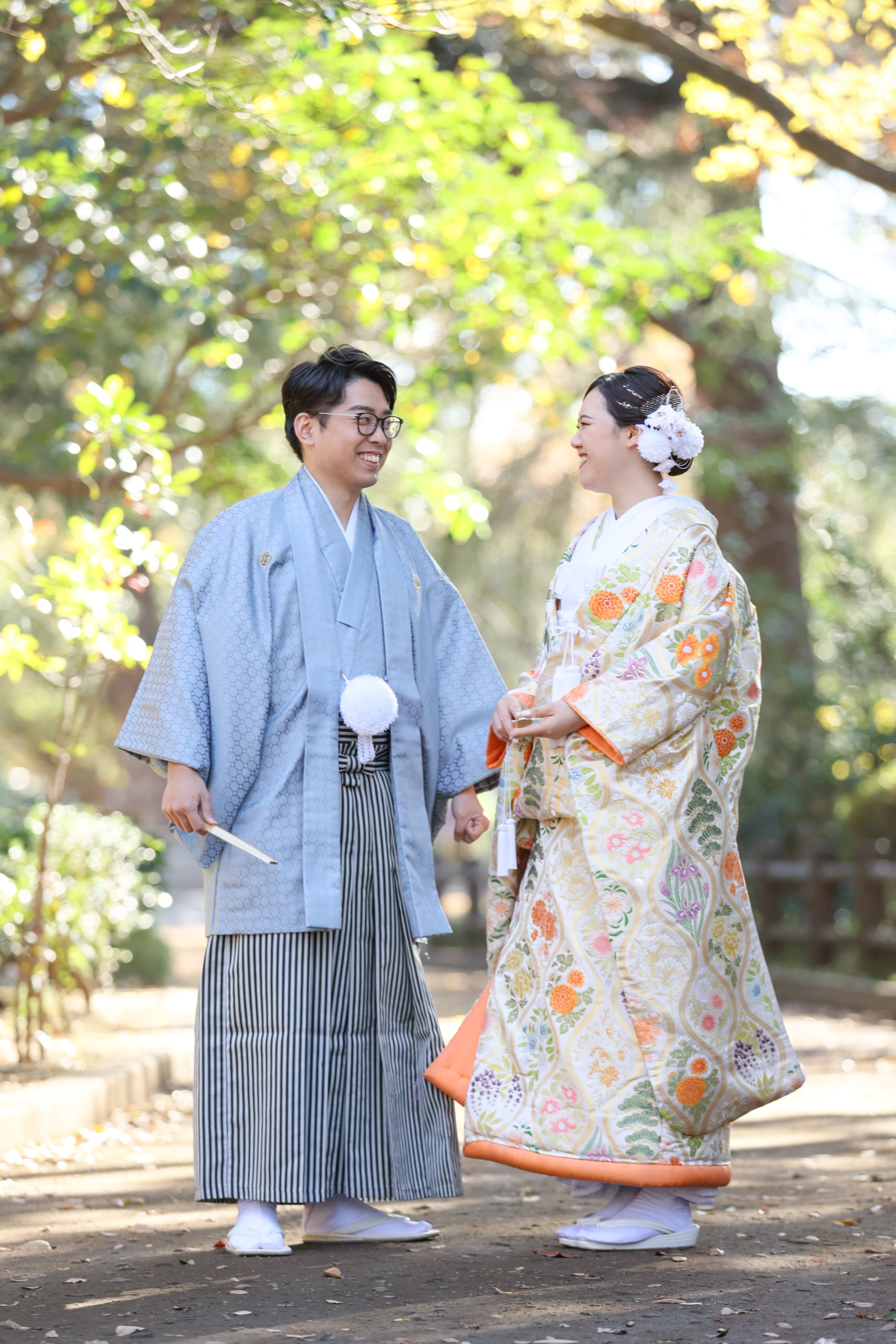
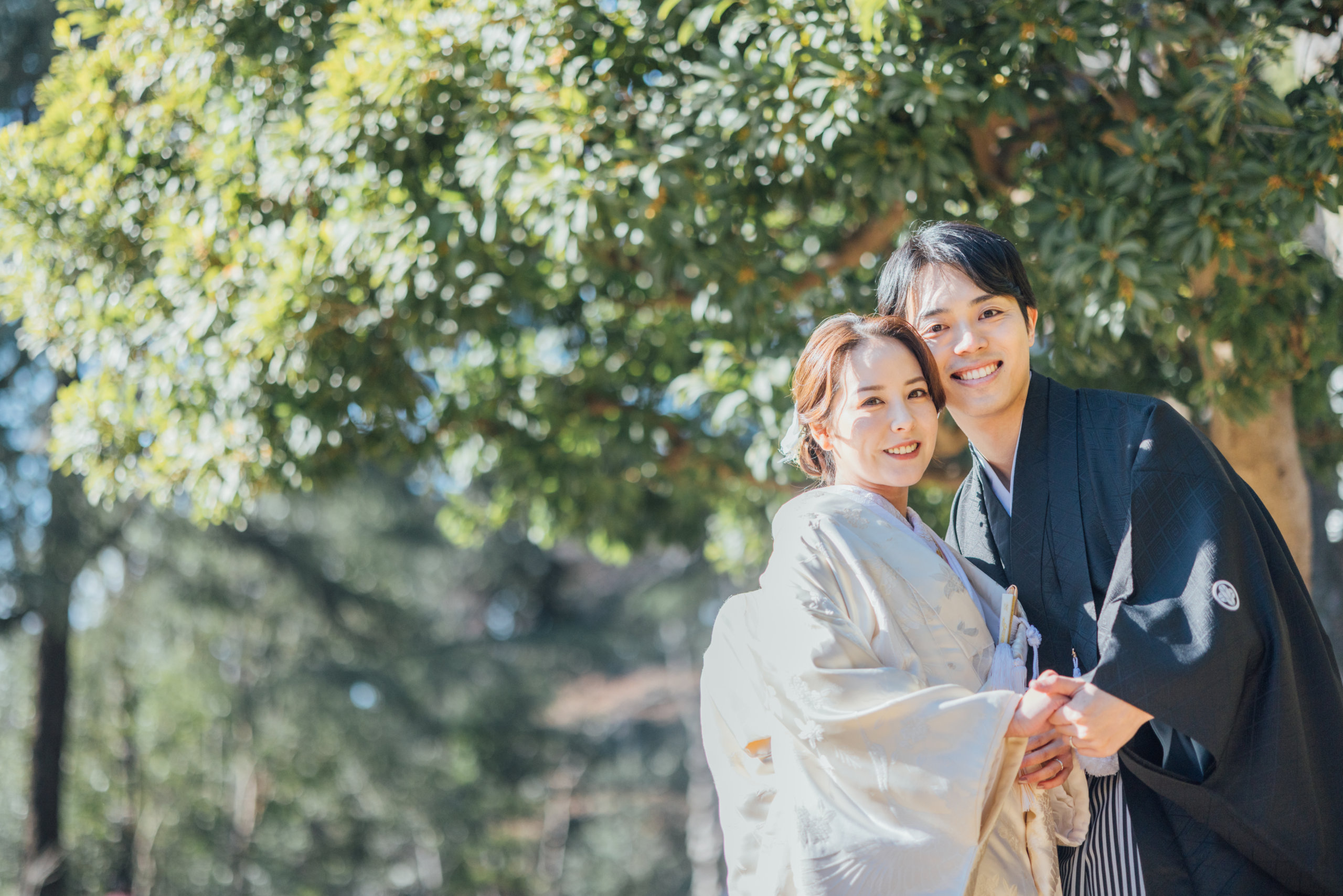
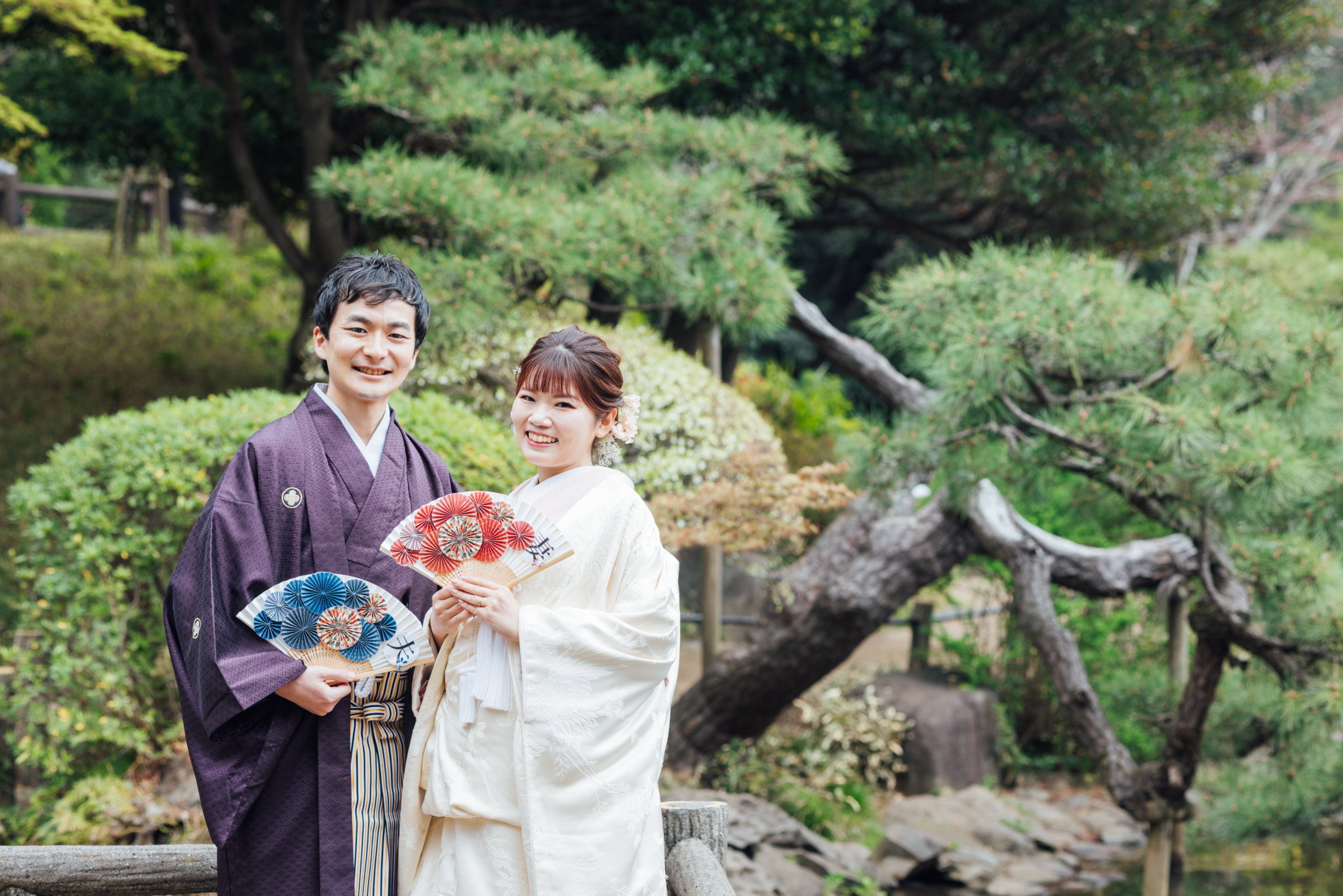
Shiromuku (white kimono) creates one of the most striking visual statements available at this park. Against the deep green of the summer canopy, pure white is immediately and powerfully present — a clean, luminous form against an enveloping natural backdrop. Against the cherry blossoms, white harmonizes with the pale pink and white of the flowers. Against autumn foliage, white provides a cool counterpoint to the warmth of the seasonal color. In every season, white kimono at Arisugawa produces images of distinctive visual clarity.
Vermilion, gold, and warm-toned iro-uchikake are perhaps the strongest choice for autumn foliage sessions, where the kimono’s warm tones and the maple leaves’ warm tones create a unified palette of great richness. In summer, the same tones create a bold complementary contrast against the green canopy. At the stone arch bridge, vermilion against grey stone is a visually powerful combination that produces images of considerable impact.
Pale blue, lavender, and soft-toned iro-uchikake work particularly well in spring and early summer, where their cool tones harmonize with the green of the woodland without competing with it. Under cherry blossoms, pale pink tones create a unified seasonal composition. Along the dappled paths in fresh green season, cool soft tones have a quality of quiet, flowing elegance that suits the environment perfectly.
🍀 Kimono by Season — Quick Guide
- Spring (cherry blossoms): White shiromuku or pale pink-toned kimono — harmonizes with the seasonal blossoms beautifully
- Early summer (fresh green): White for contrast; pale blue or lavender for harmony — both work exceptionally well
- Autumn (foliage): Vermilion, gold, and warm tones — harmonizes with the seasonal palette for maximum visual richness
- Winter: White for luminosity against bare branches; deep tones for striking contrast
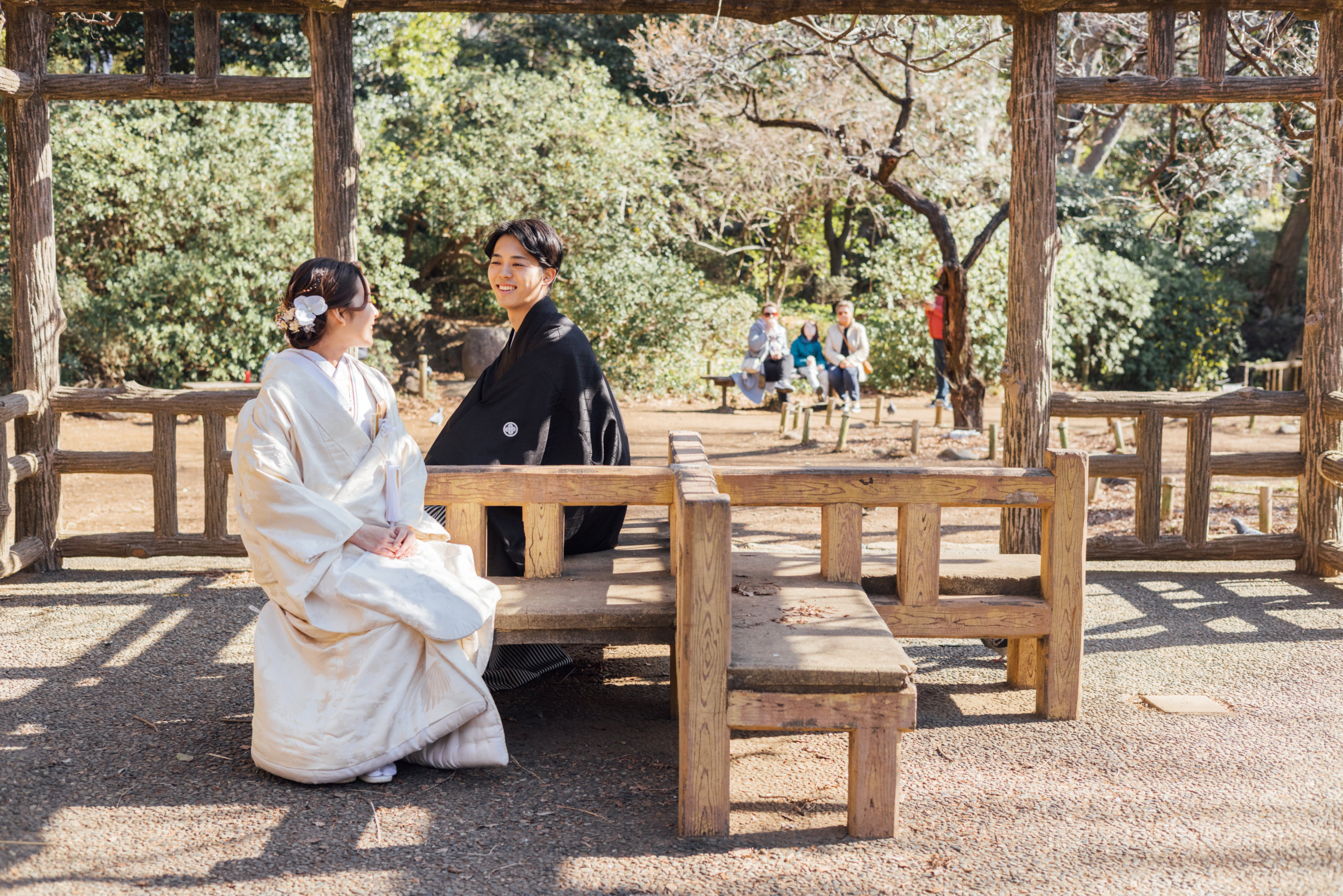
📷 See Real Photos from Arisugawa Memorial Park
Browse photographs and reviews from couples who have experienced this park firsthand.
From Our Photographers — What Makes This Park Unique
Our photographers have worked at Arisugawa Memorial Park across multiple seasons and with many different couples. Here is what they consistently notice about shooting here.
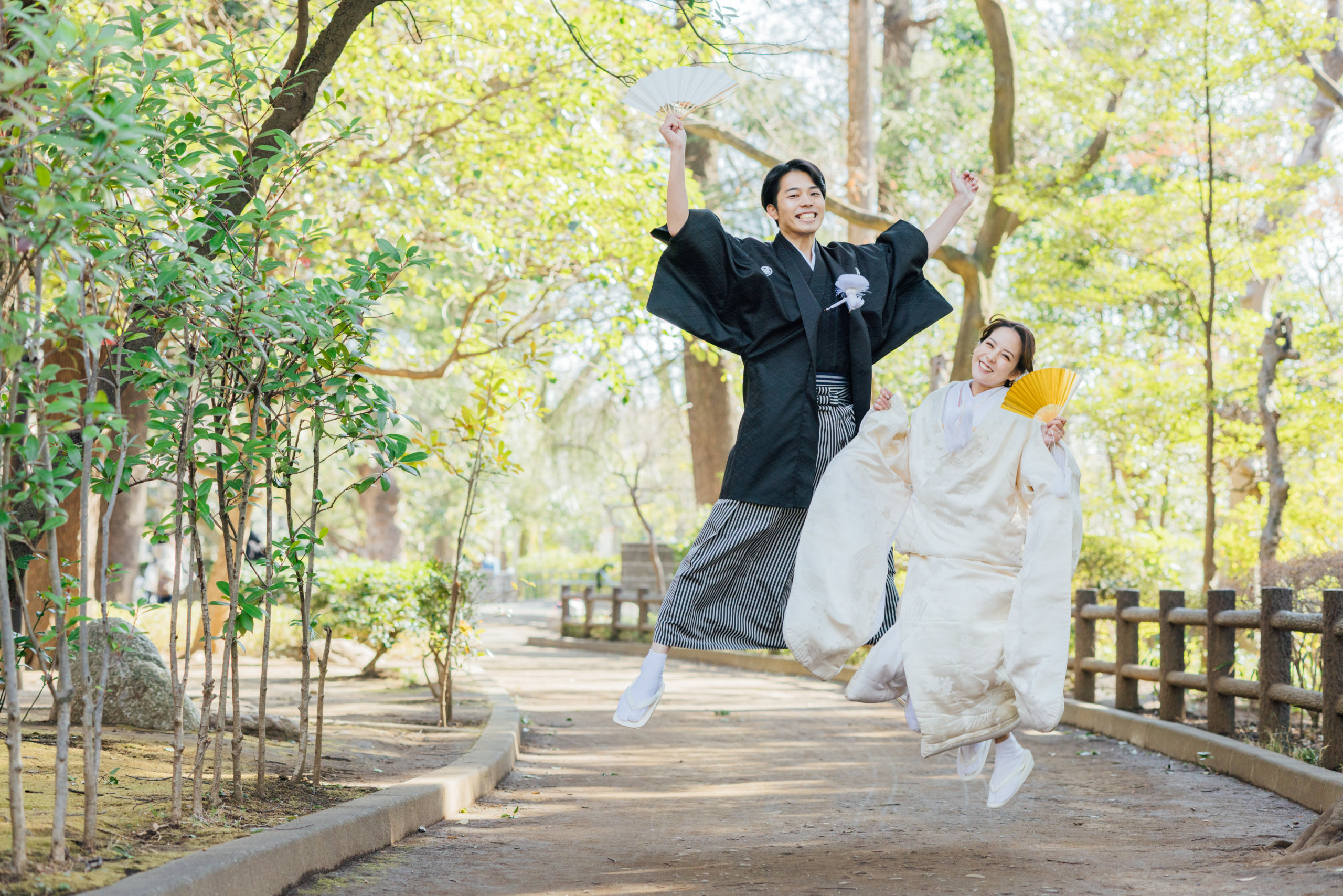
The park relaxes people
In formal Japanese garden settings, the environment’s aesthetic gravity sometimes makes couples feel that they should look a certain way — composed, dignified, arranged. Arisugawa has no such pressure. It is a woodland. People walk through it naturally. They look at things with curiosity. They speak to each other without thinking about how they appear. Our photographers find that the most natural expressions of any session often emerge at this park, precisely because there’s nothing about it that demands performance.
The light requires reading
Dappled light is beautiful but variable. It shifts with wind and cloud, with the time of day and the season. Our photographers spend the first minutes of every session at this park assessing the light — where it’s falling, how strong it is, what angle it’s coming from — before deciding where to position the couple. When the light is right and the couple moves into it at the right moment, the photograph that results is genuinely exceptional. This is the core skill that separates experienced photographers at this location from those encountering it for the first time.
Movement is photography here
At most locations, the camera stops when the couple is between positions. At Arisugawa, we keep shooting throughout. The act of walking along a hillside path in full kimono, ascending stone steps, crossing the small bridge — these transitional moments produce images that feel more alive, more real, than posed portraits. Couples who might be self-conscious about posing often find their best images from this park come from the moments when they thought nothing was being captured.
The stone bridge rewards multiple approaches
We always shoot the stone arch bridge from at least three angles — front, side, and from below — because each produces a completely different image. The front view is formal and composed. The side view uses the curve of the arch as a leading line. The view from below makes the arch into a natural frame above the couple, with the forest visible beyond. All three are worth doing, and together they account for some of the session’s most architecturally striking images.
About Wedding Avenue Tokyo Station Studio
Wedding Avenue Tokyo Station Studio is located a 10-minute walk from Tokyo Station’s Yaesu Exit. All hair, makeup, and kimono dressing takes place at our studio before traveling to the park with our team. English-language support is available throughout the planning and shooting process.
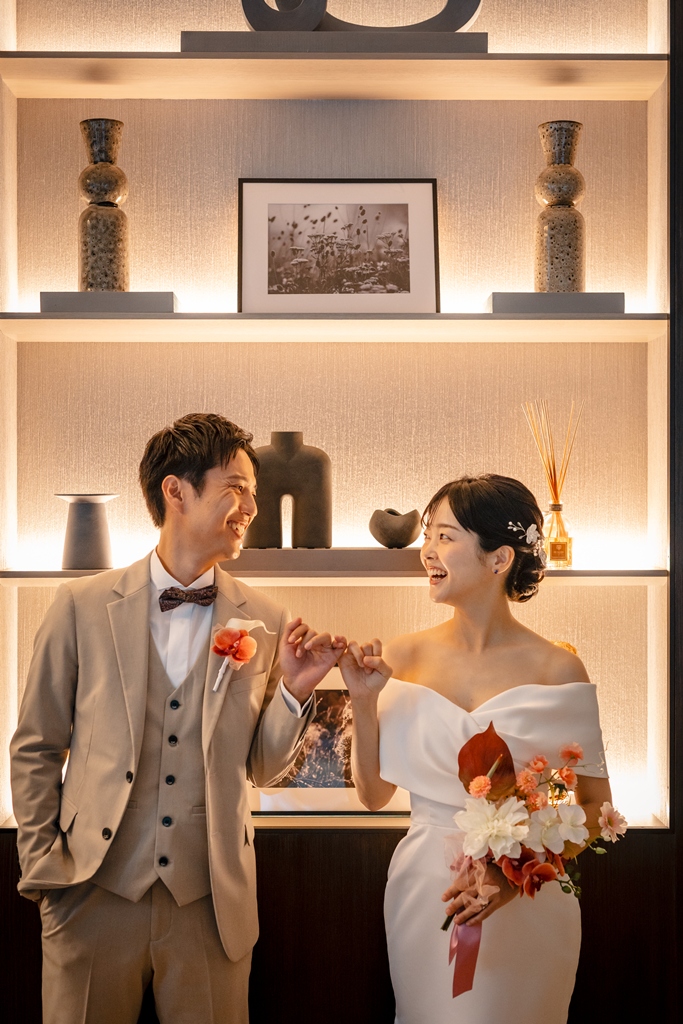
Our standard location photography packages include 200 high-resolution digital images (currently with a 100-image bonus under our active campaign). Date changes for weather are always free. For cherry blossom and autumn foliage season sessions, we monitor park conditions and proactively suggest schedule adjustments where improved timing is possible.
📋 Summary
- Arisugawa Memorial Park is a forested hillside garden in central Tokyo — natural, unhurried, and almost entirely unknown to tourists
- Dappled woodland paths, a stone arch bridge, and a small wooden footbridge over a stream provide diverse photographic environments within a compact, walkable space
- The park’s terrain creates natural movement — which produces natural photographs. Transitional moments between spots often yield the session’s strongest images
- Cherry blossom (late March–April) and autumn foliage (October–November) are spectacular — both reward early morning scheduling and early booking
- White shiromuku creates striking contrast against the green canopy year-round; vermilion and warm-toned iro-uchikake are ideal for autumn foliage
- Wedding Avenue handles everything from kimono dressing to final image delivery, with English support throughout
WEDDING AVENUE TOKYO STATION STUDIO
Dappled light. Stone bridge. Seasons.
A forest in the heart of Tokyo.
Questions about Arisugawa Memorial Park, kimono selection,
seasonal timing, or planning your Tokyo visit?
Free consultations available every day — in English.
📍 1-2-8 Hacchobori, Chuo-ku, Tokyo / 10 min walk from Tokyo Station Yaesu Exit