


Tokyo National Museum Wedding Photos | Elegant Japan Pre-Wedding Location
What Is Tokyo National Museum?
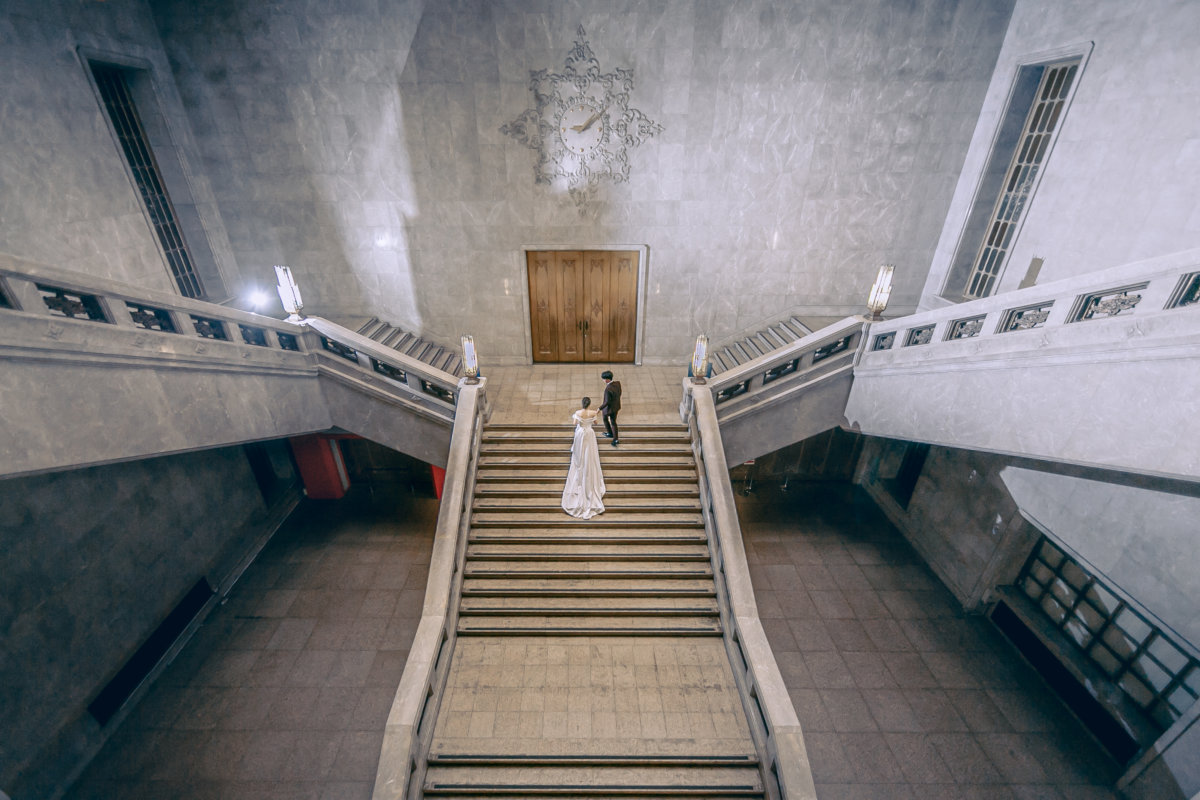
In Ueno Park, at the northern end of Tokyo’s great cultural corridor, stands the Tokyo National Museum — the oldest and largest museum in Japan, housing the world’s largest collection of Japanese art. Its Main Hall, built in 1938 in a style that blends Imperial Japanese architecture with Modernist influence, contains one of the most remarkable interior environments available for wedding photography anywhere in the country.
From the outside, the building’s imposing stone facade and broad ceremonial approach suggest formality and scale. Inside, the experience shifts entirely: marble staircases sweep upward with classical grandeur; stained glass windows pour colored light across stone floors; heavy wooden doors carry the patina of nearly a century of use; classical light fixtures cast warm, layered illumination across an interior that feels — to almost every couple who enters it for the first time — less like a museum and more like a palace.
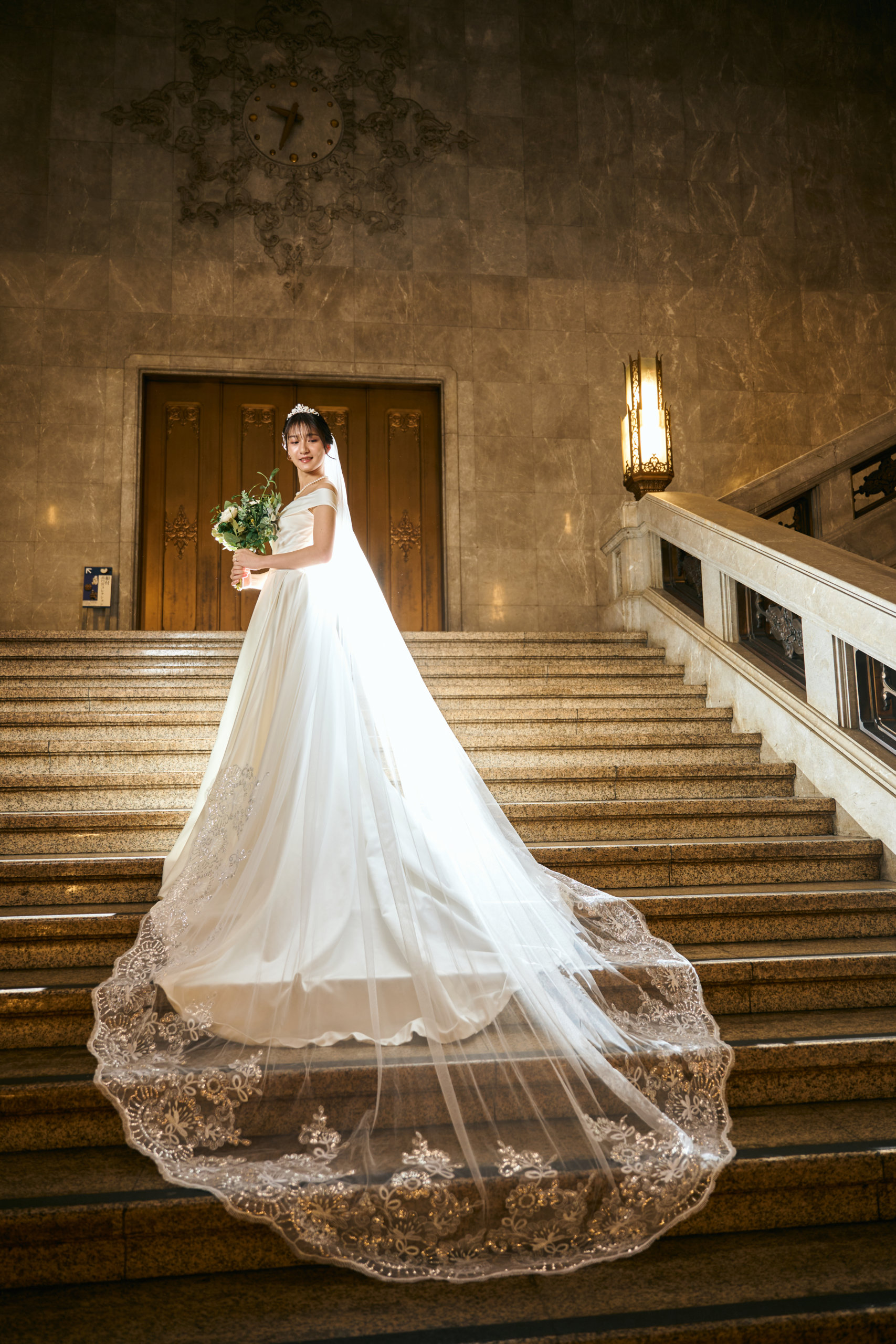
For international couples seeking wedding photography that combines genuine historical grandeur with the particular beauty of Japan — and who want images that feel categorically different from anything available at a studio or conventional outdoor location — the Tokyo National Museum is in a class of its own.
Photography permissions are included in our plan pricing. All coordination with the museum is handled by our team, so couples can focus entirely on the experience of being in this remarkable space.
Why This Location Creates Exceptional Wedding Photography
The qualities that make Tokyo National Museum extraordinary for wedding photography are specific and worth understanding before you visit.
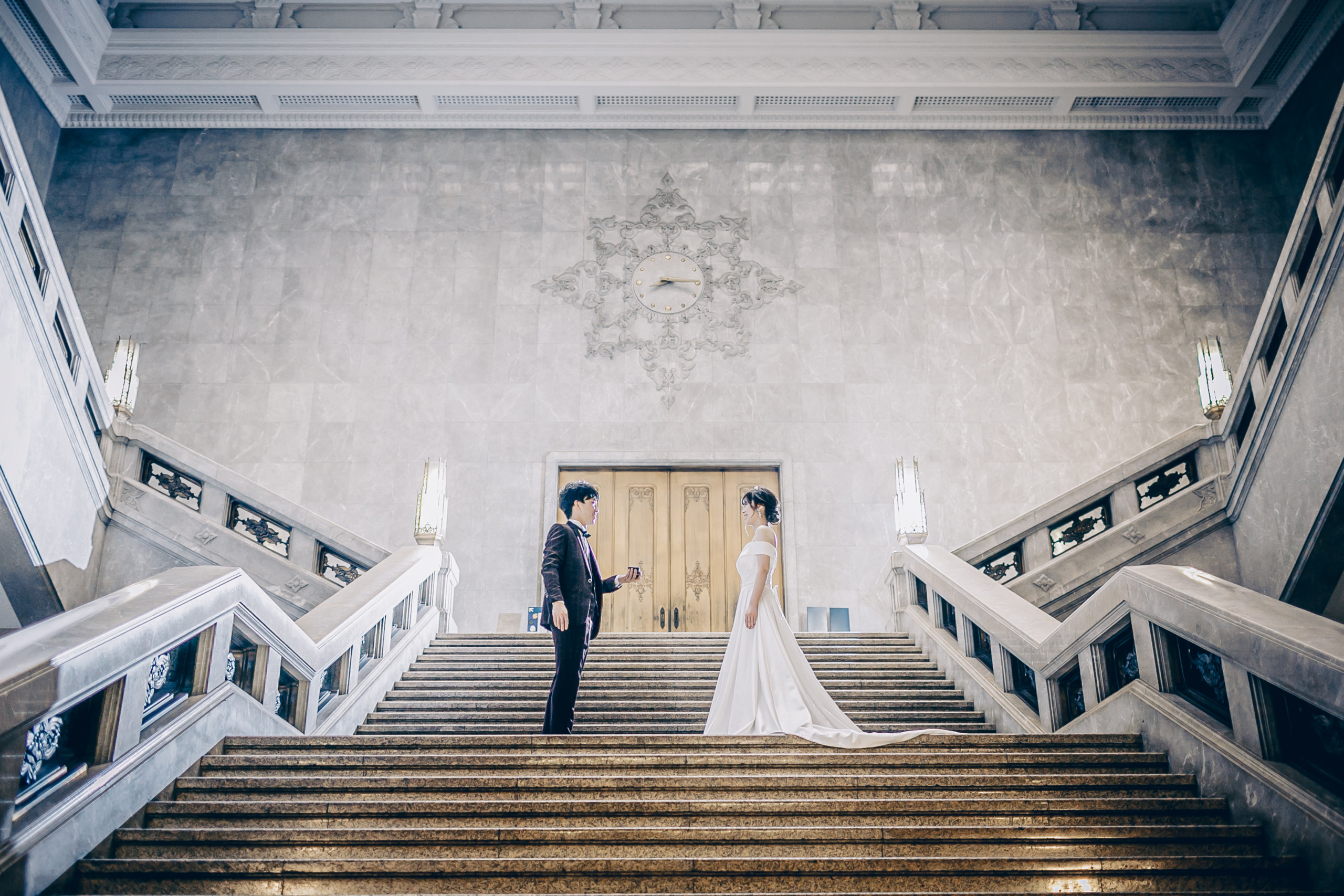
✨ Five Reasons This Location Produces Extraordinary Photographs
① The interior itself is the set
At most wedding photography locations, the environment provides a backdrop. At Tokyo National Museum, the environment is the subject. The marble floors, the soaring staircase, the colored glass, the aged wood — every surface has character, texture, and visual interest that no artificial set can replicate. There is literally nowhere to point a camera inside this building that doesn’t produce a compelling image.
② Multiple distinct light environments within a single building
The stained glass produces colored light that changes with the time of day and weather. The skylights bring in soft natural illumination. The classical fixtures create warm, layered pools of artificial light. Each shooting spot has its own light quality — which means each produces photographs with a different character, mood, and aesthetic, even when the dress and the couple remain the same.
③ Weather-independent shooting
Because the primary shooting environment is indoors, rain has virtually no effect on the session. The interior shots — which typically form the majority of the album — proceed regardless of conditions outside. This makes Tokyo National Museum one of the most reliable locations in Tokyo for couples visiting during unpredictable seasons.
④ The experience of being in the space
Many couples describe their first moments inside the Main Hall as unexpectedly moving — a feeling of entering somewhere that is simultaneously foreign and deeply Japanese. That feeling registers in photographs in a way that’s hard to define but immediately apparent when you see the images. It’s the difference between posing in front of a backdrop and actually being somewhere extraordinary.
⑤ Interior and exterior — two completely different worlds in one session
The classical grandeur of the interior and the imposing historical architecture of the exterior provide two entirely different photographic environments within the same location. A single session here produces images of dramatically varied character — intimate and palatial indoors; monumental and open outside.
Interior Shooting Spot Guide
Here is a closer look at the key photography locations within the Main Hall, and what makes each one distinctive.
🏛️ ① The Grand Staircase — Front View
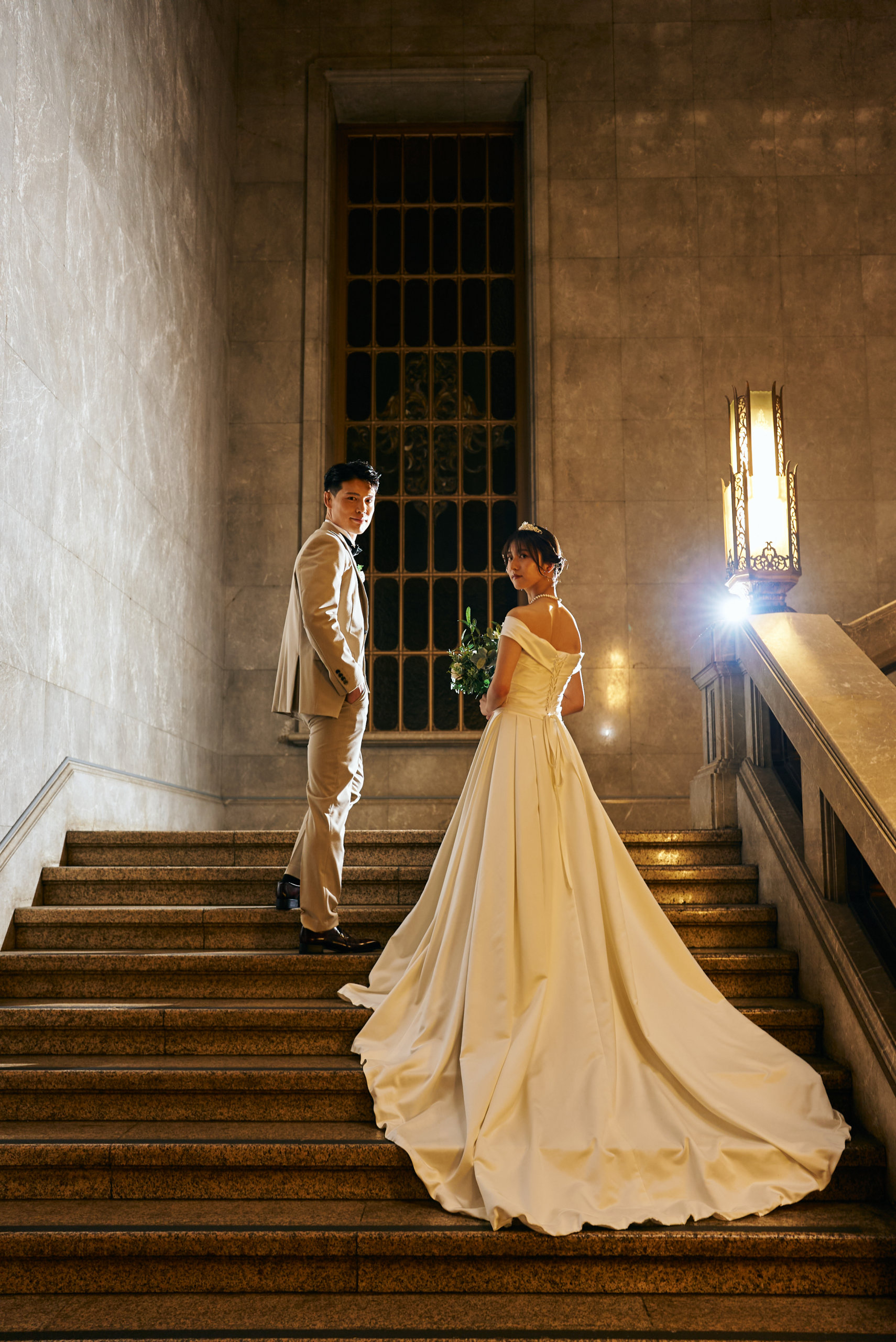
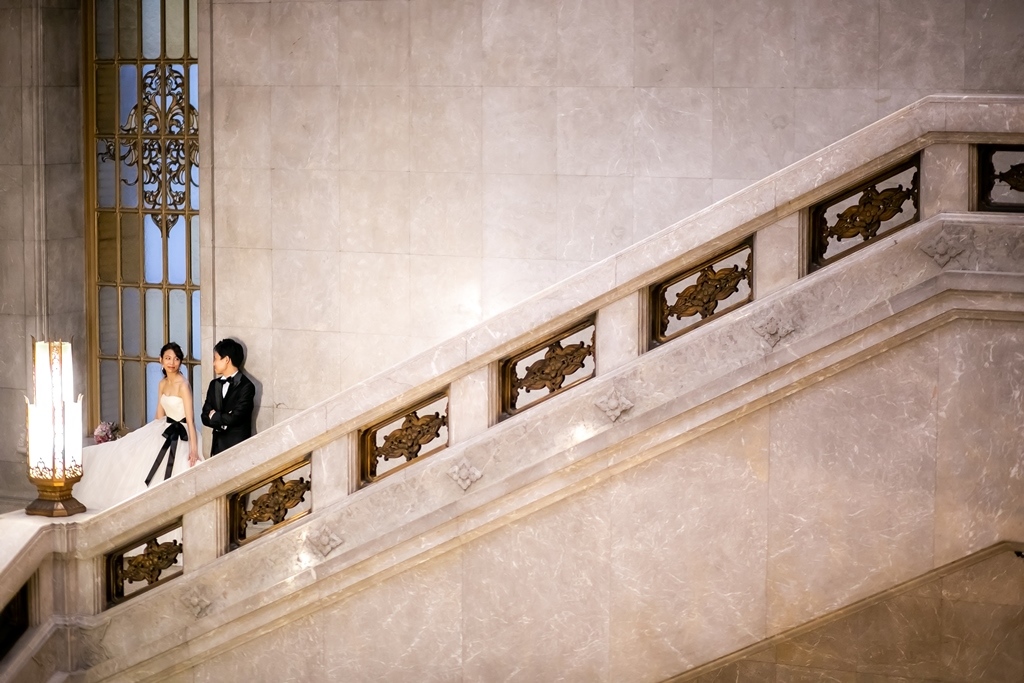
The symmetrical marble staircase, shot straight on, is the defining image of this location. The geometric precision of the architecture, the height of the ceiling above, the quality of stone underfoot — these elements combine to produce photographs of imposing formal grandeur. A trailing gown spread across the steps is the compositional signature of this spot: it’s been done many times, and it remains consistently spectacular because the environment genuinely justifies it. Standing at the top of the stairs looking down, or pausing mid-ascent to look back at the camera — every variation works.
🏛️ ② The Grand Staircase — Side View
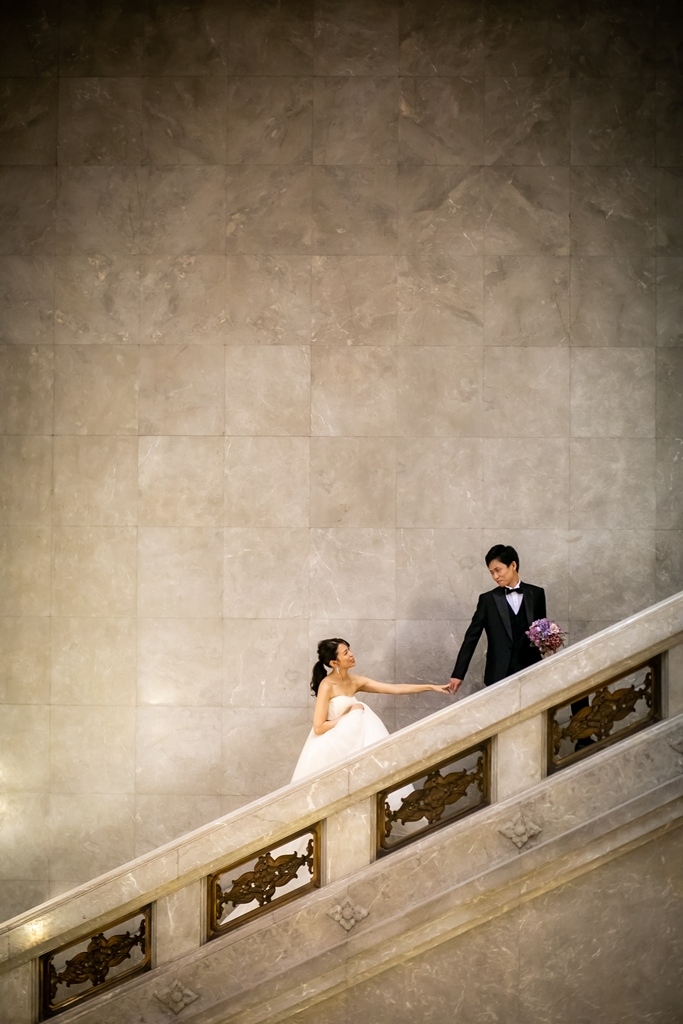
The side angle of the staircase produces an entirely different set of images: the receding lines of the steps create perspective and depth; the play of light across the angled surfaces introduces shadow and dimension; the profile view emphasizes the architecture’s verticality in a way that feels more intimate than the formal front view. Couples who might find the direct frontal shot slightly formal often prefer the side-angle images, which carry more movement and less ceremony.
🏛️ ③ The Stained Glass
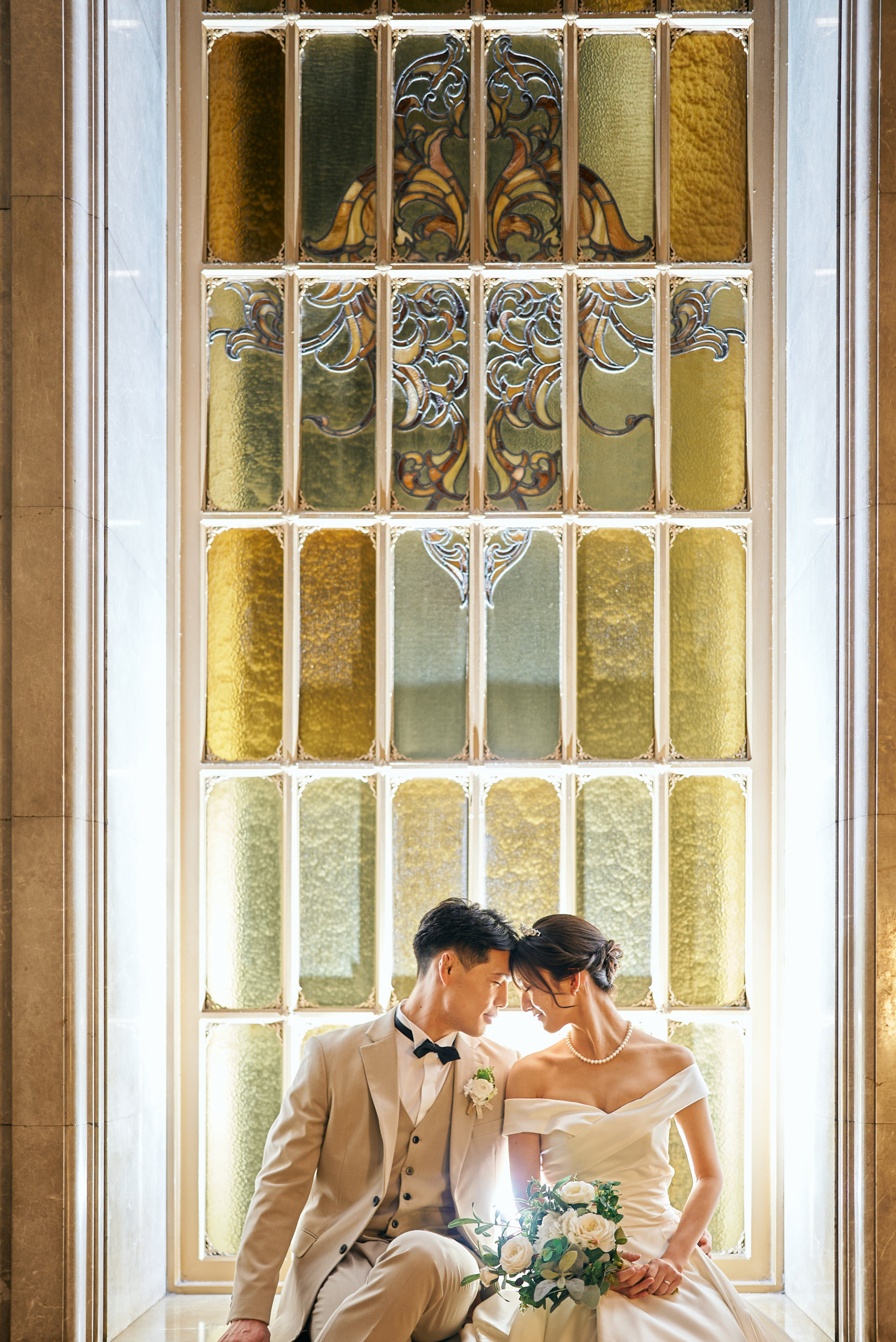
The stained glass is the most photogenically unique spot in the building. Colored light — shifting across the spectrum depending on time of day, weather, and season — pours through the glass and falls across stone floors and white fabric alike. A silhouette of a bride against backlit stained glass: this is the image that couples most consistently describe as their favorite from the entire session. It looks, to people seeing it for the first time, as though it must have been digitally enhanced. It hasn’t been. The light does that on its own.
🏛️ ④ The Heavy Wooden Doors
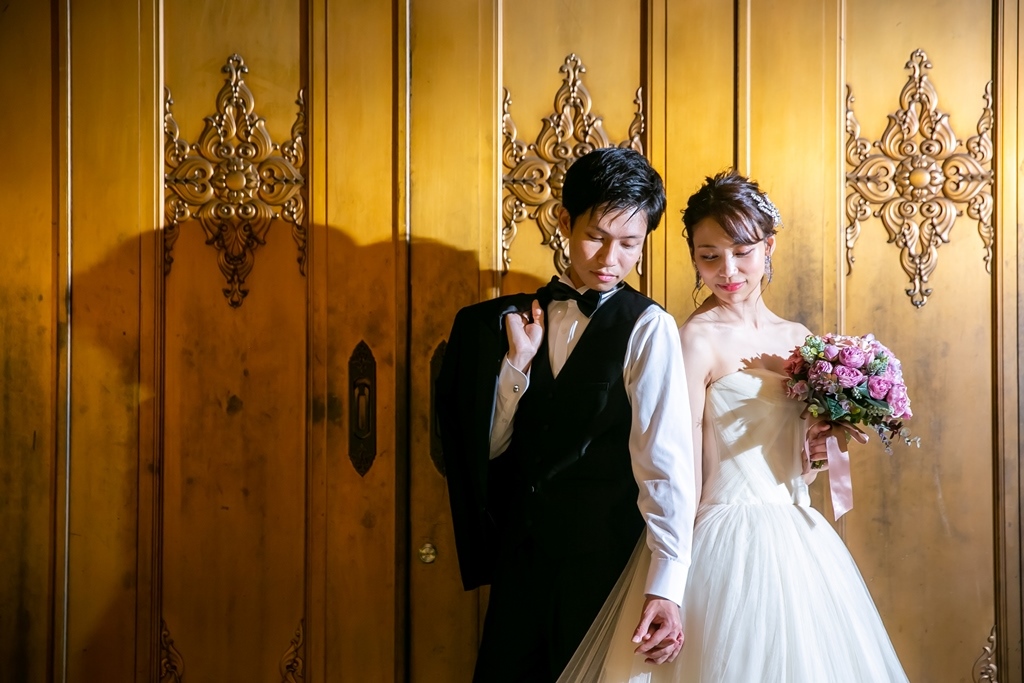
The building’s large wooden doors — dark, aged, richly textured — provide a backdrop of quiet historical weight. Standing beside or before them, the couple becomes part of a visual conversation between the contemporary (white dress, living people) and the antique (wood worn smooth by decades of use). Less dramatic than the staircase, less otherworldly than the stained glass, but producing images of a particular intimacy and depth that the grander spots cannot.
🏛️ ⑤ Classical Interior Details (Lighting, etc.)
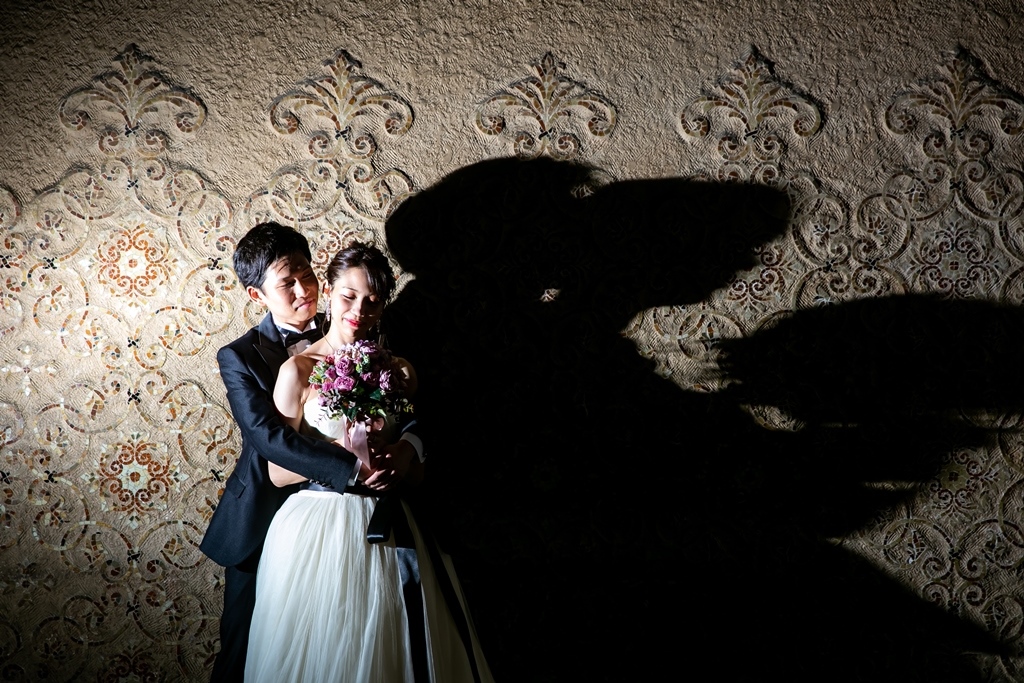
The building’s classical light fixtures and decorative interior details create environments where the architecture recedes slightly and the couple moves to the visual center. Without the overwhelming grandeur of the staircase or the drama of the stained glass, these spots produce portraits of natural warmth — two people in a beautiful old space, looking at each other, looking at the camera, looking at nothing in particular. Often the most natural expressions of the session happen here.
📷 View Our Location Photography Plan
Browse our wedding dress location plan — including what’s included, pricing, and the stunning Tokyo locations available.
The Exterior — Historic Architecture as Backdrop
After the interior session, stepping outside into the museum’s grounds provides an immediate and welcome contrast: open air, natural light, and the full sweep of the Main Hall’s imposing facade as a backdrop.
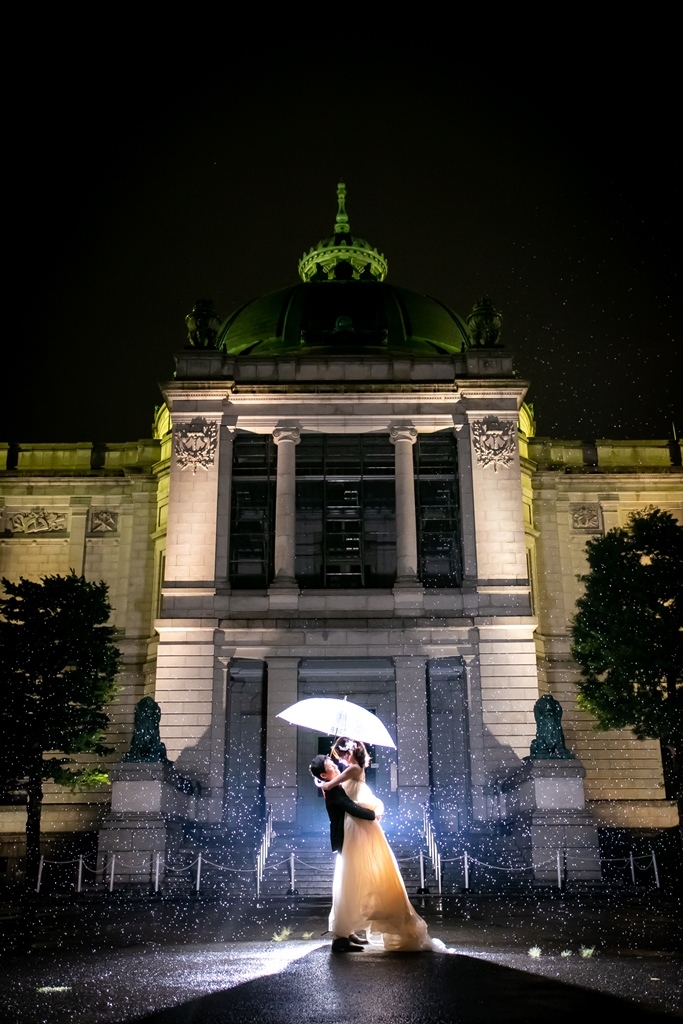
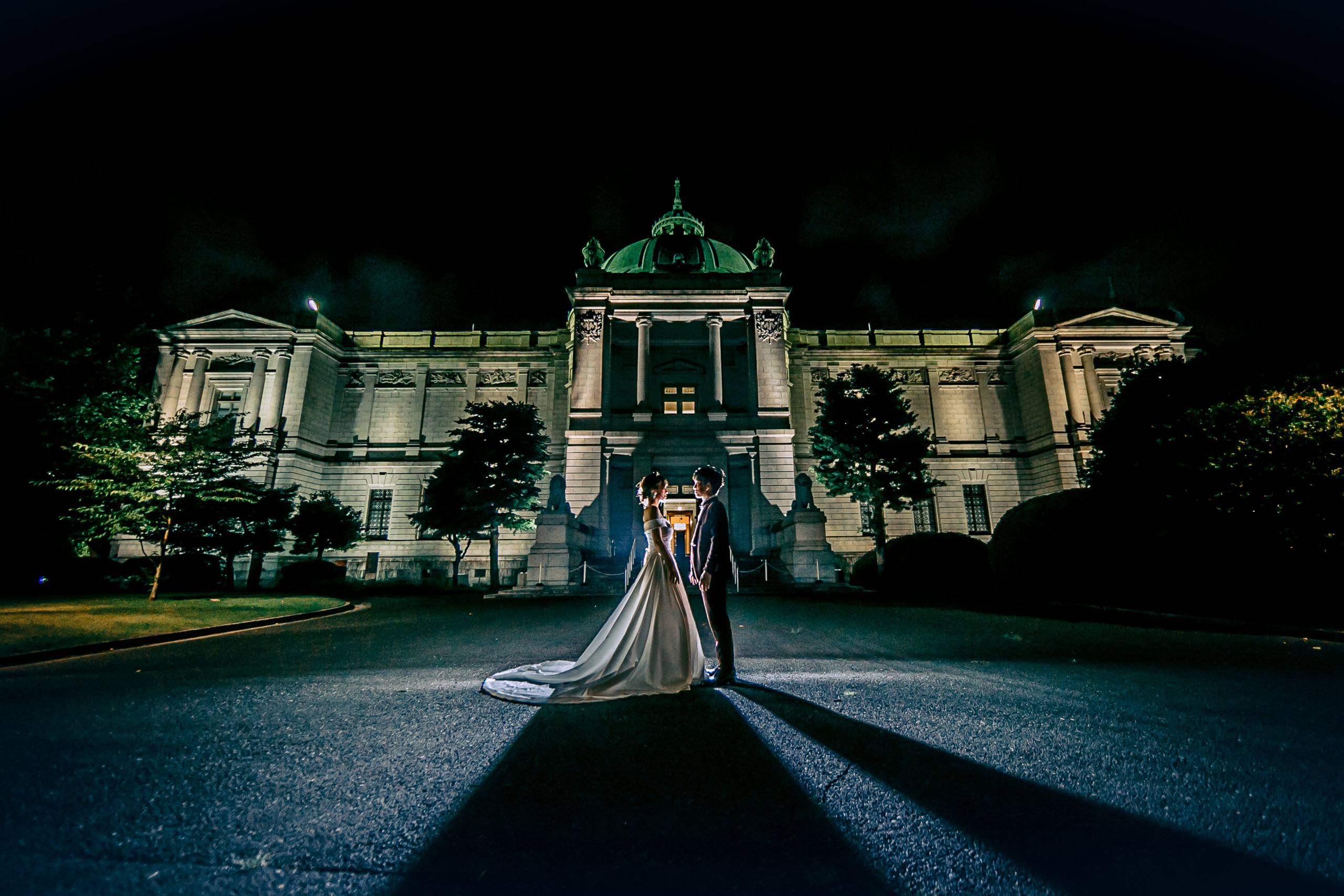
The building’s exterior style — known as Teikan-yoshiki, a distinctly Japanese fusion of traditional architectural elements with Western Modernist structure — is unique in Tokyo and genuinely photogenic in ways that pure Western classical architecture or pure traditional Japanese architecture alone cannot be. Standing before it in a wedding gown, the visual juxtaposition is quietly extraordinary.
The exterior session typically produces wider, more expansive images that complement the intimate interior shots. The approach to the building, the broad forecourt, the building’s full scale captured in a single frame — these images carry a different kind of impact from the interior portraits: monumental rather than intimate, open rather than enveloping.
In cherry blossom season — typically late March to early April — the surrounding Ueno Park provides one of Tokyo’s most celebrated seasonal displays. Shooting in front of the museum with cherry blossoms visible in the background produces images that are uniquely Japanese in a way that has no equivalent anywhere else in the world: Western wedding dress, Meiji-era architecture, sakura. The combination is unrepeatable, and it photographs spectacularly.
💡 From Our Photographers: Cherry blossom season exterior sessions at this location are among the most requested and most visually rewarding shoots we do anywhere in Tokyo. If your visit to Japan coincides with late March or early April, we strongly recommend making this location a priority. Bookings during this period fill early — please contact us as soon as your travel dates are confirmed.
From Our Photographers — What Makes Each Spot Unique
Our photographers have worked at Tokyo National Museum across many sessions and seasons. Here is what they consistently observe about each location within the building.
At the Grand Staircase
We always shoot both the front view and the side view — they produce such different images that omitting either would feel like a missed opportunity. The front view is formal and architectural; the side view is more dynamic. For the front shot, we take time with the gown’s train — getting the spread right, making sure it catches the light correctly — because that detail is what elevates the image from a nice portrait to something genuinely spectacular. We also typically take one wide establishing shot that shows the couple small against the full height of the staircase: that image, more than any other, conveys what it actually feels like to be in this space.
At the Stained Glass
The stained glass requires patience. We assess the light when we arrive — its quantity, its color, the angle at which it’s falling — and build the shooting plan around what we find. The silhouette shot works best when the light source is strong enough to create clear separation between the figure and the background. On overcast days, we shift to more frontal compositions that use the glass as a decorative backdrop rather than a light source. Both approaches produce beautiful results; they just produce different results. The key is reading the light before deciding how to use it.
At the Heavy Doors
The doors reward close attention to detail — the texture of the wood grain, the hardware, the way light falls differently on different planes of the surface. We often position the couple in relation to the door asymmetrically: one person closer, one further; one touching the door, one not. This creates compositional tension that makes the image more interesting than symmetrical frontal positioning. The results tend toward intimacy rather than grandeur — a useful counterpoint to the staircase shots.
In the Classical Interior Areas
These spots are where we slow down. Away from the architectural set pieces, with the pressure of “getting the grand shot” temporarily relieved, couples tend to relax — and in that relaxation, something genuine appears in their expressions. We find that some of the most natural, most emotionally resonant photographs of any session come from these quieter spots, where the couple stops being aware of the building and starts being aware of each other.
Which Dress Works Best Here?
The Tokyo National Museum’s interior creates clear and specific guidance for dress selection — the light environments, the architectural scale, and the character of each spot all favor certain choices over others.
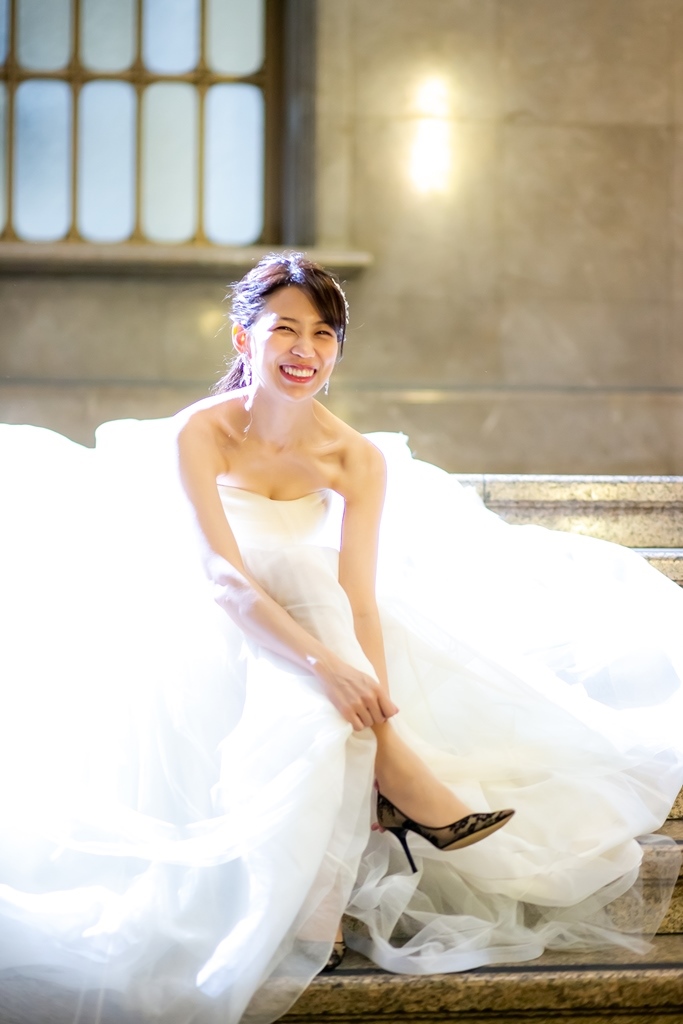
For the grand staircase, a gown with a substantial train is the obvious choice — and here, “obvious” and “correct” are the same thing. The train spread across the stairs is one of those compositions where the environment and the garment are designed for each other. A-line and ballgown silhouettes work best; the volume of fabric creates visual weight that balances the scale of the architecture. Pure white and off-white are reliable choices that hold their own against the pale stone of the staircase without competing with it.
For the stained glass, a gown with light-reactive fabric is ideal. Silk satin, organza, and chiffon all respond to the colored light in ways that heavier, more matte fabrics do not — they catch the color, reflect it, and seem almost to glow. For the silhouette shot specifically, a clean, simple silhouette reads most powerfully: elaborate surface detail is lost when the figure is backlit, so a dress that makes a beautiful shape is more valuable here than one with complex surface ornamentation.
For the doors and classical interiors, the dress matters less — the environment is more forgiving, and the images are more about the couple than the architecture. That said, warm tones (ivory, champagne, blush) harmonize naturally with the warm light of the classical fixtures, and gowns with some surface texture (lace, embroidery) reward the closer framing that these spots typically call for.
For the exterior, a gown with presence and visual weight reads well against the scale of the building. The same A-line or ballgown that works on the staircase works here. In cherry blossom season, any light color works beautifully against the pink-white of the blossoms — though white remains the most classic choice.
📷 See Real Photos from Tokyo National Museum
Browse photographs and reviews from couples who have experienced this location firsthand.
About Wedding Avenue Tokyo Station Studio
Wedding Avenue Tokyo Station Studio is located a 10-minute walk from Tokyo Station’s Yaesu Exit — well positioned for couples combining a studio session with a location shoot at Tokyo National Museum or other Tokyo locations. All hair, makeup, and dress fitting takes place at our studio before traveling to the museum with our team.
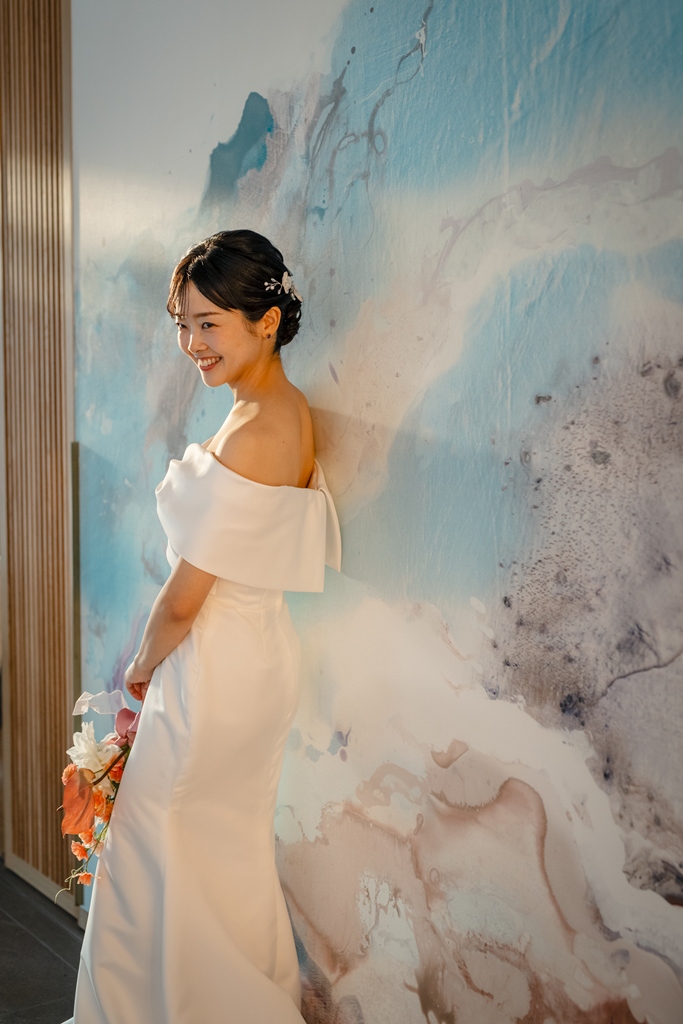
Photography permissions at Tokyo National Museum are included in our plan pricing — no separate coordination is required from couples. Our team handles all arrangements with the museum and schedules the session to make optimal use of the available light at each spot. English-language support is available throughout the planning and shooting process.
Our standard location photography packages include 200 high-resolution digital images (currently with a 100-image bonus under our active campaign). Date changes for weather are always free — though for this location, where the majority of the shoot takes place indoors, weather rarely affects the session significantly.
📋 Summary
- Tokyo National Museum’s Main Hall interior contains grand staircases, stained glass, heavy wooden doors, and classical lighting — each producing distinctly different photographic environments
- The stained glass silhouette shot is consistently described as couples’ favorite image from the session — and requires no artificial enhancement to achieve
- Front and side views of the grand staircase produce entirely different images; we always shoot both
- The interior shoot is largely weather-independent — one of the most reliable locations in Tokyo for couples visiting during unpredictable seasons
- In cherry blossom season, the exterior adds images that are uniquely Japanese and unrepeatable — book early if your dates fall in late March or early April
- Photography permissions included in plan pricing; all coordination handled by our team; English support throughout
WEDDING AVENUE TOKYO STATION STUDIO
Marble. Stained glass. History.
A photograph unlike any other in Japan.
Questions about the Tokyo National Museum shoot,
dress selection, or planning your Tokyo visit?
Free consultations available every day — in English.
📍 1-2-8 Hacchobori, Chuo-ku, Tokyo / 10 min walk from Tokyo Station Yaesu Exit