


Roka Koushun Garden Wedding Photos in Tokyo, Japan | Kimono Experience
What Is Roka Koushun Garden?
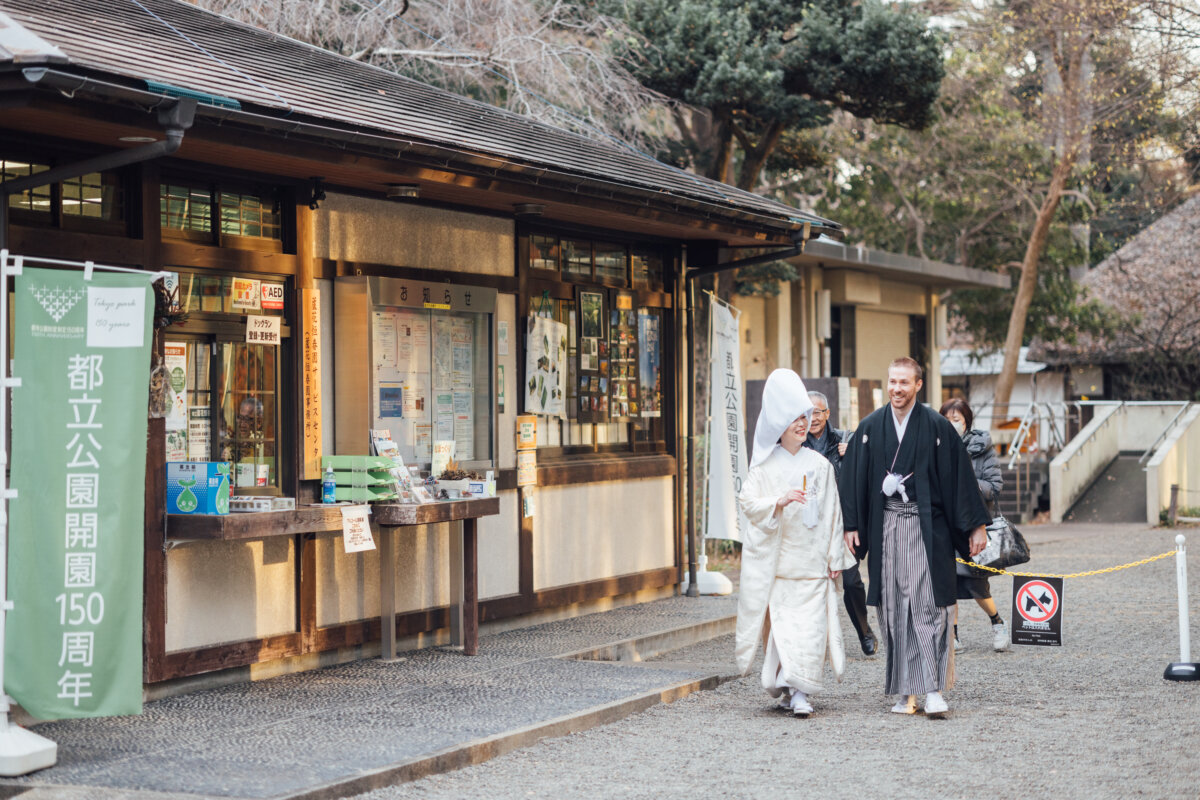
In the quiet residential district of Setagaya, far from the tourist circuits of central Tokyo, a wooden gate opens onto a property that has barely changed in a century. Roka Koushun Garden was the home of Tokutomi Roka — one of the most celebrated novelists of the Meiji era — who lived here from 1907 until his death in 1927. The name “Koushun-en,” which Roka gave the property himself, means “garden of eternal spring.”
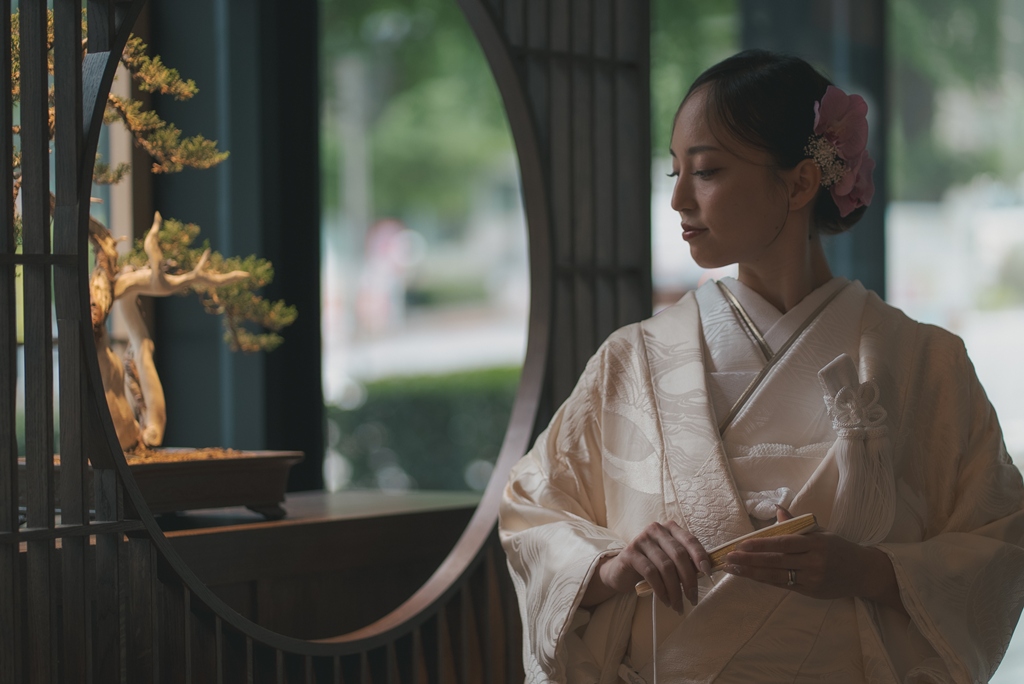
What makes this place remarkable as a wedding photography location is not its scale or its famous name — it has neither. What makes it remarkable is its authenticity. The main farmhouse, the study, and the outbuildings remain as Roka left them: thatched roofs, old wooden sliding doors, a verandah looking out over the garden, worn floorboards, earthen walls. This is not a reconstructed historical environment or a managed museum space. It is a place where someone actually lived, and that quality of lived-in history permeates every photograph taken here.
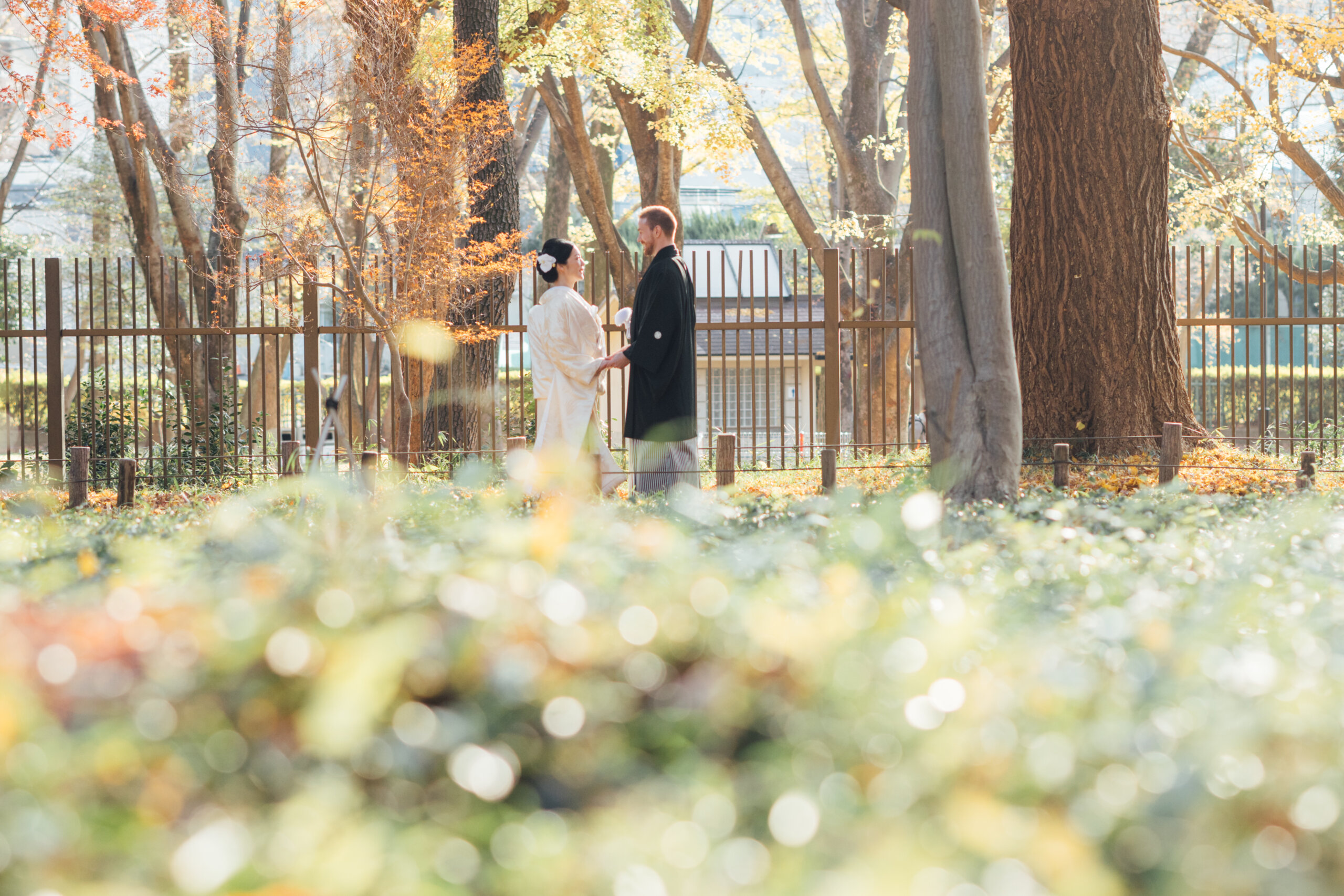
The garden also contains a small but beautiful bamboo grove — a relatively rare feature among Tokyo’s wedding photography locations — and the surrounding grounds change character through the seasons, from fresh green in early summer to rich autumn foliage.
The location sees few visitors and receives little tourist attention, which means sessions here take place in genuine quiet. A photography permit costs ¥800. No separate reservation with the park is required beyond what our team handles.
Why This Location Creates Distinctive Wedding Photography
Most of Tokyo’s kimono wedding photography locations fall into recognizable categories: the manicured classical garden, the famous temple precinct, the urban landmark. Roka Koushun Garden belongs to none of these.
🍁 What Makes This Location Distinctive
① A historic building with genuine character
The old wood, the sliding doors, the veranda, the earthen walls — these surfaces carry the texture and patina of real age. Photographs taken here have a quality of historical depth that no purpose-built set or recently restored building can replicate. The farmhouse is not performing history; it is history.
② A bamboo grove — uncommon among Tokyo photography locations
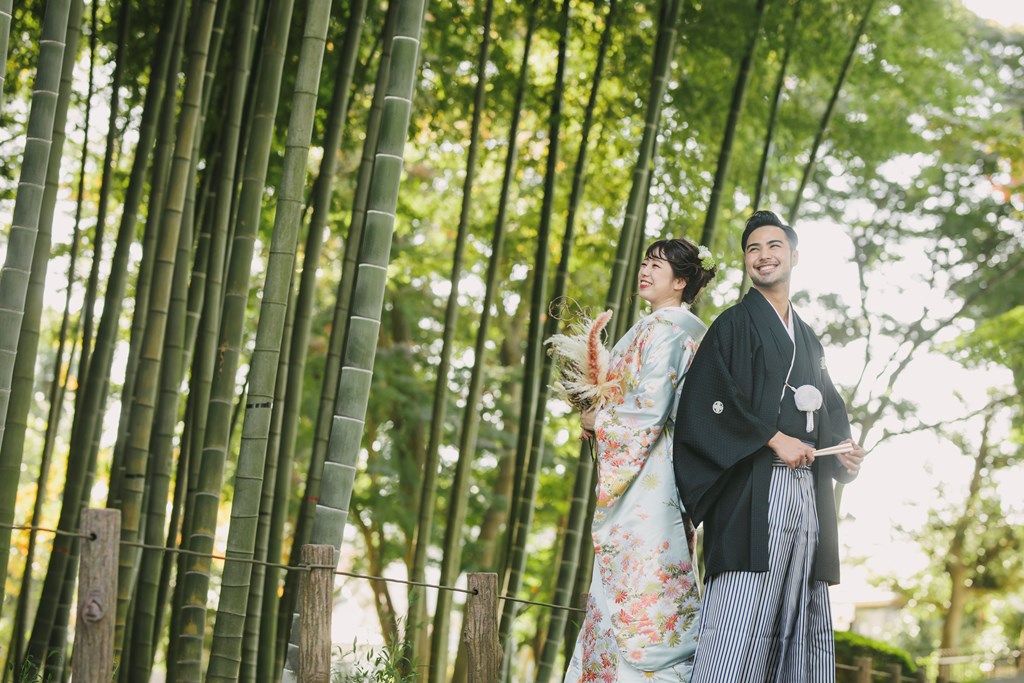
Few of Tokyo’s photography locations include a bamboo grove of any size. The vertical lines of bamboo, its particular quality of green, and the way light moves through it create a photographic environment that is genuinely distinct from garden or woodland settings. Kimono and bamboo is one of the most classically Japanese visual combinations, and here it can be done in a context that feels unhurried and private.
③ Genuine quiet and privacy
This is not a famous destination. The people who come here come specifically to be here — there are no crowds, no tourist groups, minimal background movement. Sessions at this location feel private in a way that sessions at more prominent sites rarely do.
④ Seasonal change that transforms the location
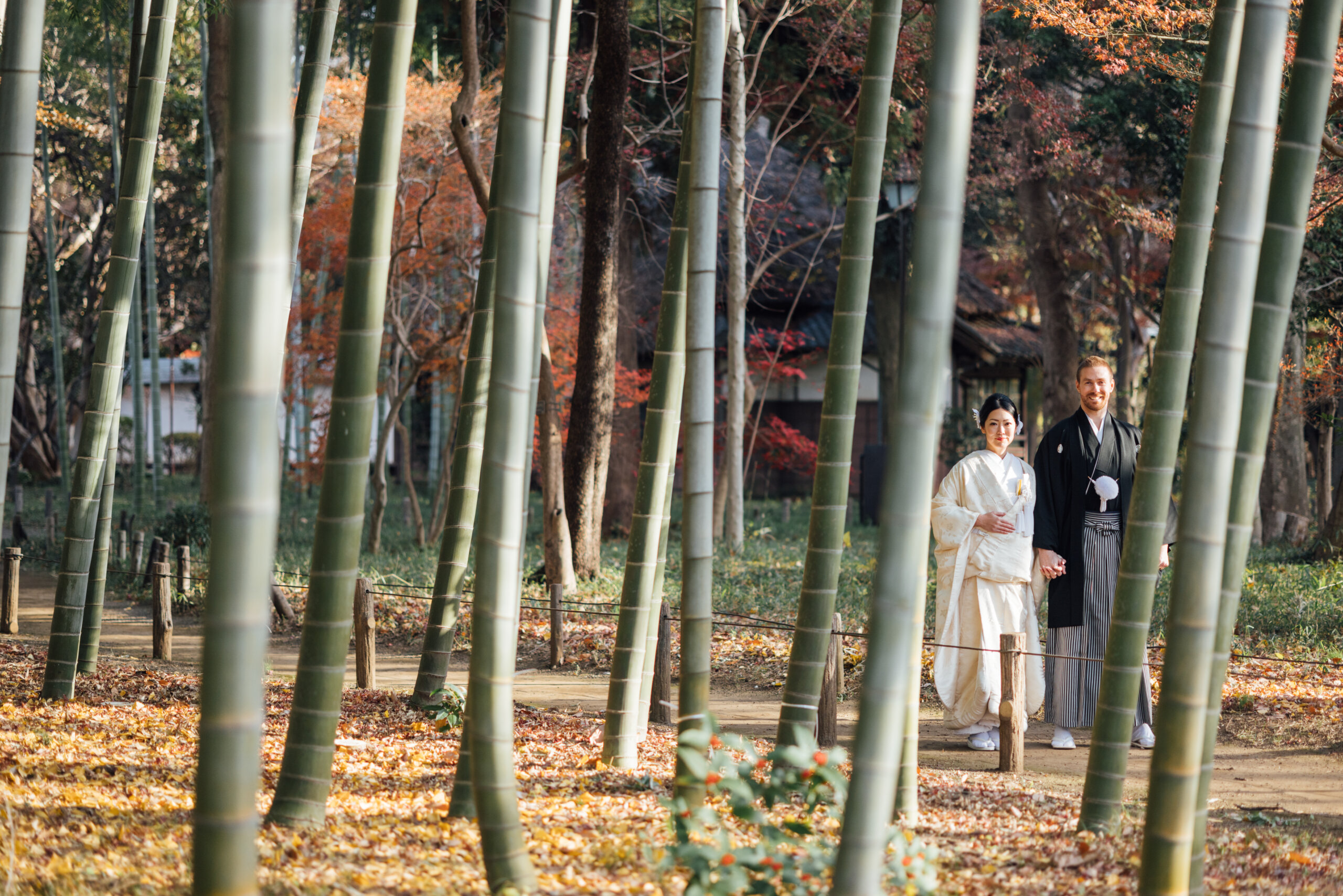
The fresh green of early summer, the autumn foliage — each season adds a different layer of color and atmosphere to the farmhouse and bamboo grove settings. The core character of the location remains constant; the seasonal dressing around it changes completely.
Shooting Spot Guide
The location is compact — which means there is time to work each spot carefully rather than rushing between many.
🏠 ① The Farmhouse & Veranda
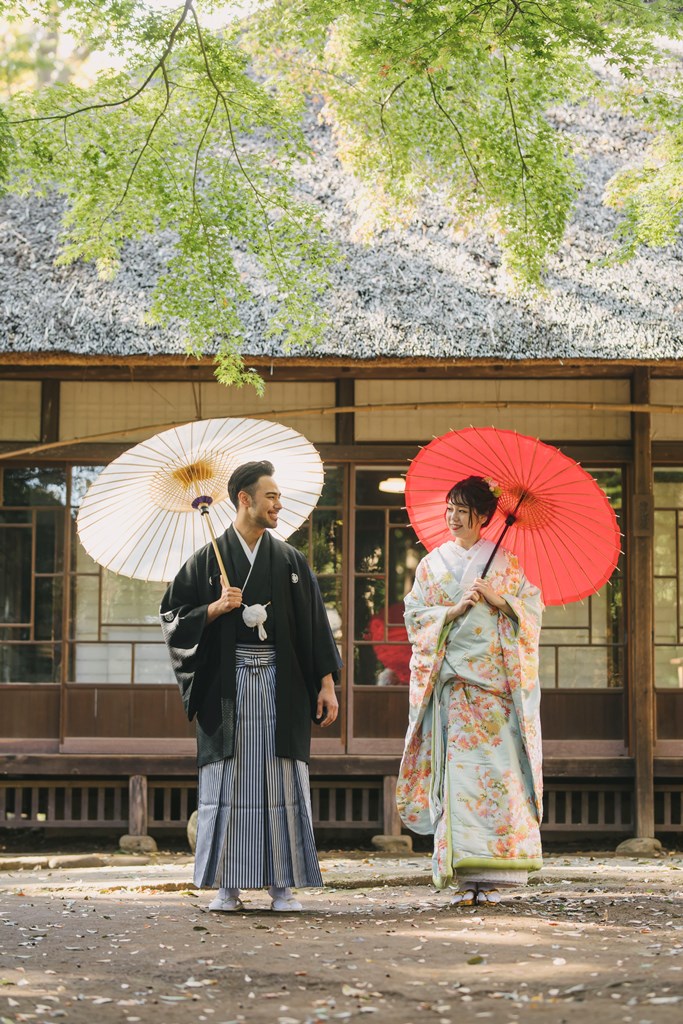
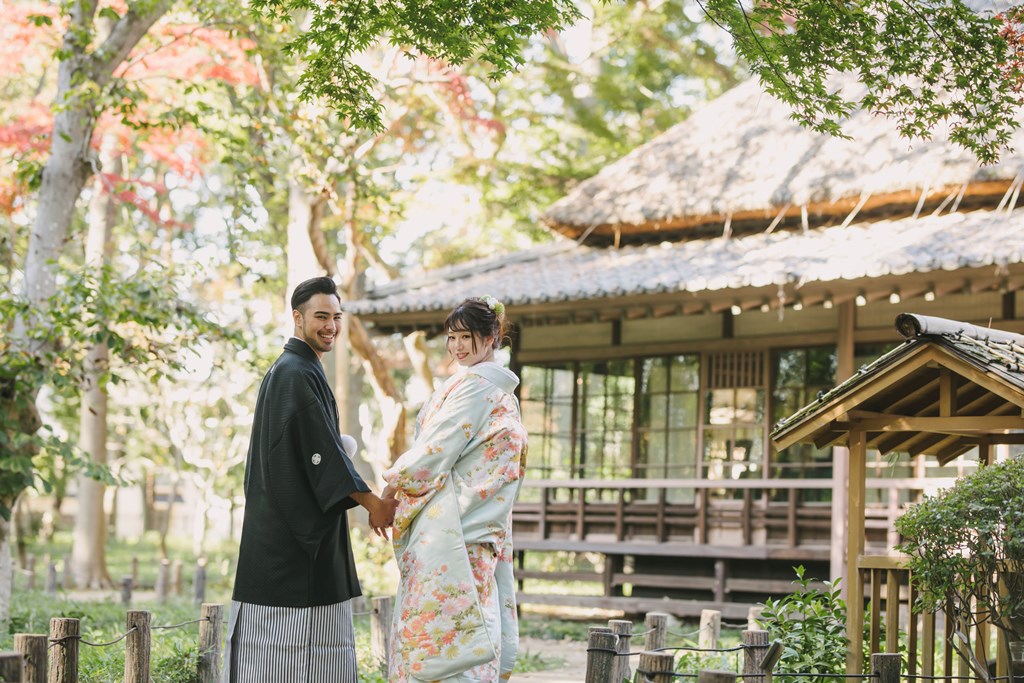
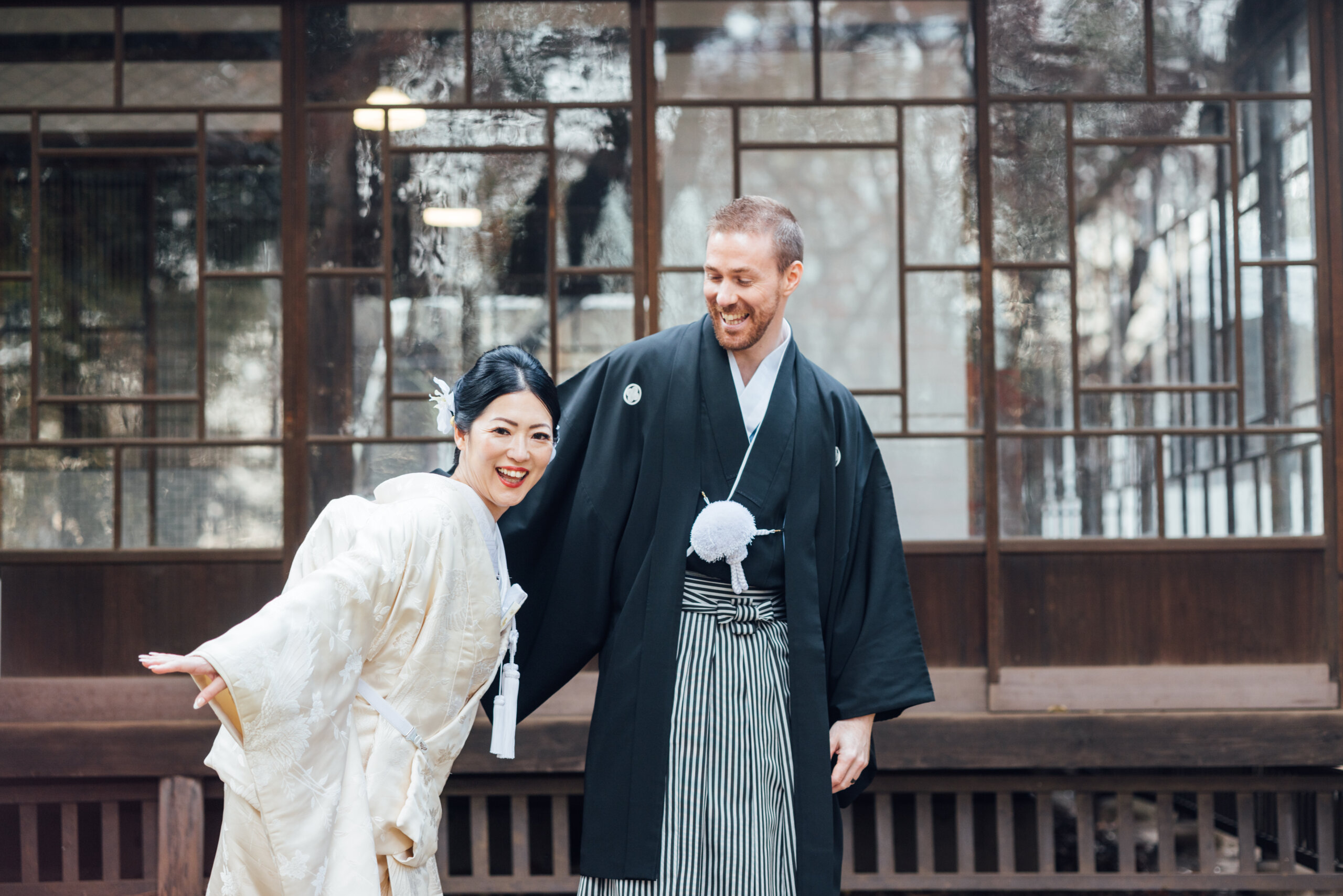
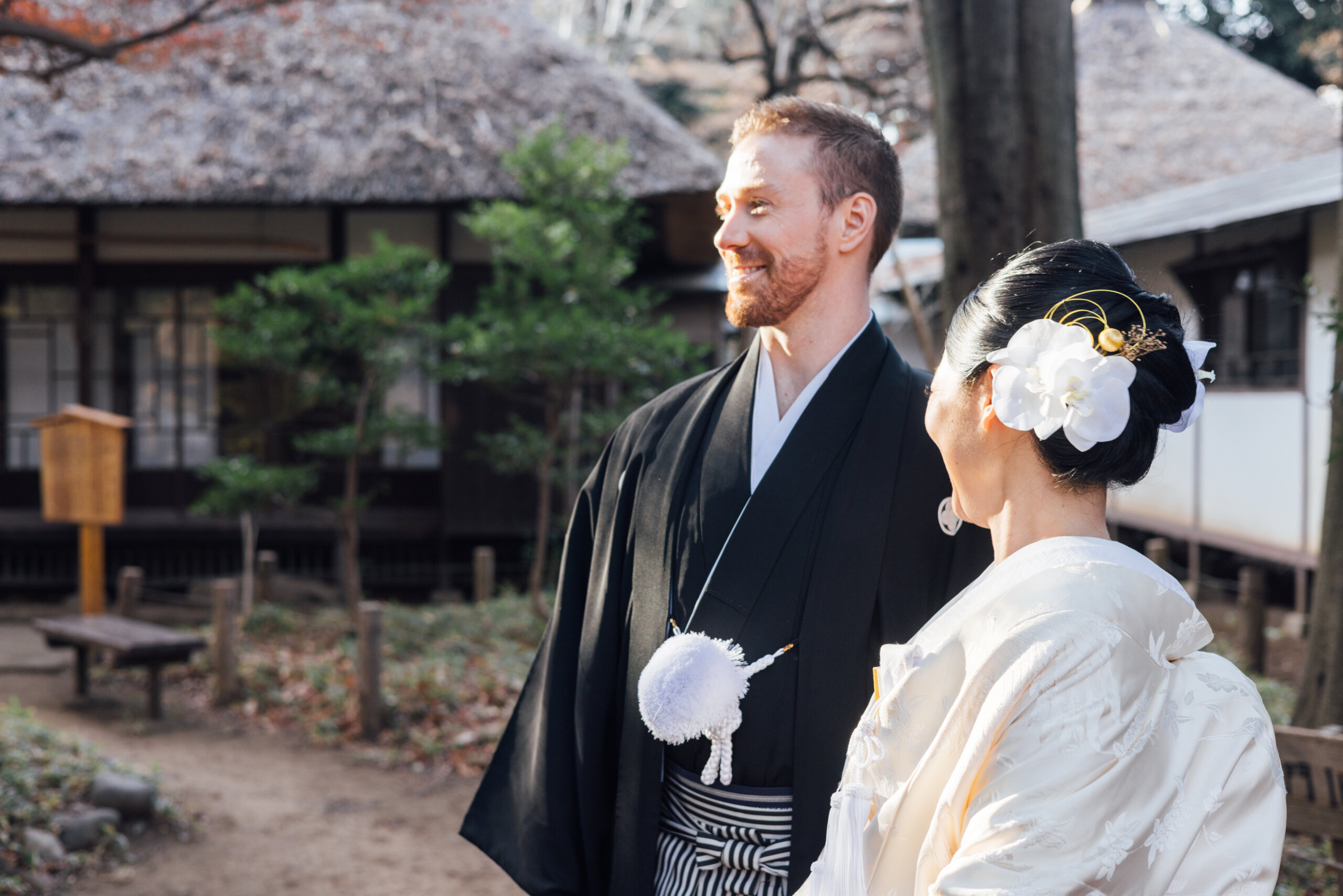
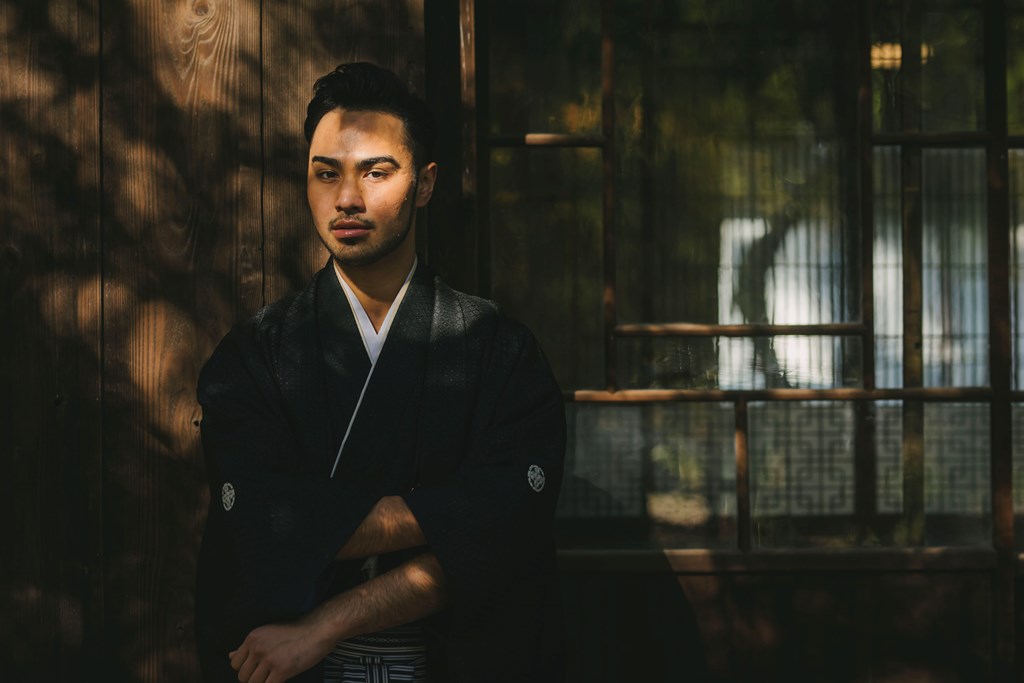
The main farmhouse — with its thatched roof, wooden sliding doors, and wide veranda — is the heart of the location and the spot where sessions here are most distinctive. The veranda offers a natural seated position that brings couples physically close and encourages the relaxed, unhurried posture that the best intimate portraits require. The textures of the building — old wood, worn grain, age-darkened sliding door panels — function as backgrounds of genuine visual interest. Standing portraits against the building’s facade have a quality of historical weight that no modern background can approximate.
🍀 ② The Bamboo Grove
The bamboo grove provides a complete tonal and atmospheric contrast to the farmhouse: where the building is warm and worn and intimate, the bamboo is cool, vertical, and precise. The classic composition here is the vanishing-point shot — couple walking away from the camera as the bamboo lines converge in the distance — which creates a strong sense of depth and direction. Standing portraits within the grove, with the vertical lines of the bamboo as a structured backdrop, produce images of particular formal elegance. Light in the grove varies significantly: on sunny days, directional light creates shadows that add drama; on overcast days, the diffuse light is softer and more flattering for close portraits.
🌿 ③ Seasonal Nature (Fresh Green & Autumn Foliage)
Beyond the farmhouse and the bamboo, the surrounding grounds change character with the seasons. In early summer, fresh green wraps the old building in vivid color — the contrast between the aged wood and the new growth is particularly photogenic. In autumn, red and orange leaves fall around the veranda and collect at the base of the bamboo, adding warmth and seasonal depth to both primary shooting spots. These seasonal layers don’t replace the character of the location — they add to it.
Seasonal Highlights
The location’s character is consistent across seasons — the farmhouse and bamboo are always there — but the seasonal surroundings shift the atmosphere considerably.
🌸 Spring (March–May)
New growth softens the grounds as the trees bud. A clean, quiet season — the farmhouse reads clearly against the fresh surroundings, and visitor numbers are low. Good conditions for unhurried, careful work at each spot.
☀️ Early Summer (May–July)
The fresh green season — when the surrounding foliage is at its most vivid. The contrast between the aged wood of the farmhouse and the new green growth is particularly strong. White shiromuku reads with particular clarity against the deep green backdrop.
🍁 Autumn (October–November)
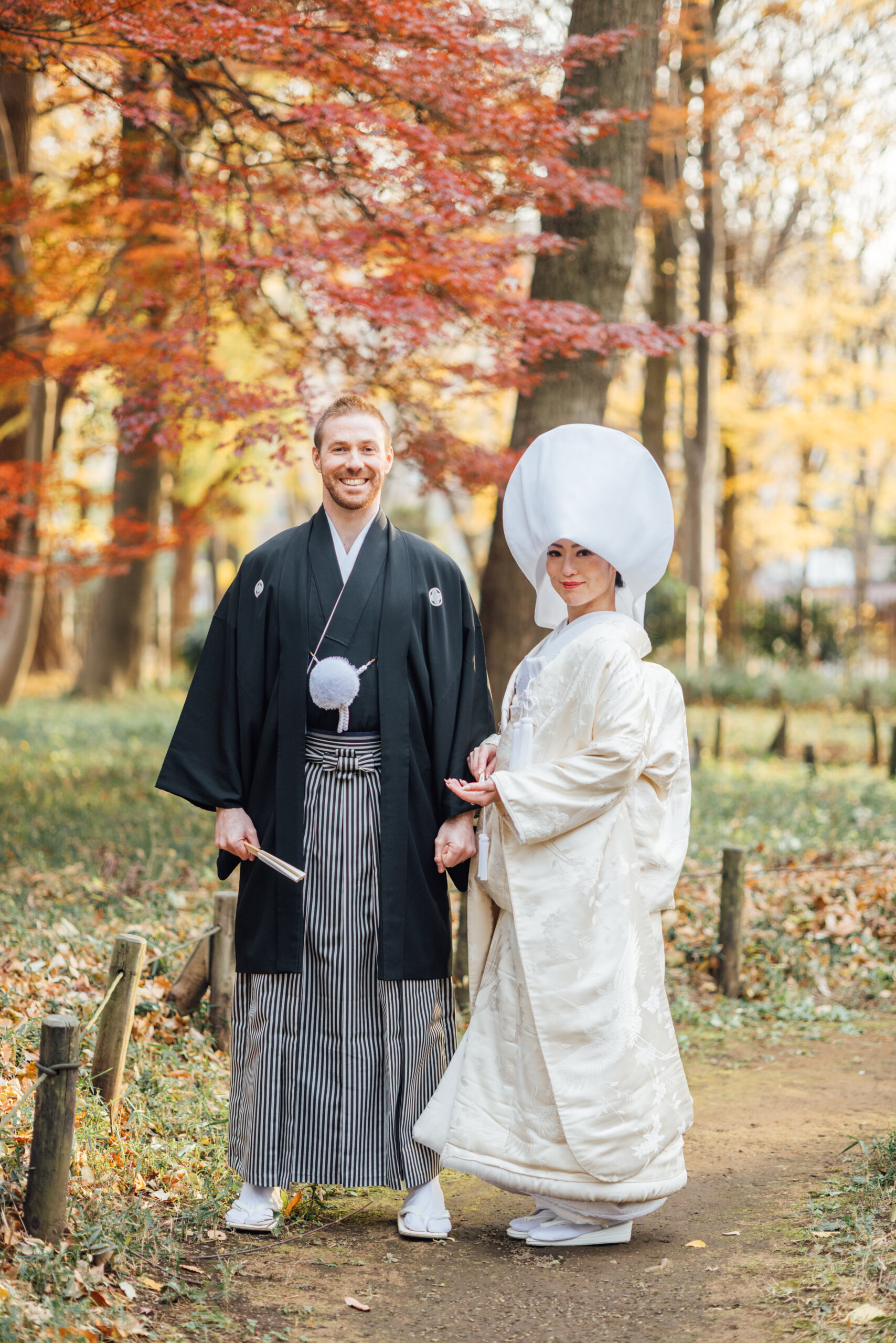
The most requested season. Red, orange, and gold leaves fall around the veranda and settle at the base of the bamboo. The warm tones of the foliage combine with the warm tones of the old wood in a way that feels naturally composed. Vermilion iro-uchikake works particularly well in this season.
❄️ Winter (December–February)
With leaves fallen, the structure of the farmhouse and the bamboo read most clearly. A spare, austere season — the bamboo grove in particular has a precise, graphic quality in winter that other seasons soften. White shiromuku against the winter bamboo is among the most formally elegant combinations available at this location.
From Our Photographers
Our photographers have worked at Roka Koushun Garden across seasons and bring specific observations about what makes each element of the location work photographically.
The veranda invites stillness
At most photography locations, couples are moving: walking, turning, adjusting position. At the veranda, there is a natural invitation to sit — and sitting brings couples close together, loosens posture, and encourages the kind of small, ordinary gestures — a glance, a quiet word, a shared moment of looking at the garden — that produce the most genuine portraits. We spend more time here than at any other spot in the location, and it consistently produces the session’s most intimate images.
The bamboo responds to light differently than any other environment
On sunny days, the directional light that filters through the bamboo creates sharp shadows on the ground and across the stems — a graphic, high-contrast environment that photographs with particular drama. On overcast days, the bamboo grove becomes a softly lit, even space where the green is at its most saturated and the light is most flattering for skin. Both conditions produce beautiful images, but very different ones. We assess the light when we arrive and plan the bamboo section of the session accordingly.
The quiet is part of the photograph
This is a location where the absence of crowds, noise, and visual interference genuinely shows in the final images. Photographs from Roka Koushun Garden have a stillness to them — a sense that the couple was somewhere private and unhurried — that is much harder to achieve at busier locations regardless of how carefully the session is managed. For couples who want images that feel genuinely calm, this matters.
Which Kimono Works Best Here?
The farmhouse and bamboo grove each create different conditions for kimono selection.
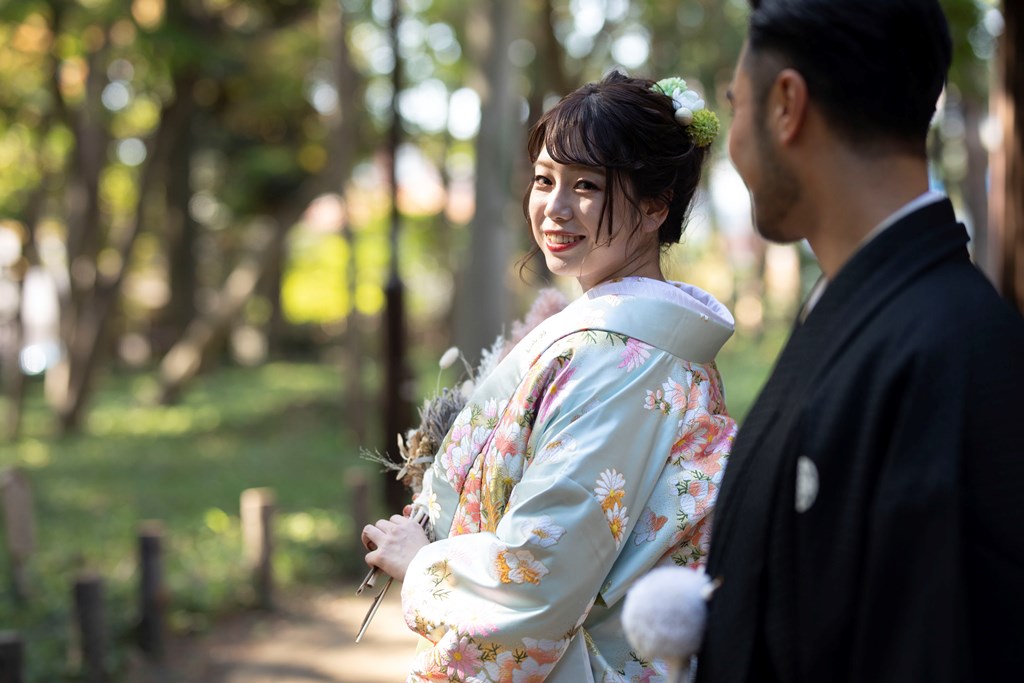
At the farmhouse, the aged wood and earthen tones of the building favor kimono that either contrasts cleanly (white shiromuku against the brown wood) or harmonizes in tone (deep, earthy colors that echo the building’s palette). Bright, highly saturated colors can feel slightly at odds with the farmhouse’s quiet character — though the bamboo grove handles them better. White shiromuku works in every season and against every surface of the building, and is the most reliably successful choice for this spot.
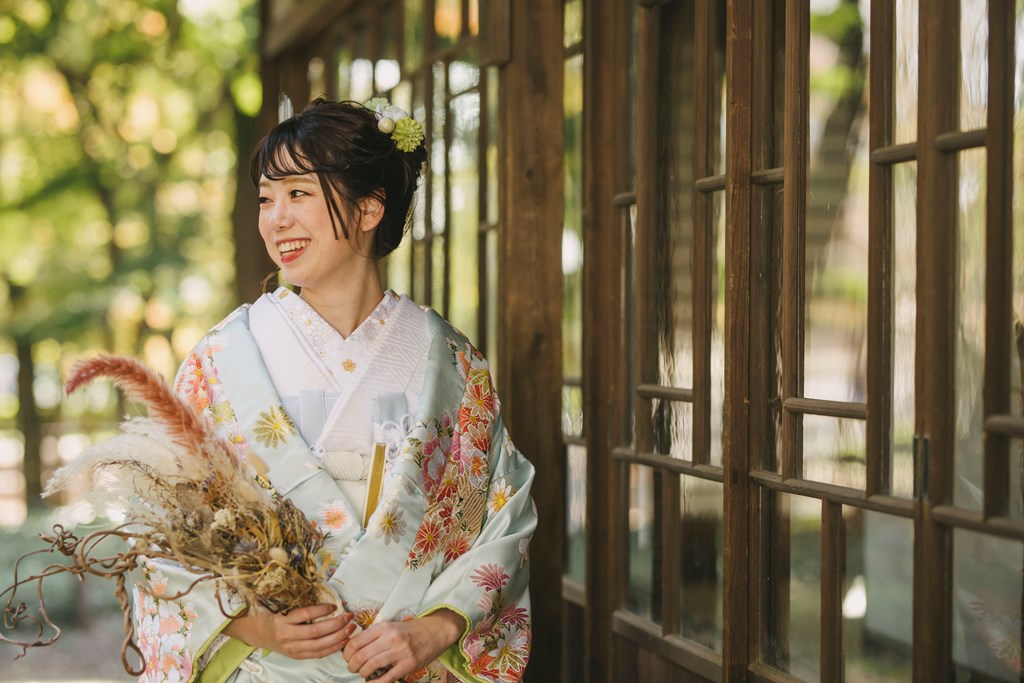
In the bamboo grove, the deep blue-green of the bamboo creates strong contrast with white, and harmonizes with cool deep tones — navy, indigo, deep forest green. Vermilion and other warm colors create a bold complementary contrast against the bamboo’s cool green, producing images of more dramatic visual impact. The bamboo grove is the spot at this location where color iro-uchikake is most photogenically effective.
🍁 Quick Guide
- Farmhouse & veranda: White shiromuku — works in every season; deep earthy tones harmonize with the building’s aged palette
- Bamboo grove: White for clean contrast; deep navy/indigo for cool harmony; vermilion for bold complementary contrast
- Autumn foliage season: Vermilion and warm-toned iro-uchikake work well with the seasonal colors at both spots
- Early summer green season: White reads with particular clarity against the deep fresh green surroundings
📷 See Real Photos from Roka Koushun Garden
Browse photographs and reviews from couples who have experienced this location.
About Wedding Avenue Tokyo Station Studio
Wedding Avenue Tokyo Station Studio is located a 10-minute walk from Tokyo Station’s Yaesu Exit. Roka Koushun Garden is accessible by train from central Tokyo in approximately 30 minutes. All hair, makeup, and kimono dressing takes place at our studio before traveling to the garden with our team. English-language support is available throughout the planning and shooting process.
Photography permit fee is ¥800, handled by our team. Our standard location photography packages include 200 high-resolution digital images (currently with a 100-image bonus under our active campaign). Date changes for weather are always free.
📋 Summary
- Roka Koushun Garden preserves the former home of Meiji novelist Tokutomi Roka — a thatched farmhouse with veranda, sliding doors, and earthen walls that carry genuine historical character
- A bamboo grove — rare among Tokyo’s photography locations — provides a classically Japanese photographic environment distinct from the farmhouse
- Few visitors, genuine quiet, and a private atmosphere that shows in the final photographs
- Seasonal fresh green and autumn foliage add layered depth to both primary spots
- White shiromuku works at every spot and season; vermilion iro-uchikake is particularly effective in the bamboo grove and in autumn
- Photography permit ¥800, handled by our team; English support throughout; 200 images included
WEDDING AVENUE TOKYO STATION STUDIO
A historic farmhouse. A bamboo grove.
Quiet, private, and unlike anywhere else in Tokyo.
Questions about Roka Koushun Garden, kimono selection,
seasonal timing, or planning your Tokyo visit?
Free consultations available every day — in English.
📍 1-2-8 Hacchobori, Chuo-ku, Tokyo / 10 min walk from Tokyo Station Yaesu Exit