


Furukawa Residence Wedding Photography in Tokyo, Japan
What Is the Former Furukawa Residence?
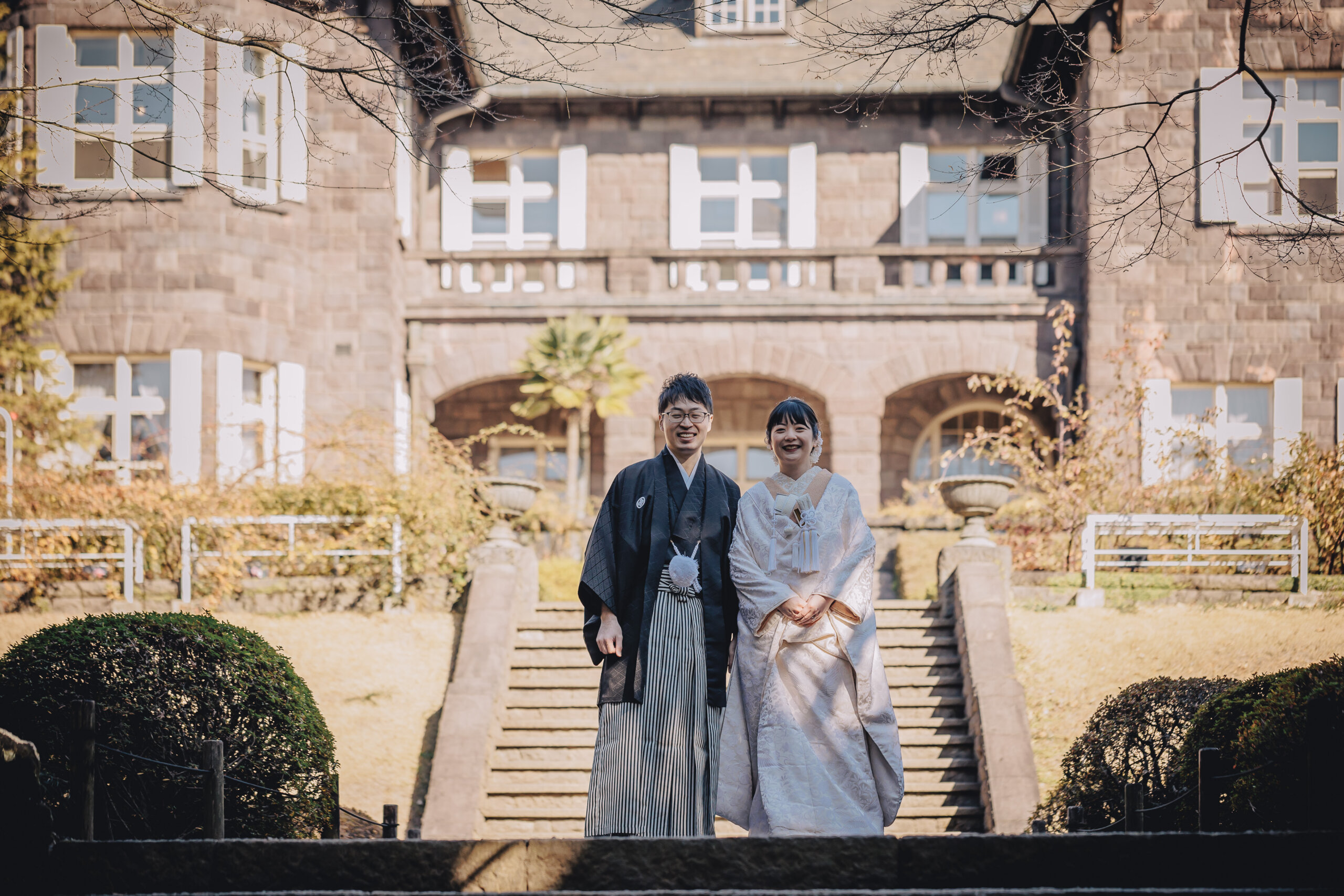
In the quiet residential neighborhood of Nishigahara in North Tokyo stands a Western-style mansion from the Taisho era (1912–1926), designed by a student of the renowned British architect Josiah Conder. The Former Furukawa Residence has been designated an Important Cultural Property of Japan, and today it operates as a historic house open to the public — and, under a formal photography permit, as one of the most distinctive wedding photography locations in Tokyo.
The building’s interior has been preserved in its original state: a grand staircase with deep red carpet leading to stained-glass windows, a sunroom with green-painted window frames and a black-and-white checkered floor, a dining room with red walls and a chandelier, a door with heart-shaped glass panels. Each room has a distinct character, and the shift between them — from the formal gravity of the staircase to the warmth of the sunroom — gives a single session here a range that few locations can match.
Access is straightforward: the residence is a short walk from Nishigahara Station on the Tokyo Metro Namboku Line, or from Kaminakazato Station on the JR Keihin-Tohoku Line. Hair, makeup, and dress fitting take place at our studio before traveling to the residence together.
Why This Location Is Rare and Special
Historic Western-style interiors — the kind where antique furniture, original woodwork, chandeliers and stained glass are genuinely from the period rather than reproduced — are rare as wedding photography settings in any city. In Tokyo, the Former Furukawa Residence is essentially the only location where this kind of setting is accessible.
🏠 What Makes This Location Genuinely Different
① A real historic interior, not a recreation
The staircase carpet, the stained glass, the chandelier, the tiled floor in the sunroom — these are original features of a building constructed over a century ago and maintained as a cultural property. The sense of authenticity in photographs taken here is not something that can be produced in a studio or at a modern venue.
② Four completely different rooms in one location
The grand staircase, the sunroom, the dining room, and the heart-paneled door each have a distinct visual character — in color, material, light quality, and mood. A session here produces photographs that look like they were taken in different places, because in atmosphere they essentially were.
③ Beautiful natural light throughout
The residence’s large windows were designed to bring in natural light, and each room is well-lit by soft, diffused daylight. Photography here does not depend on flash — the light is part of what makes the setting work, and it changes character subtly across the rooms.
④ Both Western and Japanese dress photograph well here
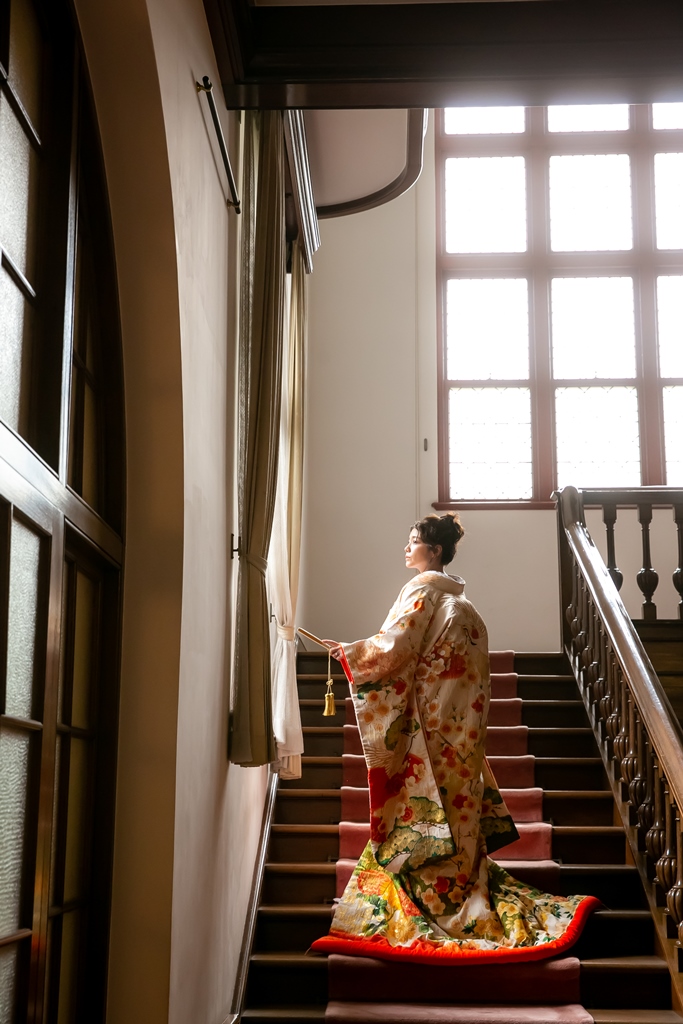
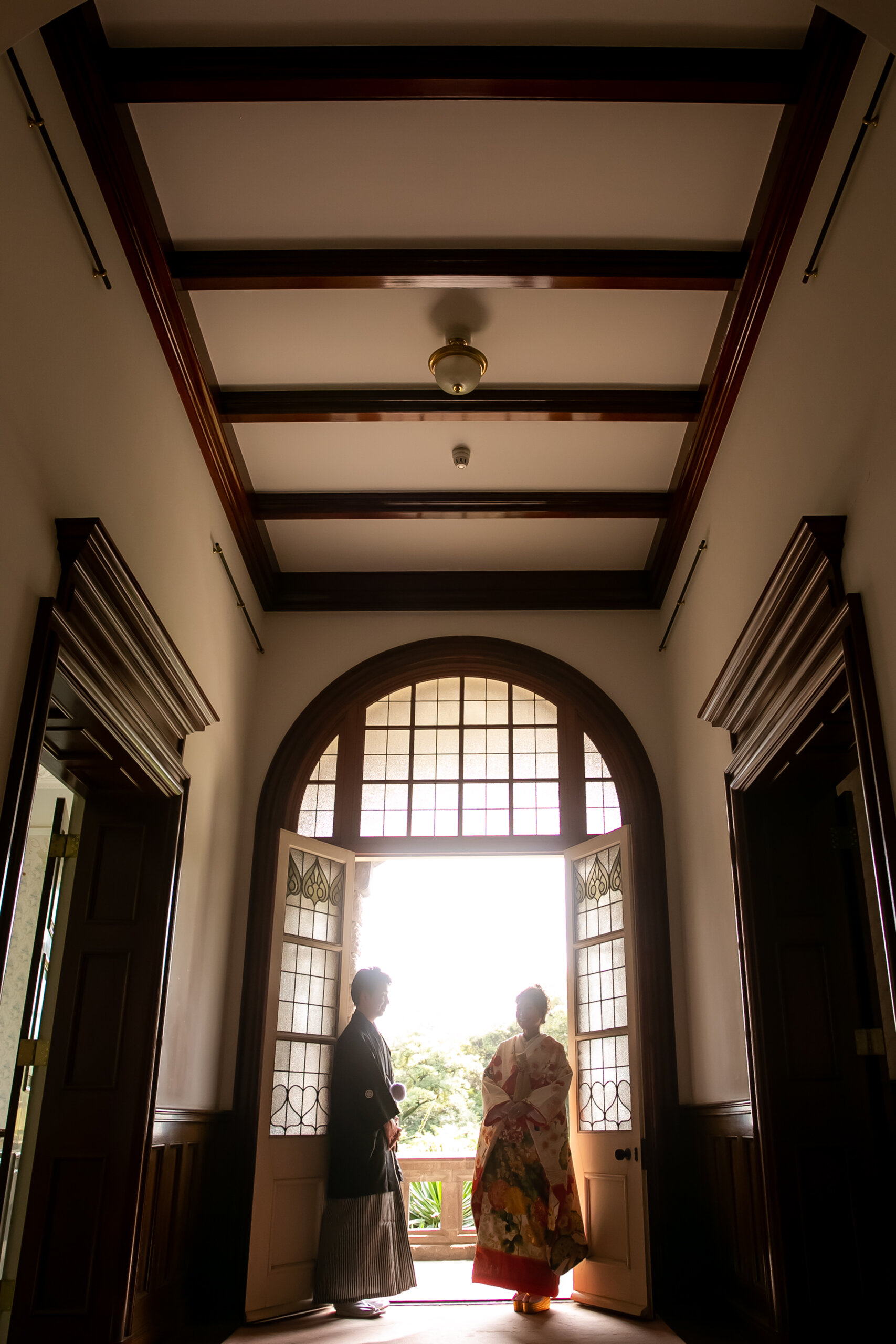
A wedding dress in a historic Western mansion is the obvious pairing, but kimono — particularly the formal uchikake worn for wedding photography — also works very well in this setting. The Taisho era was a period when Japanese and Western aesthetics coexisted and influenced each other, and a kimono worn in a mansion from that period sits there with genuine historical logic.
Shooting Spot Guide
Here is a closer look at each of the four main photography locations within the residence.
🏠 ① The Grand Staircase
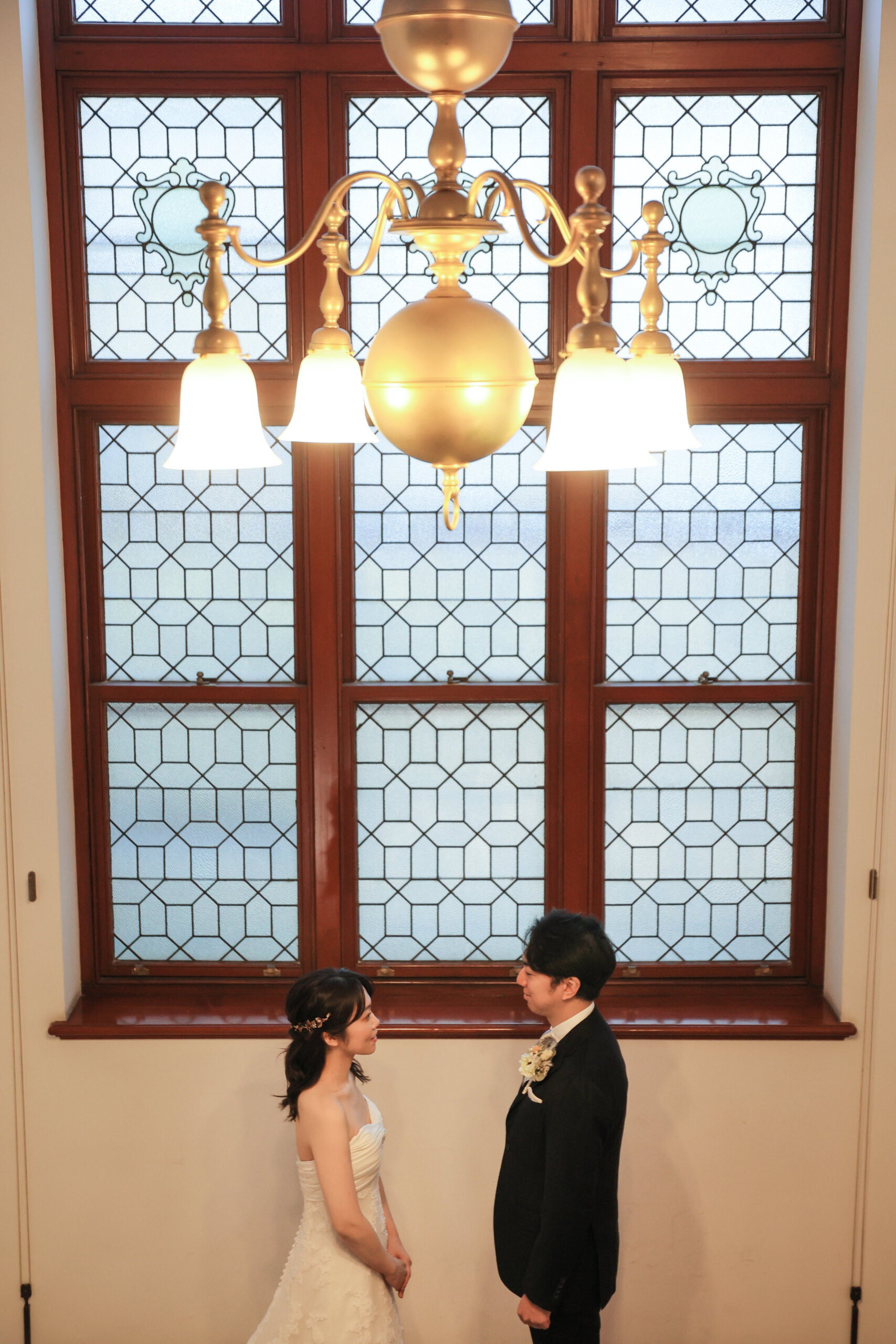
The staircase is the residence’s signature element and the most requested shooting spot. The deep red carpet ascending toward stained-glass windows creates a compositional environment that rewards formal positioning: standing on the stairs, seated on the steps, descending toward the camera. The stained glass casts colored light at certain times of day; when this happens, the combination of light and architecture produces images that are specifically and irreplaceably from this place. Long trains look particularly good here, pooling on the red carpet below the subject.
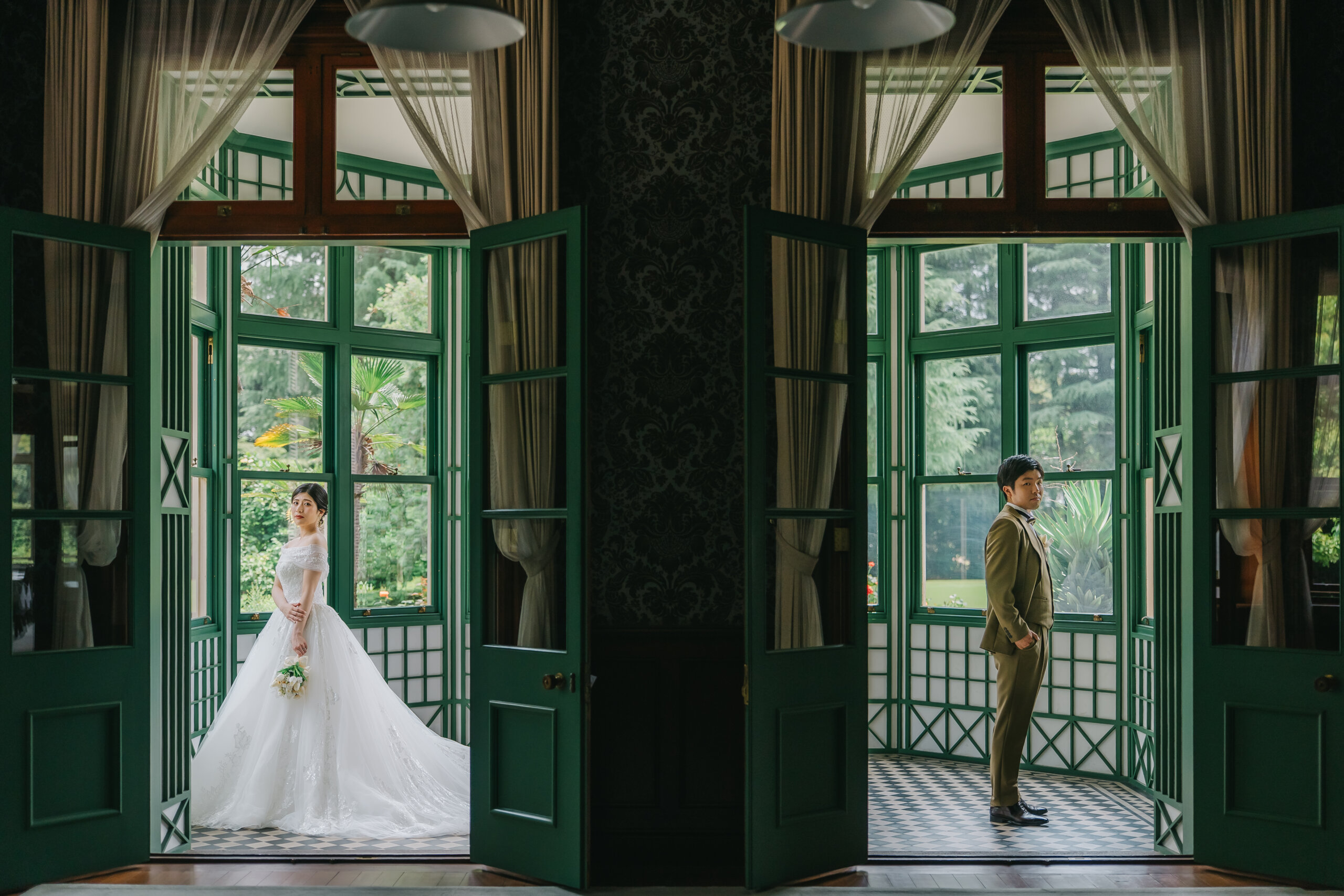
🏠 ② The Sunroom
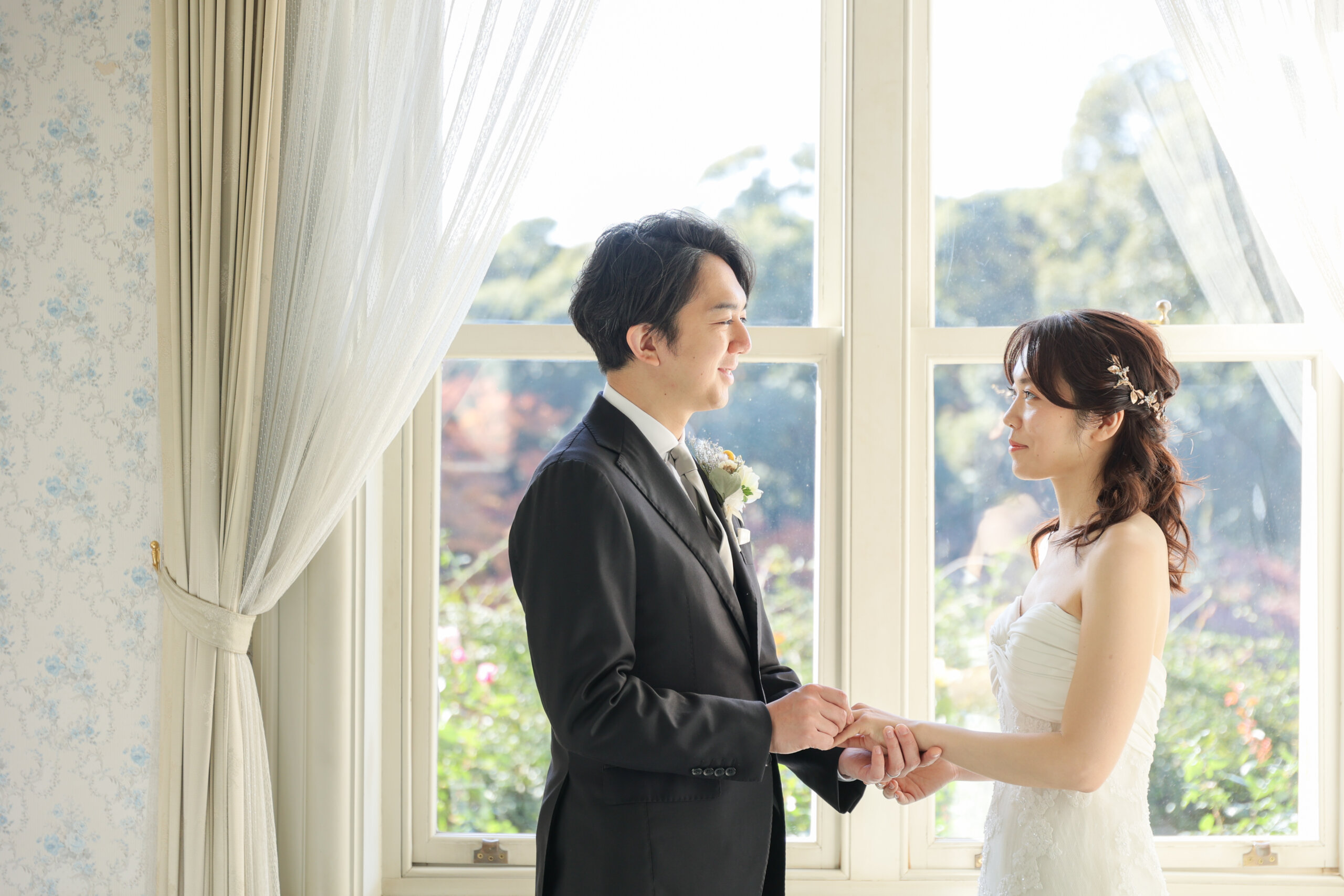
The sunroom — with its green-painted window frames forming a grid across the walls and a black-and-white checkered tile floor — is the residence’s most unexpected room. Where the staircase is formal and vertical, the sunroom is warm and horizontal. Light fills it softly, and the green-and-white window pattern creates a distinctive backdrop that reads as greenhouse-like even though the room is entirely interior. Portraits taken here have a quality of intimacy and calm that the more dramatic rooms don’t produce.
🏠 ③ The Dining Room
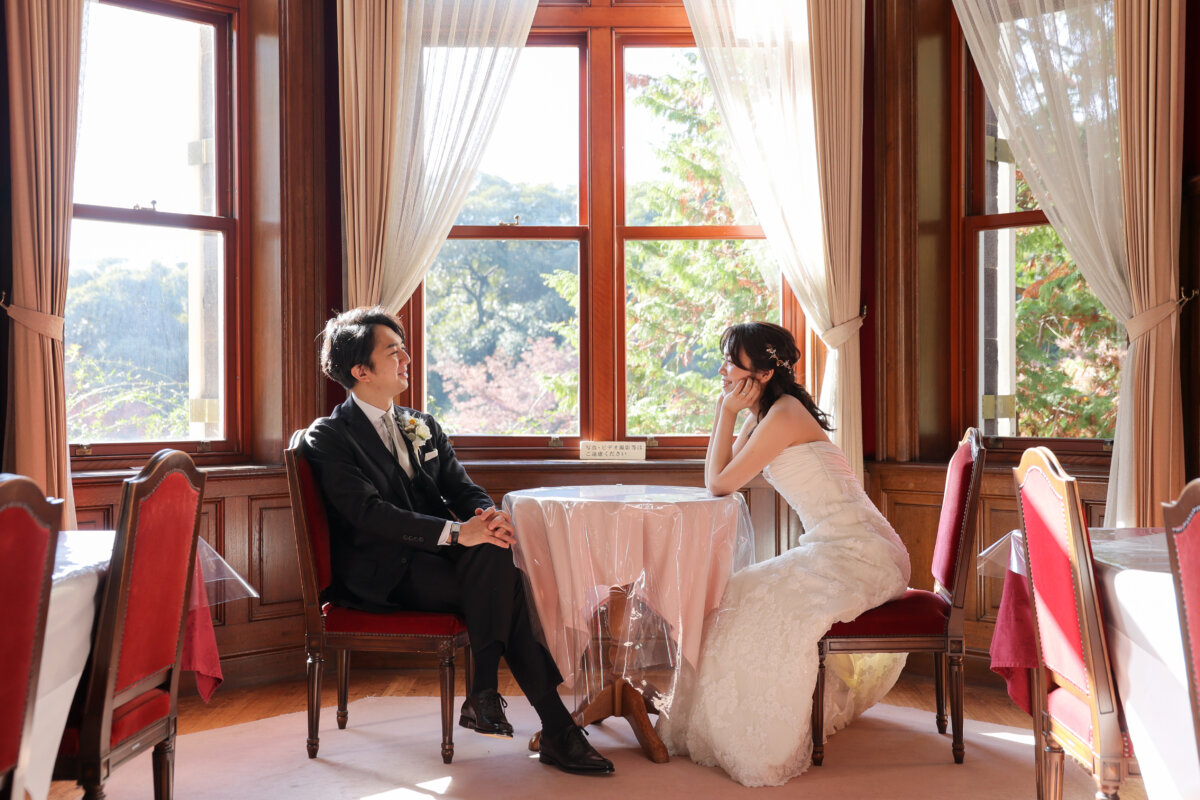
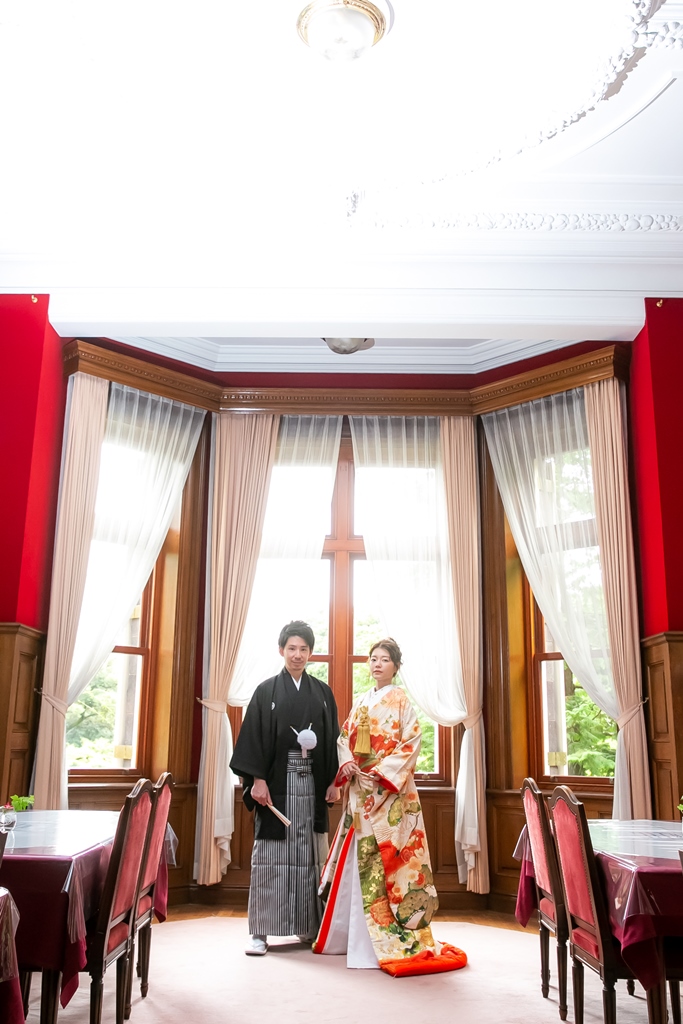
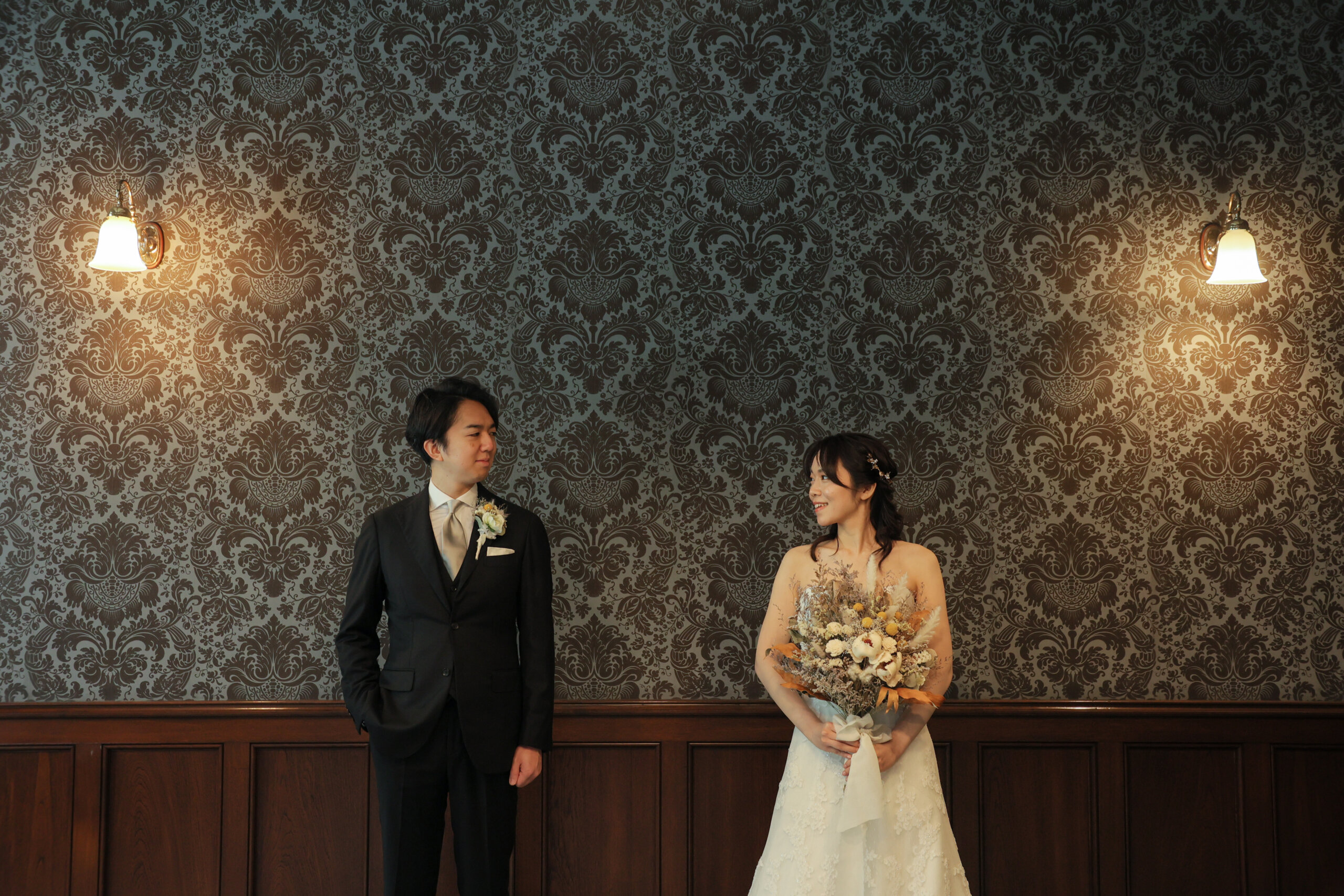
Red walls, tall windows, a chandelier, and original antique furniture make the dining room the most cinematically dramatic space in the residence. It is the room most likely to produce photographs that people describe as looking like a film scene — a quality that comes from the combination of strong color (the red walls), overhead light source (the chandelier), and furniture that implies a narrative (who sat in these chairs, at this table, in this room a hundred years ago). Portraits taken beside the windows, or at the table, or simply standing in the room, carry this sense of inhabited history.
🏠 ④ The Heart-Paneled Door
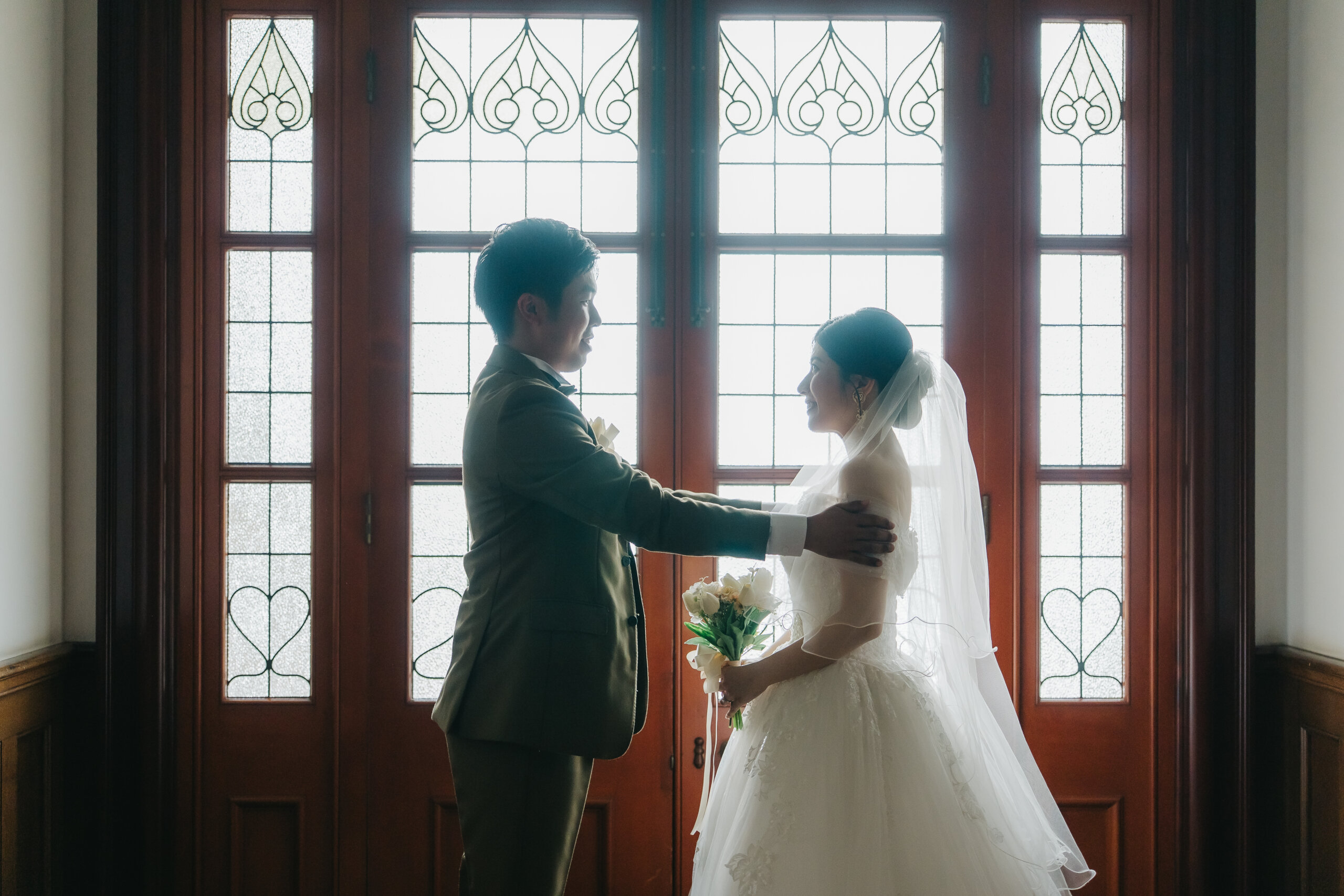
Somewhere in the residence, a door with heart-shaped glass panels awaits discovery. It is the one genuinely playful element in an otherwise formal building, and it consistently surprises people who encounter it for the first time. Photographs taken at this door — silhouettes seen through the glass, hands resting on the frame, faces appearing through the heart-shaped panes — have a lightness of tone that the other rooms don’t produce. They work well as contrast pieces in an album otherwise full of more formal images.
Wedding Dress or Kimono — Which Works Here?
Both work well here, and for different reasons.
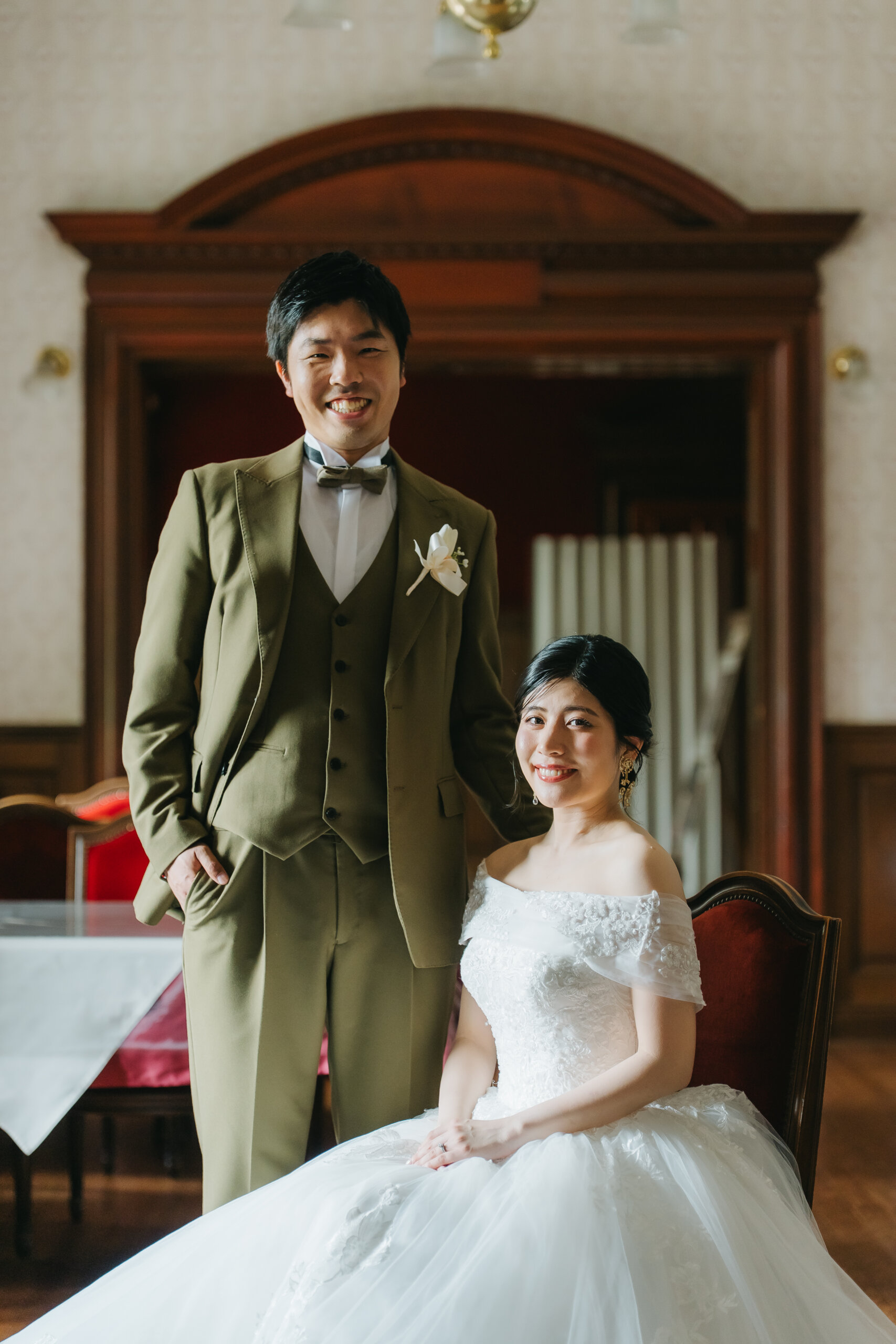
Wedding dresses are the most immediately intuitive choice. White or off-white against the red carpet of the staircase creates strong contrast; lace fabric suits the period aesthetic of the building; full skirts and long trains use the physical space of the rooms well. The dining room’s chandelier makes light-catching fabrics — silk satin, beaded bodices — particularly effective.
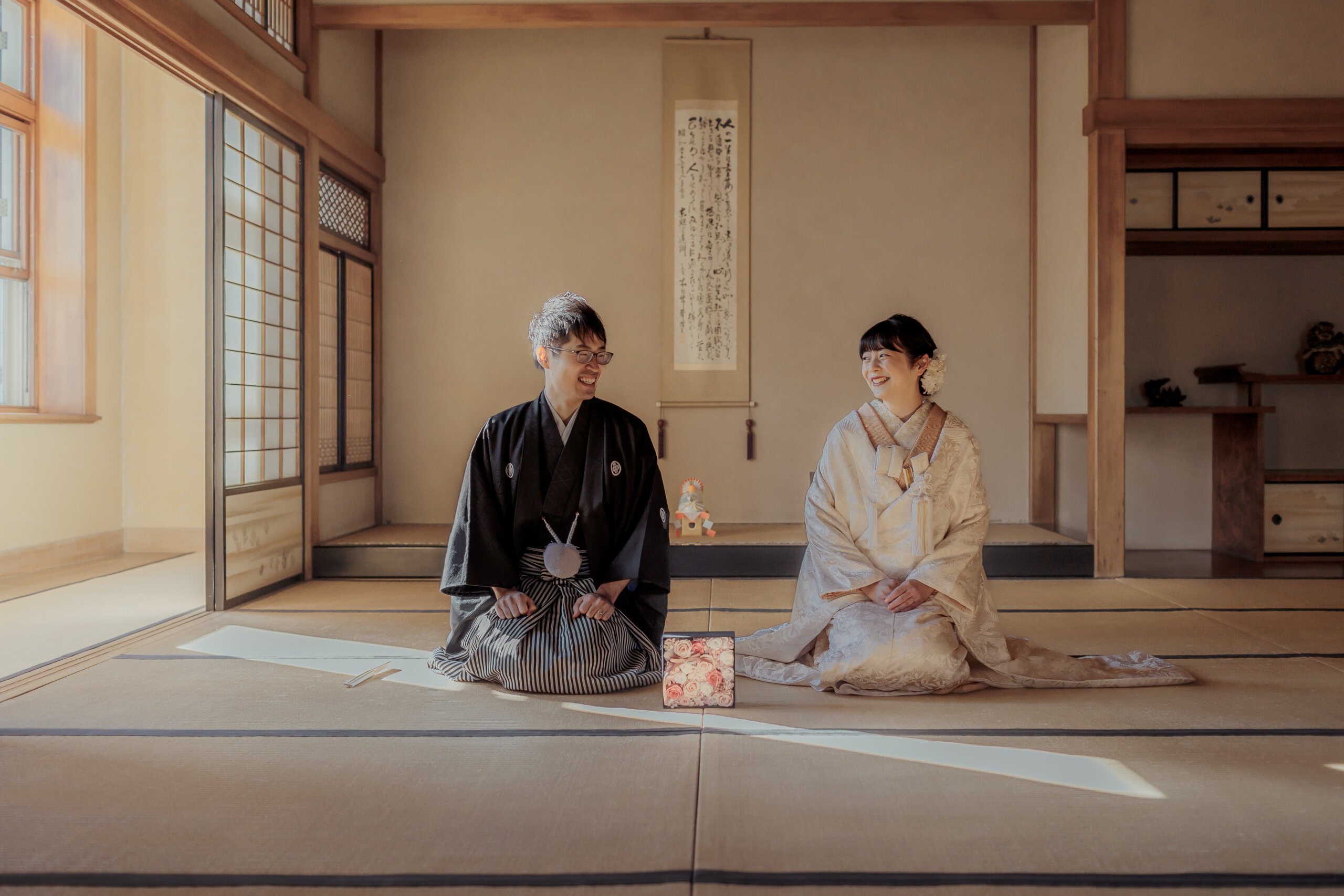
Kimono — specifically the formal uchikake (color-printed over-robe) worn for wedding photography, or the white shiromuku — is more unexpected, but it photographs remarkably well in this setting. The Taisho era was a period of deliberate cultural blending in Japan, when Western architecture and Japanese dress coexisted naturally in the lives of the people who built and used buildings like this one. A shiromuku against the red staircase carpet creates the sharpest contrast. For color uchikake, the dining room’s red walls call for colors that stand apart rather than blend — deep navy, black, gold work better than red or orange tones here. In the sunroom, lighter-toned uchikake suit the softer light and the room’s own green-and-white color palette.
🏠 Quick Styling Guide by Room
- Grand Staircase: Lace, full skirt, long train for dresses; shiromuku (maximum contrast) or deep-toned uchikake for kimono
- Sunroom: Simple, clean-lined dresses; lighter-toned uchikake; the soft light flatters sheer fabrics like chiffon and organza
- Dining Room: Light-catching fabrics (silk satin, beading) respond well to chandelier light; deep navy, black, or gold uchikake avoid competing with the red walls
- Heart-Paneled Door: Any dress or kimono works here — the door is the subject, and the outfit provides color and form without needing to lead
📸 View Our Dress and Kimono Collection
Browse our full selection of wedding dresses and kimono available for your session at the Former Furukawa Residence.
From Our Photographers
Our photographers have worked extensively at the Former Furukawa Residence. Here is what they consistently observe about the location.
The stained glass timing matters
The stained glass windows above the staircase cast colored light at certain angles — typically in the mid-morning and again in the afternoon, depending on the time of year. When this light is active, the staircase photographs differently than it does in flat or indirect light. We check the light on arrival and plan the staircase segment around the best window, because this is one of the features that makes the residence genuinely special and is worth the scheduling consideration.
The rooms do a lot of the work
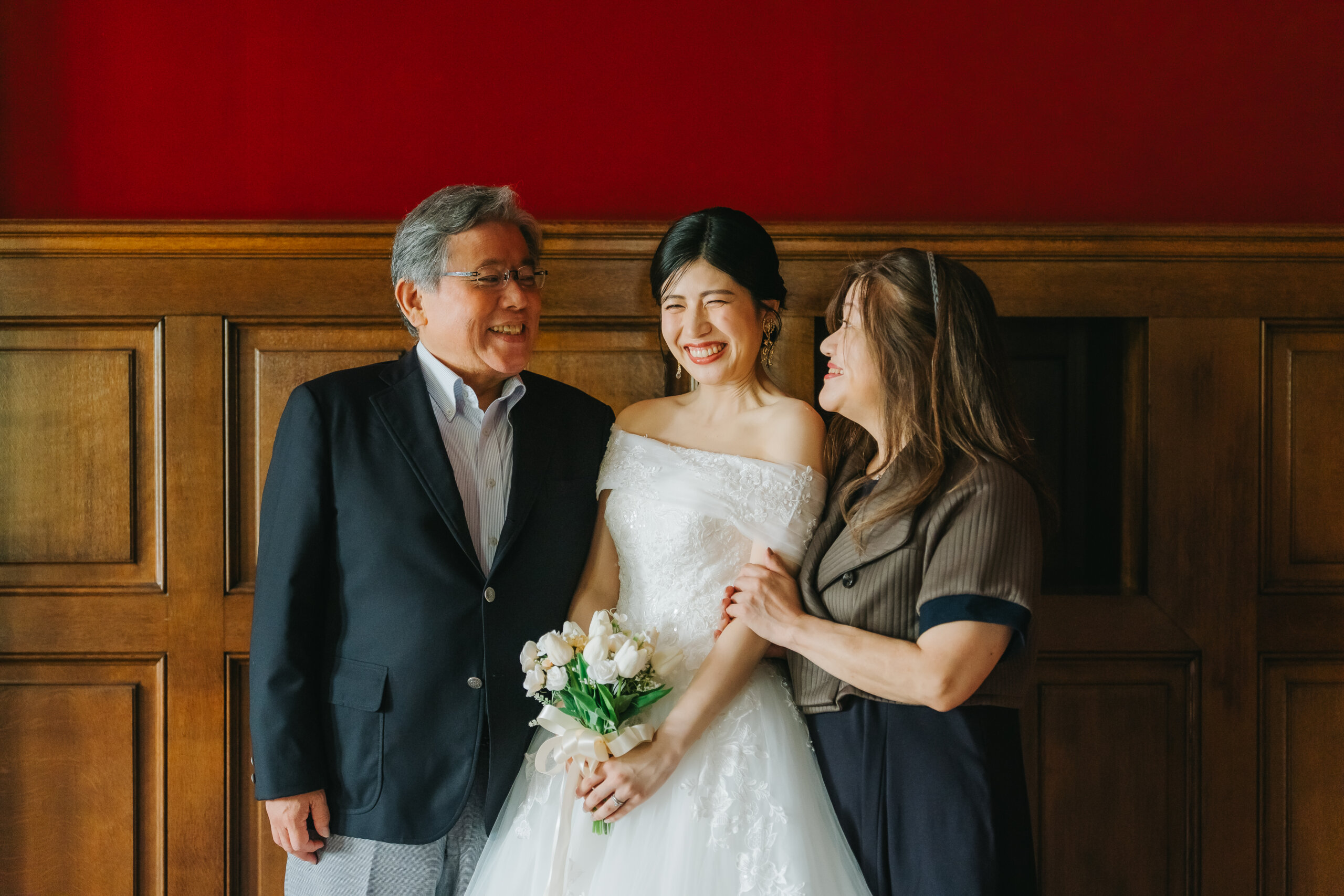
At many locations, creating interesting photographs requires active direction — specific poses, carefully chosen angles, deliberate movement. At the Former Furukawa Residence, the rooms themselves provide so much visual structure that a couple simply standing or sitting naturally in them produces images of immediate character. We use this. Keeping direction minimal — asking people to talk to each other, to look at something in the room, to walk slowly — produces more honest photographs here than prescribing poses would.
Prioritize before you arrive
The photography permit is timed, and covering all four main spots — staircase, sunroom, dining room, door — in the available time requires planning. We ask couples to identify their priority room before the session, so we can allocate time accordingly and not rush any room to fit in all of them. If one spot is the reason you chose this location, that spot gets the time it deserves.
Book early — permit slots are limited
Photography permits at the Former Furukawa Residence are issued in limited slots, and popular dates fill up ahead of time. If there is a specific date or season you have in mind, reaching out early gives us time to secure the permit that fits your schedule. We handle all permit arrangements — there is nothing for you to do except decide when you want to shoot.
📷 See Real Photos from the Former Furukawa Residence
Browse photographs and reviews from couples who have experienced this location.
About Wedding Avenue Tokyo Station Studio
Wedding Avenue Tokyo Station Studio is located a 10-minute walk from Tokyo Station’s Yaesu Exit. The Former Furukawa Residence is accessible from our studio by train in approximately 30 minutes. All hair, makeup, and dress or kimono fitting takes place at our studio before we travel to the residence together. English-language support is available throughout the planning and shooting process.

Photography at the Former Furukawa Residence requires a permit fee (¥33,000 per hour for the mansion interior) and entry fee (¥600 per person), both handled by our team. Our standard location photography packages include 200 high-resolution digital images (currently with a 100-image bonus under our active campaign). Date changes are always free.
📋 Summary
- The Former Furukawa Residence is a Taisho-era Important Cultural Property — one of the very few genuine historic Western-style mansions accessible for wedding photography in Tokyo
- Four rooms of completely different character: grand staircase with red carpet and stained glass, sunroom with green window frames and checkered floor, chandelier dining room with red walls, heart-paneled door
- Both wedding dress and kimono photograph well here — the Taisho era was a period when Western and Japanese aesthetics naturally coexisted
- The rooms provide strong visual structure on their own; natural, understated direction produces the best results
- Permit slots are limited — early booking recommended
- Permit fee ¥33,000/hour (mansion interior) + ¥600 entry, handled by our team; 200 images included; English support throughout
WEDDING AVENUE TOKYO STATION STUDIO
A grand staircase. A chandelier.
A Taisho-era mansion in Tokyo.
Questions about this location, dress or kimono selection,
permit arrangements, or planning your Tokyo visit?
Free consultations available every day — in English.
📍 1-2-8 Hacchobori, Chuo-ku, Tokyo / 10 min walk from Tokyo Station Yaesu Exit